Imperial Fabergé necklace with imperial provenance leads Sotheby’s sale
An Imperial Fabergé necklace tied to Empress Alexandra Feodorovna and priced at $400,000 to $600,000 is leading Sotheby’s first Artistic Luxury sale.
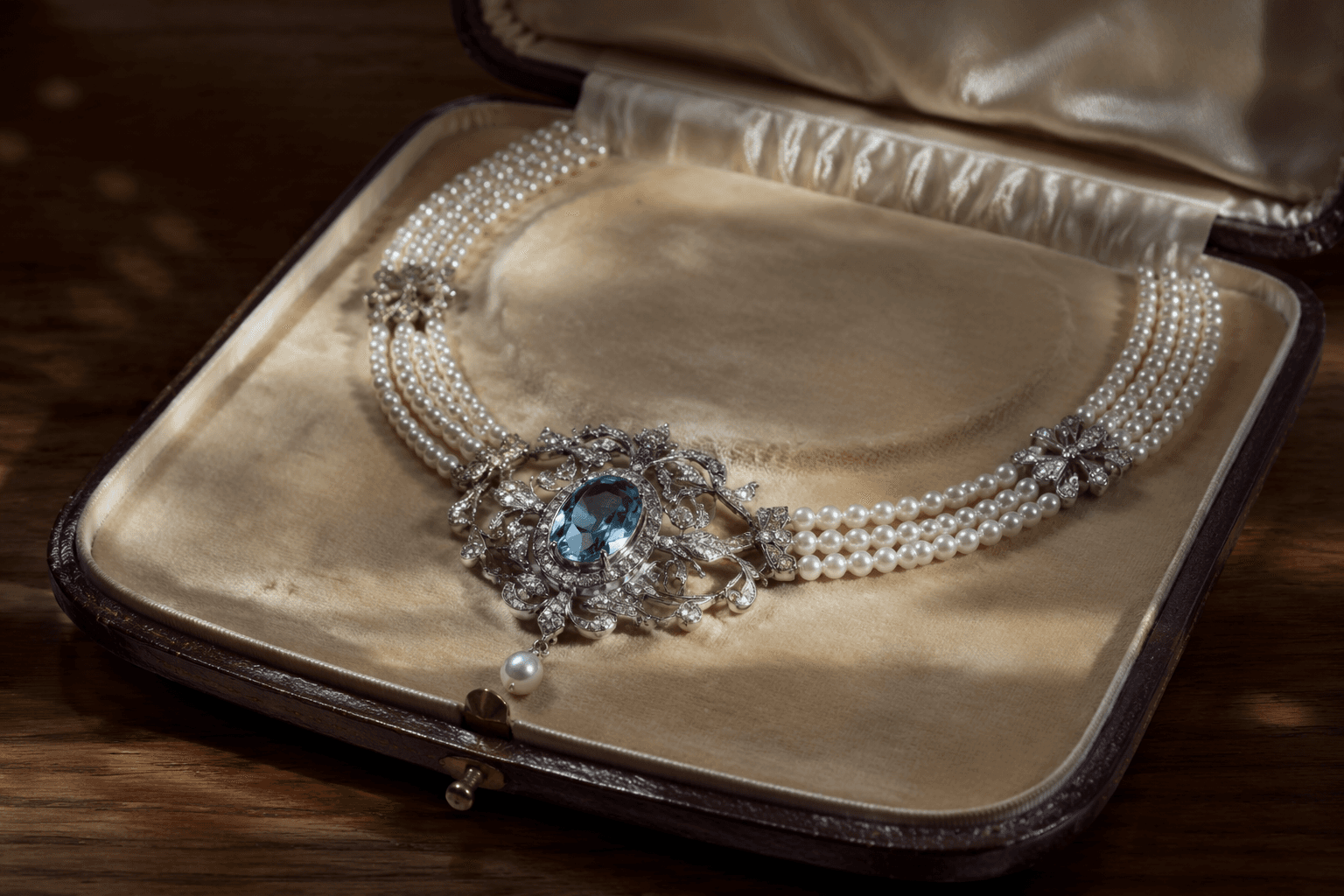
A rare Imperial Fabergé necklace with direct palace provenance is set to anchor Sotheby’s first Artistic Luxury auction, where the story behind the jewel may matter as much as the stones themselves. Cataloged as Lot 5, the necklace carries an estimate of $400,000 to $600,000 and will go under the hammer in New York at 11:00 a.m. EDT on June 17 as part of Sotheby’s Luxury Week programming.
Made by workmaster Albert Holmström in St Petersburg around 1911, the necklace measures 15 1/4 inches, or 38.9 cm, and is built around eleven graduated round-cut Siberian aquamarines. Sotheby’s describes the stones as framed by rose-cut diamonds and set between openwork laurel motifs centered with old-cut diamond brilliants, all mounted in platinized settings with a gold clasp. The piece also bears the workmaster’s initials, 56 standard, and a scratched inventory number, 91288, details that sharpen its appeal to collectors who prize documented authenticity.
The provenance is what turns this from a beautiful antique into a once-in-a-generation gift object. Sotheby’s says the Imperial Cabinet presented the necklace in May 1911 to Empress Alexandra Feodorovna as a proposed diplomatic gift for the visit of German Crown Prince Wilhelm and Crown Princess Cecilie to St Petersburg. The jewel cost 2,650 rubles, but it was not selected and was returned to the Imperial Cabinet. That paper trail gives the necklace a kind of status no newly made high-jewelry piece can manufacture after the fact.
Sotheby’s has built the debut Artistic Luxury category around decorative arts with historical provenance, and the necklace fits that brief exactly. The aquamarines, Sotheby’s notes, also reflect the shift toward lighter, pastel jewelry around 1900, which gives the piece an unusually modern visual softness for something so rooted in imperial Russia. For a buyer looking for a gift with weight, story, and resale resilience, that combination is the real luxury signal.
The sale will also include three diamond-set floral dress trimmings associated with the Russian crown jewels, among them pieces linked to Catherine the Great and Empress Elizabeth Petrovna. Together, they position Sotheby’s new category as a market for objects where craftsmanship, court history, and traceable lineage carry the highest premium.
This article was produced by Prism’s automated news system from verified source data, official records, and press releases, then run through automated quality and moderation checks before publishing. The system is built and supervised by the people who set the standards it runs under. Read our full AI policy.
Did this article answer your question?