Luxury handbags shift toward craftsmanship, transparency and quiet status
Luxury handbags are being judged less by logos and more by proof: craft, traceable materials, repairability and the kind of quiet status that lasts.
Weak first-quarter revenues from LVMH, Kering and Hermès in April 2026 challenged the idea that luxury’s recovery would be smooth. The loud logo bag is not dead, but it is no longer enough. The luxury handbags worth giving now are the ones that can answer harder questions: where the leather came from, who made the bag, how it will be repaired, and whether it still looks right years from now.
The new test for a luxury gift
Euromonitor’s 2026 outlook describes a luxury consumer who wants purpose, sustainability and emotional connection, and expects rental, resale and repair to feel more normal across fashion and luxury. The old status game is softer now: Euromonitor still sees positive growth, but slower growth, with affordability and quality over quantity rising under cost-of-living pressure.
Elite buyers are moving away from overexposed mega-brands and toward understated, logo-free luxury. In practice, that means a handbag has to do more than announce itself from across the room.
Why quiet status is winning
The new flex is a bag that looks expensive to the person who knows, not to the person standing across the table. When the logo is not carrying the whole idea, construction has to. That is why craftsmanship, leather quality and finishing details matter more than ever.
If someone is going to carry it to work, on weekends and through travel, the bag needs to survive real use without looking tired. The shift away from pure brand prestige pushes you to buy the thing that will still look composed after years of wear, not just the thing that photographs well the week you hand it over.
Where STOW London fits
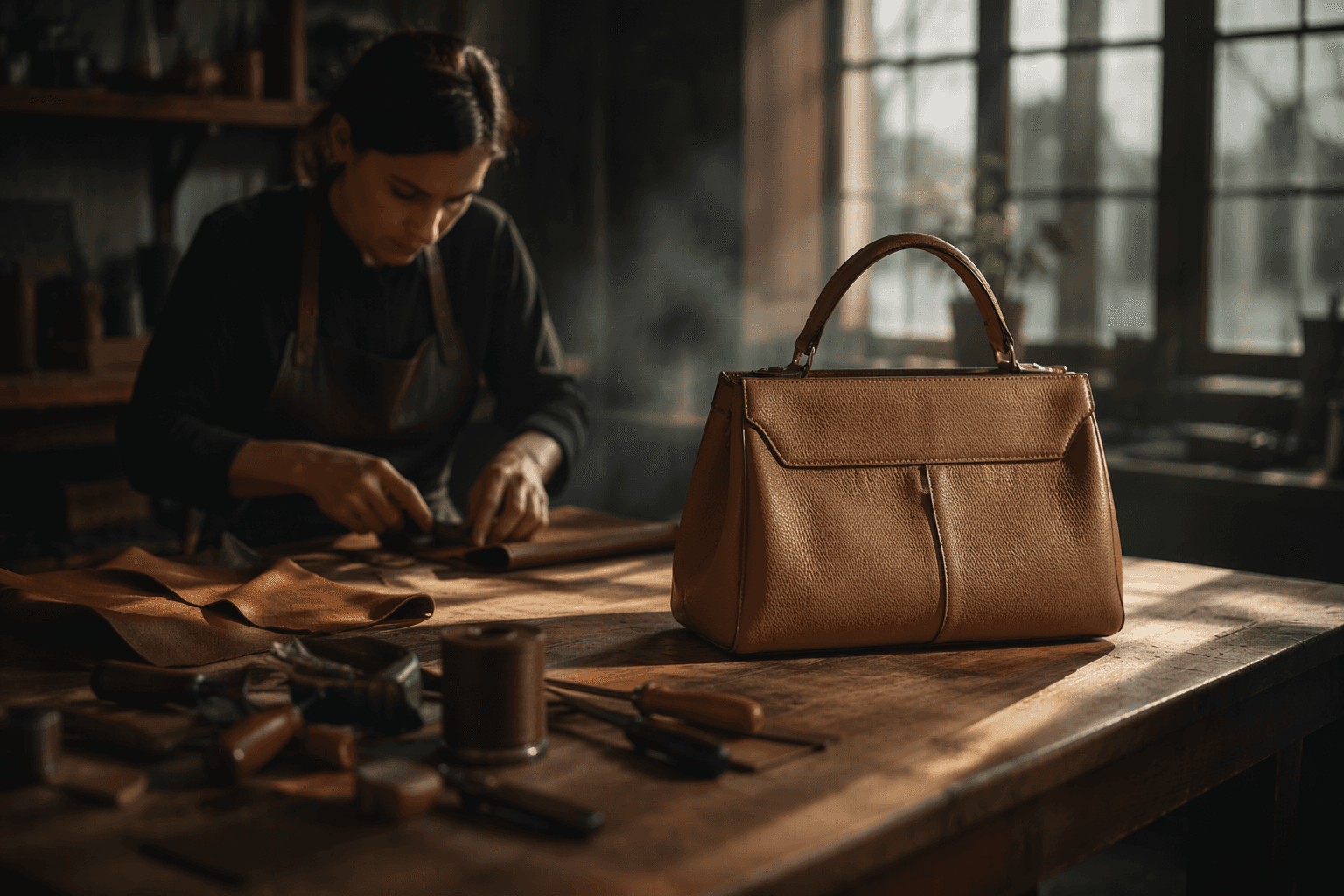
STOW London has built its pitch around that exact mood. The brand calls itself “Sincere Luxury” and says the formula is honest pricing, elite materials and transparent craft. STOW says its bags are handmade in Ubrique, Spain, a place long associated with serious leatherwork, and emphasizes ethical leather sourcing and responsible craftsmanship.
The other detail that matters is scarcity, but only in the right form. STOW says it keeps limited stock and uses pre-order shipping windows, which gives the collection a made-with-intent feel rather than a churn-and-dispose one. That kind of limited production is not valuable because it is scarce on purpose alone. It suggests a slower process, the kind that usually gives you cleaner construction and fewer compromises.
A bag that is transparently made, visually restrained and not overproduced reads as thoughtful in a way a logo-heavy piece often does not.
Why Tanner Leatherstein changed the conversation
Volkan Yilmaz, better known online as Tanner Leatherstein, has become one of the clearest voices in handbag scrutiny because he treats the bag itself as evidence. He began leathercraft at 11 and now has more than 25 years of experience. He is a BoF 500 member and an authority on leather craftsmanship.
His dissections cut through the usual marketing gloss. In a 2025 BoF post, he named STOW London the Best Value Luxury Bag of 2024 in a viral dissection video. A luxury piece that can stand up to a close inspection of materials and construction has a better chance of feeling like a real gift years later.
A checklist for choosing a bag that still feels chic years from now
If you are buying a handbag as a serious gift, this is the filter I would use:
- Traceable materials: Ask where the leather comes from and whether the brand can explain its sourcing. STOW’s focus on ethical leather sourcing is the kind of language that should make you pause, because it suggests accountability rather than vague luxury talk.
- Visible craftsmanship: Check the stitching, edge finishing and structure. A bag can be beautiful on a shelf and still fail in the details. Clean seams and thoughtful proportions are what help a piece age well.
- Repairability: A truly good bag should not be disposable. Look for straps, hardware, lining and corners that can be serviced instead of replaced, because repair is becoming part of what luxury means now.
- Limited production with a reason: Limited stock and pre-order windows are only meaningful if they reflect real production discipline. Scarcity on its own is not a virtue, but scarcity paired with careful making often is.
- An understated silhouette: Logos date fast when they are doing too much work. A quieter shape has more staying power because it can move from office to dinner to travel without feeling pinned to one season.
- Pricing that feels honest: The number should make sense against labor, materials and finishing. That is the difference between a handbag that feels like a considered investment and one that feels like a billboard.
This article was produced by Prism’s automated news system from verified source data, official records, and press releases, then run through automated quality and moderation checks before publishing. The system is built and supervised by the people who set the standards it runs under. Read our full AI policy.
Know something we missed? Have a correction or additional information?
Submit a Tip