Luxury luggage worth investing in: Briggs & Riley, Rimowa, Carl Friedrik
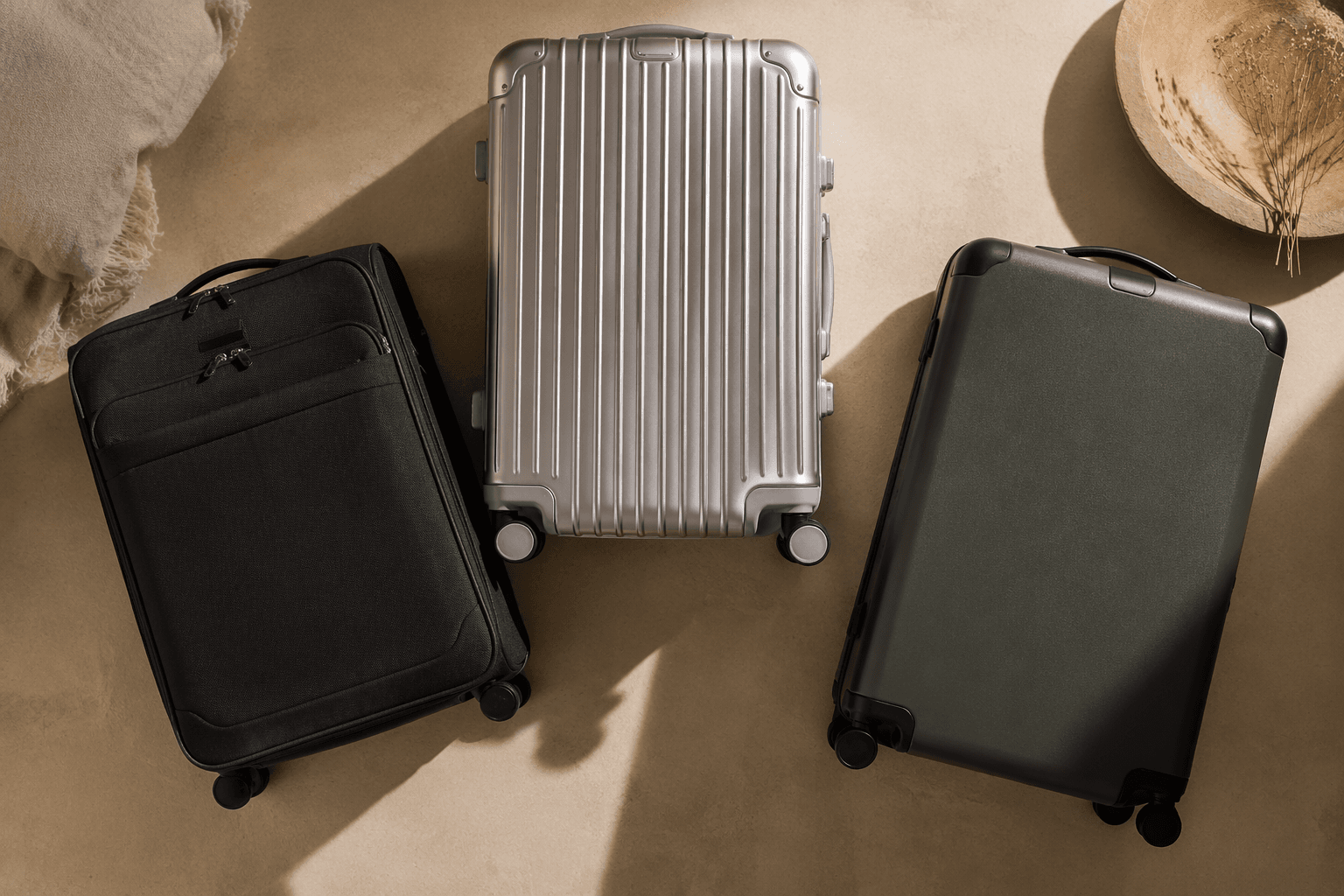
These are the suitcases that make a trip look expensive before takeoff, with Briggs & Riley, RIMOWA, and Carl Friedrik each hitting a different sweet spot.
Premium luggage is a $15.2 billion market in 2024, and the broader travel bag market hit $18.8 billion in 2023, with North America accounting for 32.6% of revenue that year. Luxury luggage has become a real status category, not just a travel errand.
The case for gifting a suitcase that feels like an object
The right luxury case does three jobs at once: it looks sharp in an airport queue, it survives actual travel, and it makes the owner feel like they upgraded their whole routine. Briggs & Riley, RIMOWA, and Carl Friedrik each take a different route to that feeling. Briggs & Riley leans into expandable practicality, RIMOWA sells recognition and heritage, and Carl Friedrik plays the quieter, lighter-handed game.
Briggs & Riley: the gift for the overpacker who still likes polish
Briggs & Riley’s Sympatico line is the one I would buy for someone who always comes home with more than they left with. Sympatico uses CX compression-expansion technology, can expand by up to 25%, then compress back to its original size, and comes with a lifetime guarantee. The glossy ruby version gives the collection a more jewel-box feel, while the hard-shell construction uses three-layer Makrolon polycarbonate and matte finishes meant to minimize scuffing and scratching.
Price-wise, this is not a casual buy, and that is exactly why it works as a gift. The Sympatico Essential 22-inch Carry-On Expandable Spinner is $695, the front-pocket carry-on is $799, and the larger expandable spinner sits at $859.
RIMOWA: the suitcase with the highest airport recognition factor
RIMOWA is the brand in this lineup with the strongest visual shorthand. It was founded in 1898 in Cologne, the hallmark grooves first appeared on suitcases in 1950, and LVMH bought an 80% stake in October 2016, which only sharpened its luxury cachet. The point of RIMOWA is not subtlety: the aluminum shell, the grooves, and the German engineering all announce themselves the moment the bag rolls into view.
If you want the most recognizable gift, the Original Cabin is the one that does the most work at the terminal, and it starts at $1,550. If you want a lighter feel with the same polished RIMOWA language, the Essential Cabin starts at $990 and uses high-performance polycarbonate; the brand also offers Cabin Plus and Sleeve versions for longer trips and laptop-friendly packing.
Carl Friedrik: the quieter choice that still looks expensive
Carl Friedrik is the best answer for the person who wants luxury without the luggage equivalent of shouting their name across the lounge. The Carry-On X Core Edition is 10% lighter than the equivalent Hybrid range, is designed for up to five days of travel, and includes a soft-shell front pocket, dual-zip TSA-approved locks, spinner wheels, an impact-resistant polycarbonate shell, and a lifetime warranty.
It is also the most approachable entry point here. The Carry-On X Core is $525, while the standard Core Carry-on is $425. Carl Friedrik extended the luxury-travel angle through its 2023 Atlassian Williams Racing collaboration, where the Carry-on Core special edition comes in at $355.
How to choose the right one for the person you are buying for
Buy Briggs & Riley for the traveler who packs hard, checks bags, and wants a suitcase that can stretch when the trip gets ambitious. Buy RIMOWA for the person who cares about status cues, airport recognition, and design pedigree as much as durability. Buy Carl Friedrik for the minimalist who wants a refined carry-on that looks more like modern furniture than hard-sell luxury.
If your gift budget is around $400 to $525, Carl Friedrik is the easiest way in. Around $695 to $799, Briggs & Riley starts to make sense because the lifetime guarantee and expansion tech are doing real work. At $990 and up, RIMOWA becomes the pure status play, especially in Original aluminum.
This article was produced by Prism’s automated news system from verified source data, official records, and press releases, then run through automated quality and moderation checks before publishing. The system is built and supervised by the people who set the standards it runs under. Read our full AI policy.
Did this article answer your question?