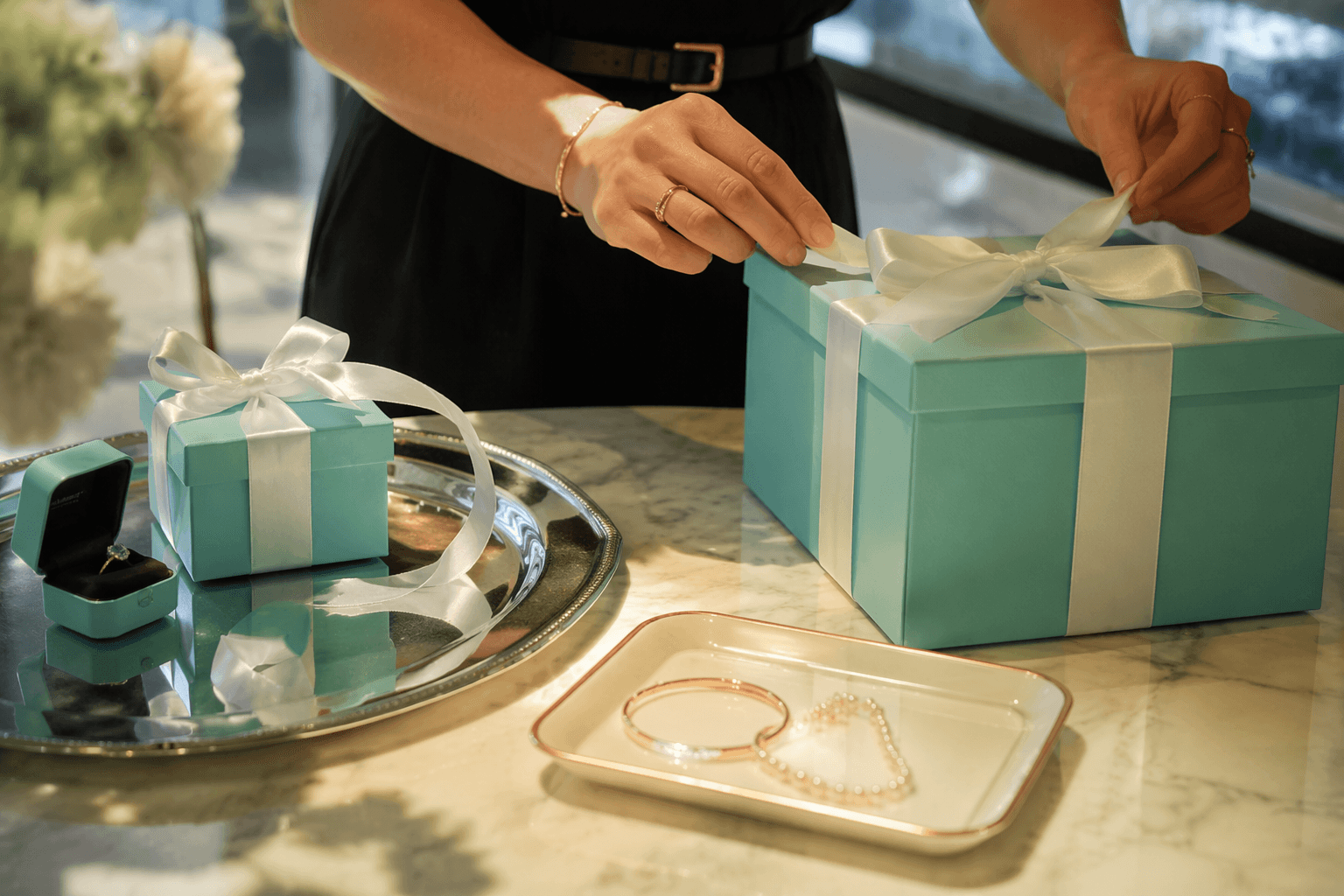
Retailers Launch Beauty Brands as Luxury Fashion Market Divide Grows
Retail's beauty land grab and luxury fashion's widening performance gap are reshaping gifting strategy in 2026, with data from Listrak's benchmarks pointing the way.

Two structural shifts are remaking the beauty and fashion retail landscape simultaneously, and understanding both matters if you're trying to give, or find, something that feels genuinely considered in 2026. Larger retailers are moving aggressively into proprietary beauty, launching their own brands rather than simply stocking other people's. At the same time, the luxury fashion market is fracturing, with a widening gap between those at the top of the market and everyone else. These twin dynamics, surveyed by WWD through Listrak's 2026 Beauty & Fashion Benchmarks, have direct implications for how thoughtful shoppers should be reading the retail landscape right now.
Why retailers are building beauty brands
The calculus is straightforward: beauty has margin, loyalty, and repeat purchase built into its DNA. A moisturizer or a candle brings a customer back every few months; a dress might not. When a larger retailer builds its own beauty brand, it controls the scent profile, the packaging, the story, and crucially, the customer relationship that comes with it. It also captures margin that would otherwise go to a third-party brand.
What this means for the gifting-minded is that the private-label beauty market is no longer the province of pharmacy shelves. The retailer-owned beauty product you encounter at a destination hotel boutique or a curated lifestyle store increasingly carries real craft behind it. It also means the brand story you're purchasing when you choose one of these items is newer, and sometimes less independently verified, than the heritage names you already know.
The luxury fashion gap and what it signals
The divide in luxury fashion isn't simply about which brands are winning. It signals a broader consumer behavior shift: people are either spending very intentionally at the top of the market, or pulling back entirely. The middle is thinning. For gift-givers, that compression is actually clarifying. The question "is this a luxury gift?" has become easier to answer because the market is sorting itself into sharper tiers.
Listrak's 2026 Beauty & Fashion Benchmarks, which WWD drew on for its March 6 feature, track vertical performance across 12 retail categories through cross-channel reporting. The Beauty & Fashion vertical specifically monitors performance benchmarks on a quarterly basis, allowing brands and retailers to track how the gap between high-performing and mid-tier players is widening in near-real time. That granularity matters because gifting decisions at the luxury end of the market are not immune to the same forces shaping retail broadly.
LAFCO New York as a case study in intentional gifting
One of the clearest examples of how a beauty brand can navigate this environment with precision comes from LAFCO New York. In November 2025, LAFCO partnered with Listrak to power the e-commerce expansion of its "Pink Paradise" collaboration with The Colony Hotel. That kind of partnership, a luxury fragrance brand co-creating with a storied hospitality property, is exactly what separates a gift with genuine narrative weight from a commodity beauty item.
The results of LAFCO's approach to digital campaign execution are quantifiable: a subsequent new collection launch delivered a conversion rate above 10%, according to Listrak's reported metrics. A 10% conversion rate in e-commerce is notably strong by any benchmark standard, though the specific channel, timeframe, and campaign parameters behind that figure haven't been independently detailed beyond Listrak's own reporting. Still, the directional signal is clear: specificity of story and precision of execution translate into purchase decisions.
For the person selecting a gift, the LAFCO model illustrates a principle worth internalizing. A candle that is the product of a deliberate collaboration between a perfumer and a hotel with its own distinct identity carries something that a generically luxurious candle does not. You're not just giving a scent; you're giving a place, a collaboration, a moment that was designed with intention at every step.
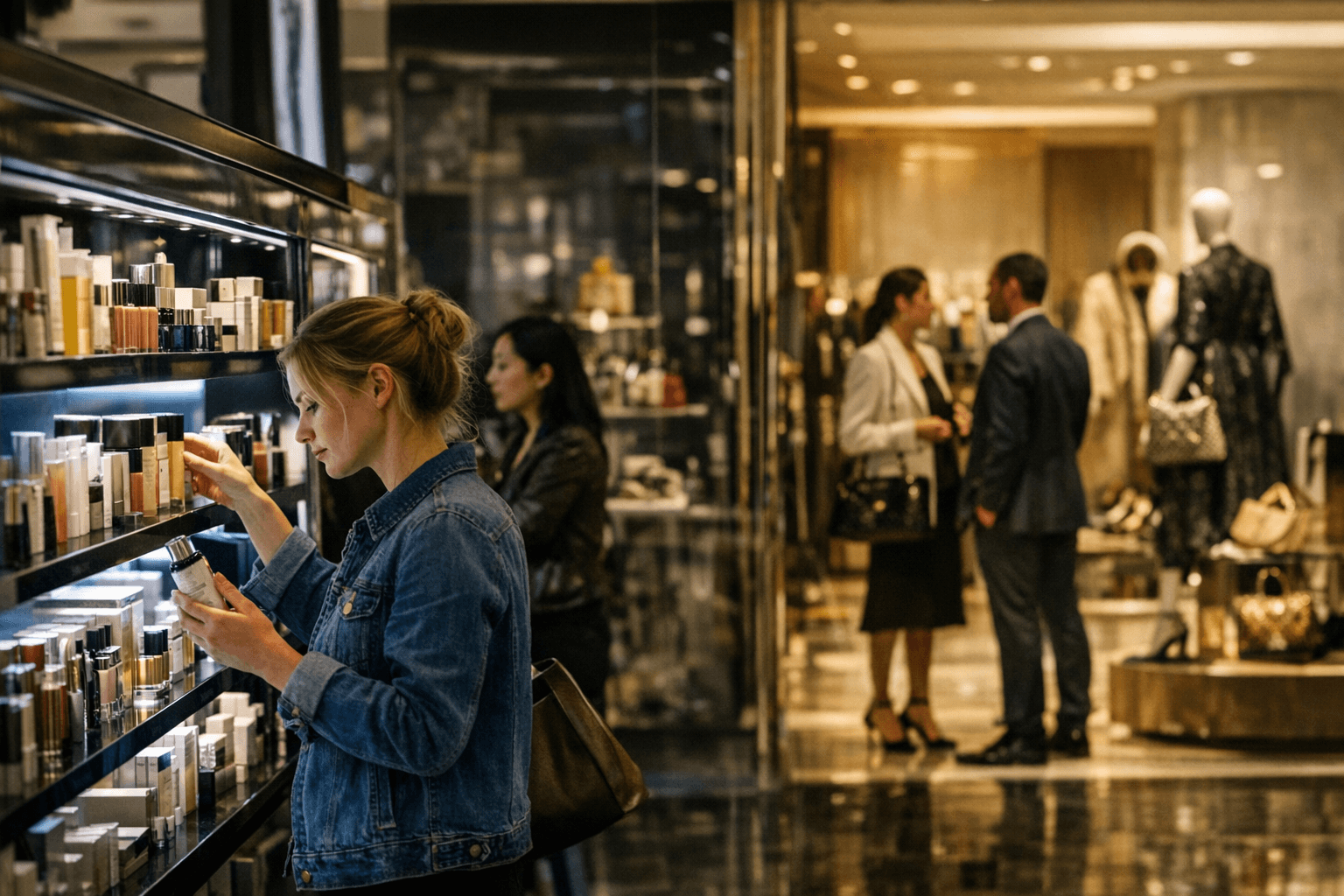
Gifting strategy in a bifurcated market
The widening luxury fashion gap has a practical consequence for gift selection: the window of items that feel genuinely luxurious without actually occupying the ultra-premium price tier is narrowing. Brands in the middle are under pressure, which means the curation story they tell is less differentiated, and the gift that comes from that middle tier can feel less considered by default.
This makes the case for two distinct gifting approaches in 2026. The first is to go deep into a brand with a clear, specific identity, whether that's a fragrance house with a hotel collaboration, an accessories label with a verifiable craft heritage, or a beauty brand whose retailer origin is itself part of the story. The second is to use data-informed gifting moments strategically. Listrak's own benchmarks flag Mother's Day as one of retail's biggest gifting moments outside of the fourth quarter, and the brands that win that moment are those that have done the work to structure their outreach and presentation with the same intention a thoughtful giver brings to selecting a gift in the first place.
The inbox intelligence factor
There is also a less visible but increasingly relevant layer to how luxury gifts reach their audience. The way email and digital communication about products is being interpreted, summarized, and surfaced by inbox intelligence tools is changing how even beautifully conceived gifts are discovered and considered. Retailers and brands that understand how to structure their messaging to maintain visibility in this environment are the ones whose products will surface at the right moment, in the right context, for a gift-giver doing research.
For the person on the receiving end of a gifting recommendation, this is worth understanding too. The curation you encounter online is increasingly shaped by how well a brand has built its digital infrastructure, not only by how good its product is. That reinforces the value of going directly to sources with known standards, whether that's a trade benchmark like Listrak's 2026 Cross-Channel Reports or a trusted editorial outlet that has done the sourcing work, rather than relying on algorithmic surfacing alone.
What this means for your next gift
The convergence of retailer-owned beauty launches and a fracturing luxury fashion market creates both noise and opportunity. The noise is the proliferation of new beauty brands whose quality and story are still being established. The opportunity is that the brands doing the work, building genuine collaborations, executing with precision, and maintaining distinct identity in a compressing market, are easier to identify precisely because the field is sorting itself so visibly.
A gift chosen from that upper tier of intentional brands, whether it carries a four-figure price tag or a thoughtfully designed $60 candle with a hotel provenance, will land differently than one pulled from the middle of a market under pressure. In 2026, that distinction is not subtle. The gap is widening, and the gifts worth giving are clearly on one side of it.
This article was produced by Prism’s automated news system from verified source data, official records, and press releases, then run through automated quality and moderation checks before publishing. The system is built and supervised by the people who set the standards it runs under. Read our full AI policy.
Did this article answer your question?