Sephora's Fragrance Guides Help You Choose the Perfect Perfume Gift
Sephora's fragrance guides cut through the overwhelm of perfume gifting with real advice on scent families, concentration, and how to match a bottle to a person.
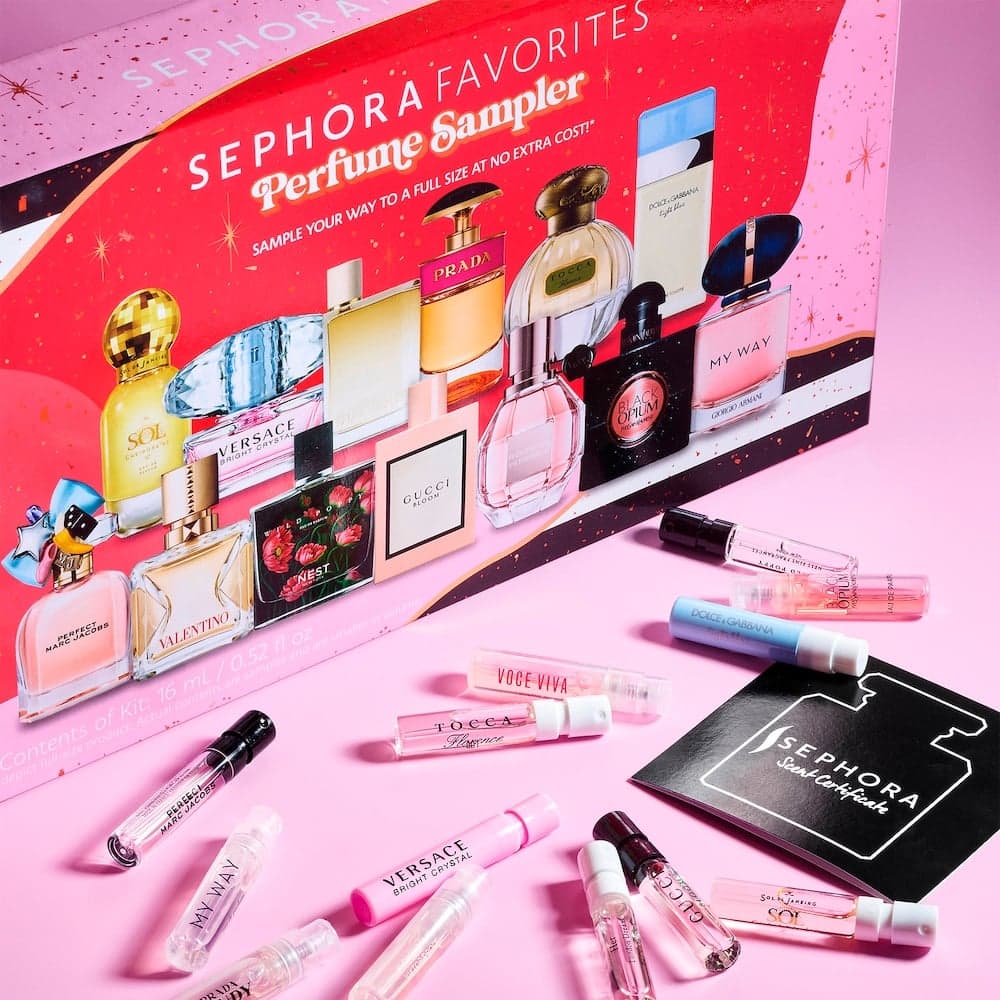
Perfume is one of the most intimate gifts you can give, and also one of the easiest to get wrong. Unlike a cashmere sweater or a piece of jewelry, fragrance is invisible, deeply personal, and impossible to return gracefully. That's exactly why Sephora's fragrance guides exist, and why they're worth your time before you walk into any beauty retailer and point at the prettiest bottle.
What makes these guides genuinely useful is that they treat you like someone who wants to understand fragrance, not just buy it. They break down the underlying logic of how perfumes are built, what the language on the bottle actually means, and how to test a scent before you commit. If you've ever stood at a fragrance counter feeling vaguely overwhelmed, this is the framework you needed.
Fragrance families: the vocabulary that makes gifting easier
Before you can match a perfume to a person, you need to understand how fragrances are categorized. Sephora's guides walk through the major fragrance families: florals, orientals, woody scents, fresh and aquatic compositions, and gourmands (think vanilla, caramel, and warm spice). Each family has a distinct emotional register.
A floral is not always soft and feminine. A woody fragrance is not always masculine. Understanding these families lets you think about the person you're buying for in terms of what they wear and how they live, not just what gender the bottle is marketed toward. Someone who gravitates toward clean, minimal aesthetics often loves crisp aquatics or white musks. Someone who wears rich textures and warm colors frequently reaches for orientals and ambers. Once you see the pattern, matching becomes intuitive.
Notes, the specific ingredients that make up a fragrance, work in three layers: top notes (what you smell first, usually the lightest), heart notes (the core character that emerges after a few minutes), and base notes (the deep, lasting impression). Knowing this helps you explain to the recipient why a perfume might smell different on the card at the store versus on their skin an hour later.
Skin versus blotter: why testing method matters
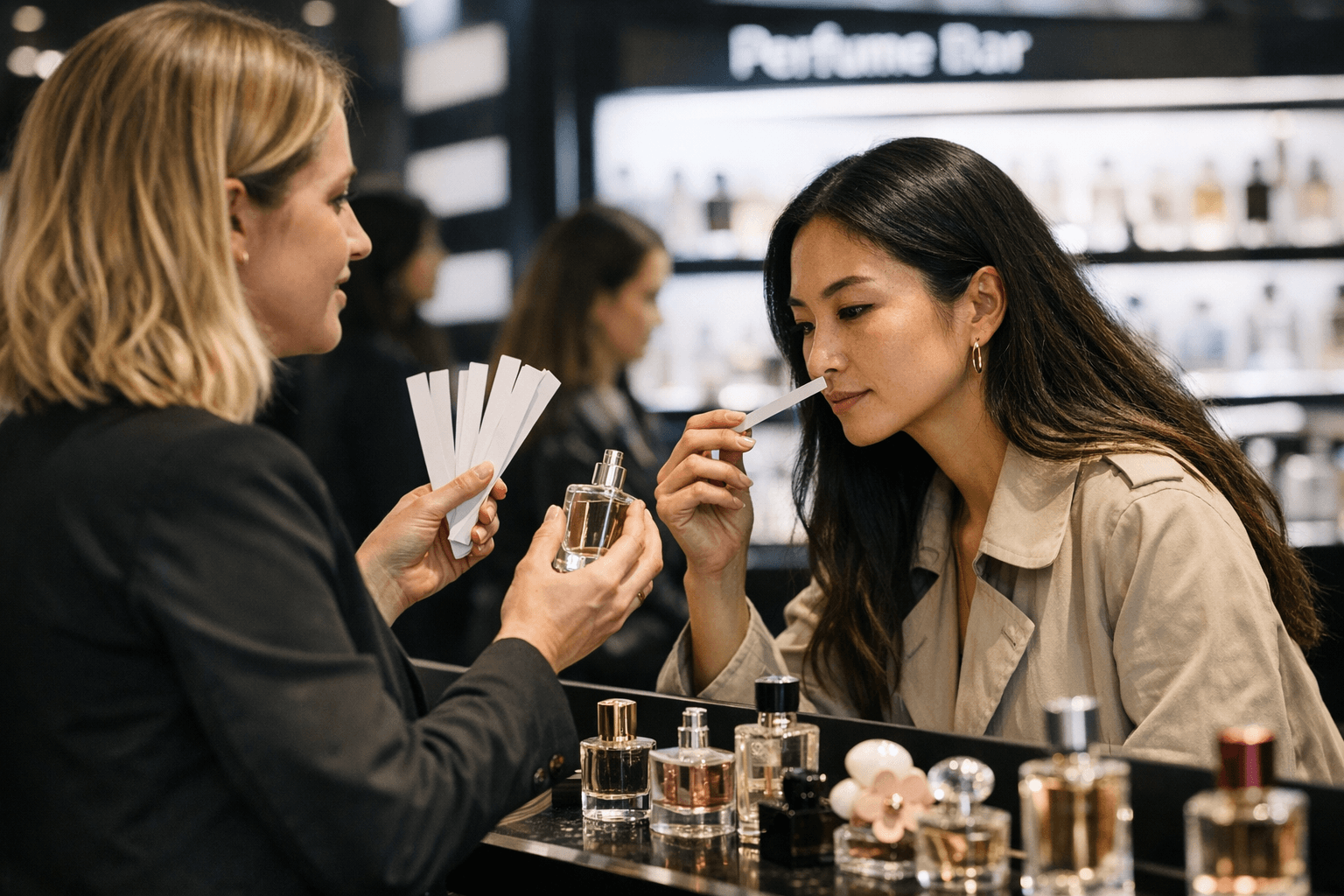
This is where most people go wrong. Sephora's guidance on testing is some of the most practical advice in the fragrance space, and it applies whether you're shopping at Sephora or anywhere else. Spraying a scent on a paper blotter gives you a rough approximation of the top notes, but nothing more. Paper has no warmth, no chemistry, no skin microbiome to interact with.
Fragrance changes on skin. The base notes that make a perfume last and feel personal, the ones that make someone say "what are you wearing?", only fully reveal themselves when worn. If you're gifting a perfume to yourself as well as a loved one, test it on your inner wrist, wait 20 minutes, and smell it again. What you get the second time is much closer to what they'll experience when they wear it.
The challenge with gifting is that you often can't test on the recipient's skin directly. The workaround: narrow down your options using blotters, then commit to a skin test on yourself to see how the fragrance evolves. If it transforms beautifully on you, it has a strong composition. Skin chemistry varies, but a well-built fragrance translates.
Concentration: what the label actually tells you
Eau de cologne, eau de toilette, eau de parfum, parfum. These aren't just marketing tiers; they represent real differences in the concentration of fragrance oil, which affects how the scent smells, how long it lasts, and how it projects.
Parfum (sometimes labeled as extrait de parfum) sits at the top of the concentration scale, typically 20 to 40 percent fragrance oil. It's rich, intense, and long-lasting, often the best choice for someone who wants a scent to stay close to the skin all day without needing to reapply. These bottles are also usually the most expensive, but a little goes a long way.
Eau de parfum typically runs 15 to 20 percent concentration, which still offers excellent longevity, usually six to eight hours, and strong projection in the first few hours. This is the most popular concentration for gift-giving because it hits the sweet spot between performance and price. Eau de toilette runs lighter, around 5 to 15 percent, and works well for warm-weather wear or for someone who prefers a subtler presence.
When choosing between concentrations as a gift, think about the recipient's habits. Do they layer scents? They might prefer something lighter. Do they want to put on one thing in the morning and forget about it? Go for eau de parfum or parfum.
Longevity and sillage: the questions you should be asking
Sillage (pronounced see-YAZH) is the French word for the trail a fragrance leaves. Some people want a scent that surrounds them in a room; others prefer something that only reveals itself to someone standing close. Neither is better, but knowing the preference matters enormously when you're picking a gift.
Longevity and sillage are related but not identical. A parfum concentration might last twelve hours on skin but stay close to the body, what fragrance people call "skin scent." An eau de toilette might project dramatically for the first two hours and then fade. Understanding this distinction means asking the right questions at the fragrance counter, and Sephora's guides give you the language to do exactly that.
For a gift recipient who works in a close-contact environment (think healthcare, teaching, or any office where strong fragrance might be intrusive), a lower-sillage option is genuinely more thoughtful than a powerhouse projector, regardless of how beautiful that projector smells.
Matching fragrance to the person
The most sophisticated skill in perfume gifting is matching a scent to someone's existing preferences without simply buying them what they already own. The framework is straightforward: pay attention to what they wear now, identify the underlying notes or families, and find something adjacent rather than identical.
If someone loves Chanel No. 5, they respond to powdery aldehydic florals. A gift in the same family but from a niche house gives them something new while still feeling familiar. If they reach for Tom Ford's Oud Wood, they're comfortable with rich, resinous depth; there's a whole category of modern oud fragrances to explore from there.
The guides also suggest thinking about occasion and lifestyle. A weekend fragrance for someone who spends Saturdays outdoors is a very different brief than an evening scent for someone who attends frequent dinners. Fragrance, when given well, tells the recipient that you noticed something true about them. That's the gift underneath the gift.
Perfume is not a gamble when you understand the system. With the right framework, a bottle of fragrance becomes one of the most personal, lasting gifts you can put in someone's hands.
This article was produced by Prism’s automated news system from verified source data, official records, and press releases, then run through automated quality and moderation checks before publishing. The system is built and supervised by the people who set the standards it runs under. Read our full AI policy.
Did this article answer your question?