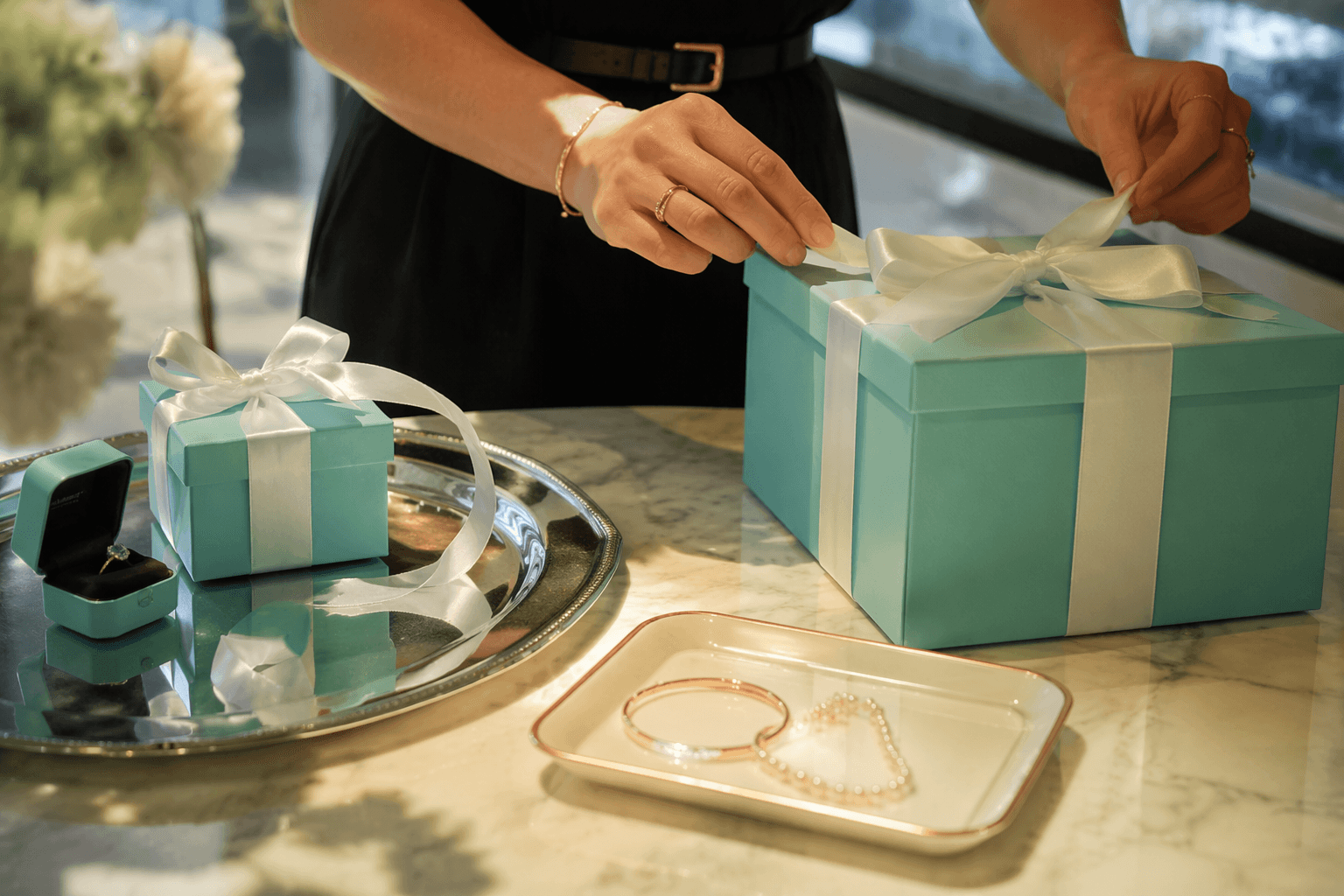
TikTok Unboxing Videos Are Now Luxury Brands' Most Cost-Effective Marketing Tool
Luxury brands are gifting £1,690 handbags to TikTok creators and getting 2.7 million views in return — the math makes traditional ad spend look embarrassing.
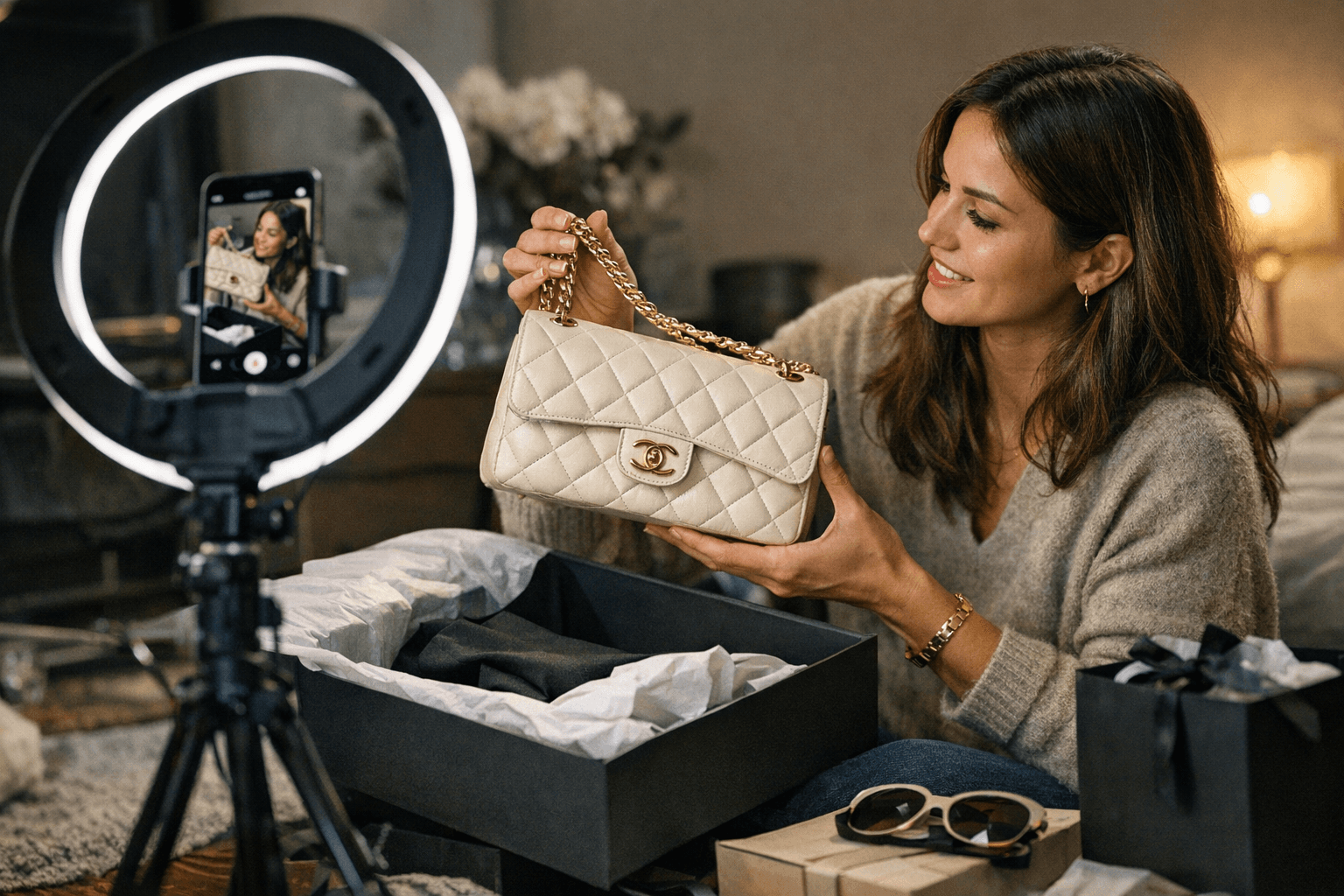
The #unboxing hashtag on TikTok has accumulated over 45 billion views since 2018. That number is roughly five times the entire global population, or as one industry analysis put it, "it's as if every person on Earth watched 5 luxury unboxing videos." For luxury brands accustomed to spending millions on glossy campaigns, runway productions, and premium media placements, that scale arriving through a format that costs little more than a gifted product is the kind of ROI math that rewrites marketing budgets.
This isn't a fringe trend being tested by digitally native startups. Dior, Gucci, Prada, Louis Vuitton, and Mulberry are all actively leaning into TikTok unboxing as a primary acquisition channel for younger affluent consumers. The format is exactly what it sounds like: a creator receives a product, films themselves opening and reacting to it on camera, and posts the result. In a 30-second clip, a label can reach an audience that has already opted into exactly that kind of content.
Why TikTok specifically
The platform's scale alone demands attention. TikTok now has over 1.12 billion global users, with roughly 170 million in the United States. Its average engagement rate sits above 5%, which is measurably higher than what brands see on Instagram or Facebook. When a video connects on TikTok, it doesn't just reach followers; it reaches anyone the algorithm decides should see it, based on behavior rather than existing brand affinity.
That algorithmic reach matters differently for luxury than for other categories. Young affluent consumers, the demographic luxury houses are competing hardest to acquire, have fundamentally shifted how they form brand trust. They trust peer content more than billboards. Gen Z's relationship with fashion is built through 30-second videos, not storefronts. A creator unboxing a Prada bag in their bedroom carries more credibility with that audience than a full-page spread in a glossy magazine, and the data on engagement backs that up.
The economics of a gifted handbag
The ROI argument is where unboxing becomes genuinely difficult for brands to ignore. The format is wildly cost-effective: a brand typically gifts a product worth a few thousand dollars and receives millions of organic impressions in return. There are no media placement fees, no production costs, no agency retainers layered on top.
The Louis Vuitton Neverfull Inside Out launch is the clearest available case study. Louis Vuitton gifted the bag, which retails at approximately £1,690 to £2,280, to influencers including Brigette Pheloung, who unboxed it on TikTok. Pheloung's video drove over 2.7 million views. To put that number in human terms, it is roughly the entire population of Chicago. If those same 2.7 million impressions had come through paid advertising at a conservative $0.01 per view, the cost would have been approximately $27,000. Louis Vuitton's actual cost was the bag itself. Pheloung's caption read: "2 bags in 1 🫶🏼 #louisvuitton #neverfullinsideout 🤍 (advertorial gift)" — a disclosure worth noting, as transparent labeling of gifted content is both a legal requirement and, increasingly, something audiences expect and respect rather than penalize.
The cost-to-reach ratio is not an anomaly. It is the repeatable structure of the format, and it explains why brands that have historically been protective of every touchpoint are now putting products in creators' hands and letting them run.
The brands that have woken up to this
Dior, Gucci, and Prada are all actively gifting products to influencers specifically to generate these viral unboxings. Mulberry has made TikTok unboxing videos a formal strategic priority. These are not brands that move quickly or casually; their presence in this space reflects boardroom-level decisions about where luxury marketing is heading.
The most instructive example, though, may be Chanel, which has never posted a single piece of content on TikTok. Despite that, Chanel ranks in the top 10 most-discussed luxury labels on the entire platform, driven entirely by user-generated content. Consumers are unboxing Chanel products, talking about Chanel, and creating an ecosystem of brand conversation that the brand itself has not paid for or directly orchestrated. Whether Chanel's approach is strategic restraint or simply an acknowledgment that their product does the work on its own, the outcome makes the case that luxury and TikTok are compatible at scale, even without an official brand account.
What the format actually does for luxury
Traditional luxury marketing has always operated on scarcity and aspiration: controlled imagery, selective placement, the sense that the brand decides who gets access. Unboxing videos invert that dynamic in a specific and useful way. The product is still rare and expensive; the moment of receiving it is still charged with desire. But that moment is now witnessed by millions of people who experience the anticipation and reveal alongside the creator.
The psychology is not complicated. Watching someone open a Louis Vuitton box, hear the tissue paper, see the dust bag, and lift out the bag creates a vicarious experience that no billboard can replicate. It is participatory in a way that passive advertising is not, and it arrives through a feed the viewer has already curated toward content they want. The trust dynamic between creator and audience also transfers. When Brigette Pheloung marks a video as an advertorial gift and her audience watches anyway, that transparency strengthens rather than undermines the message.
The practical calculus for luxury marketing
The format's cost structure also changes what "testing" looks like for luxury brands. A traditional campaign requires commitment: production, talent, media buy, creative development. Gifting a product to a creator requires a product and a logistics operation. The downside is bounded; the upside is 2.7 million views and the implicit endorsement of a creator whose audience trusts them.
That asymmetry is what has turned TikTok unboxing from a novelty into a line item. Brands that once viewed influencer gifting as supplementary to their real marketing are recategorizing it as a primary channel, and the numbers justify that recategorization. A gifted product worth a few thousand dollars generating millions of organic impressions isn't a happy accident; at this point, it's a repeatable media strategy with measurable returns.
The luxury industry spent decades building the infrastructure of desire: boutiques, runway shows, editorial features, celebrity placement. TikTok hasn't replaced any of that. It has added a distribution layer that reaches the next generation of buyers at a fraction of the cost, with higher engagement than any other platform available, and with the credibility of peer recommendation built in. For brands whose entire value proposition rests on being wanted, that combination is close to ideal.
This article was produced by Prism’s automated news system from verified source data, official records, and press releases, then run through automated quality and moderation checks before publishing. The system is built and supervised by the people who set the standards it runs under. Read our full AI policy.
Did this article answer your question?