Top Collectors Name the Most Coveted Watch Releases
Collectors are done with hype cycles — in 2026, the watches commanding real coveting are built on provenance, integrated mechanics, and strict supply.
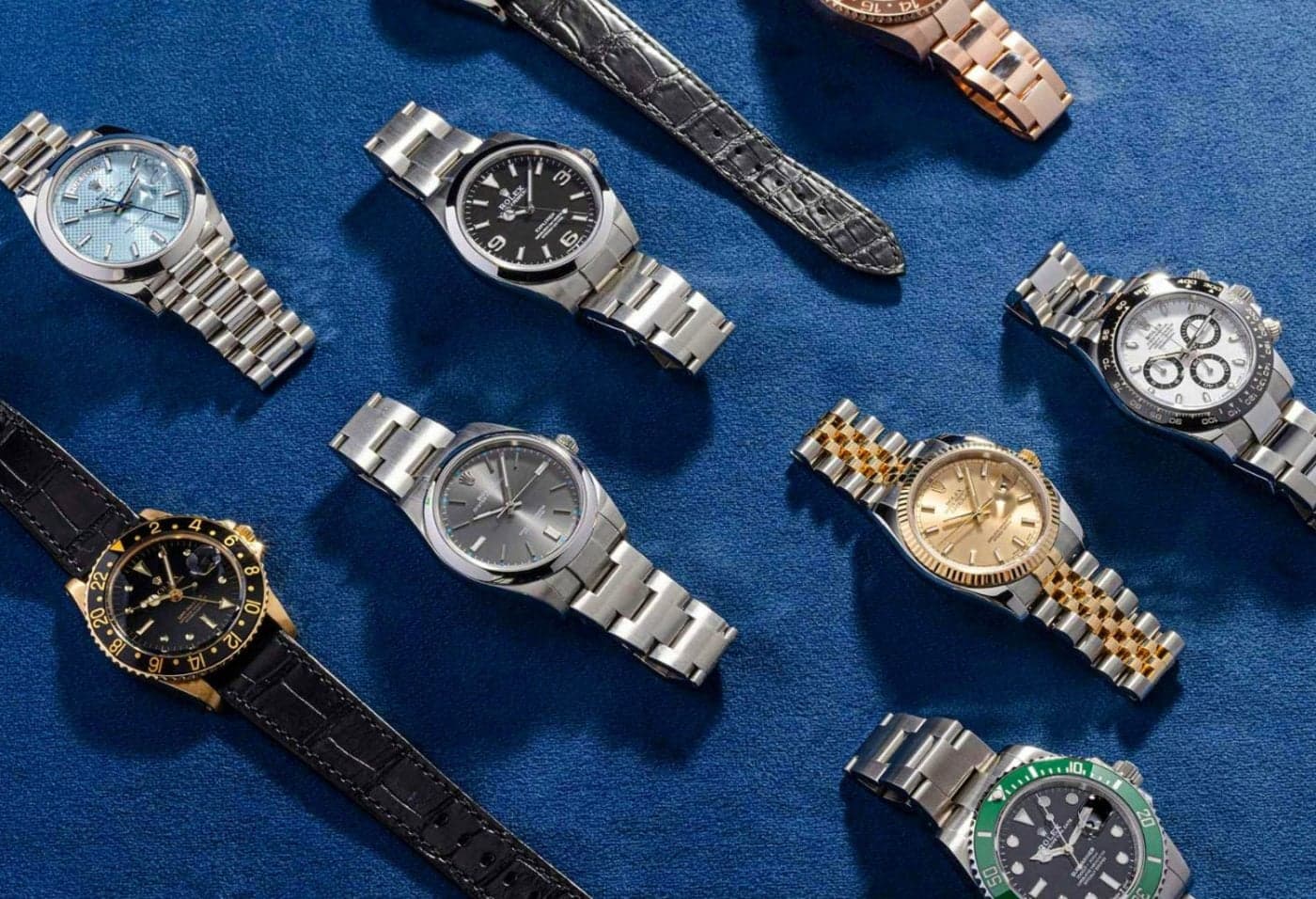
The watch world has always sorted itself into two camps: people who read about watches, and people who actually buy them. When serious collectors start agreeing on the same pieces, that consensus is worth paying attention to, whether you're shopping for yourself or searching for a gift that will genuinely stop someone mid-unwrap. A Robb Report roundtable of ten respected collectors and industry figures, including contributors with bylines in the New York Times and JCK, spent the early months of 2026 fielding exactly that question. Their answers cut straight through trend-speak and land on something more useful: a specific rationale for why certain watches belong on a wrist rather than a waitlist.
Three clear threads run through their picks. Provenance, the kind earned over decades rather than announced in a press release. Mechanical innovation that solves problems in a genuinely new way rather than layering complication on top of complication. And supply discipline, where limited or subscription releases create the kind of scarcity that means something to a collector and to the person receiving one.
The Revival That Actually Earns It
No watch in the early 2026 conversation generates more warmth than the Piaget Polo 79 Two-Tone. The original Polo launched in 1979 under the direction of Yves Piaget, born from a conversation with New York distributor Efraim Grinberg about the appetite for sportier, integrated-bracelet luxury watches. The design, defined by its horizontal gadroons running across case, dial, and bracelet, was a jet-set icon throughout the 1980s before the line was discontinued. Piaget revived it in 2024 for the Maison's 150th anniversary, first in yellow gold, then white gold, with the two-tone arriving in 2026 and winning the GPHG's "Iconic Watch" prize along the way.
The 2026 two-tone version combines white and yellow gold in a configuration that actually echoes one of the original 1979 configurations, giving it a legitimacy most revivals never quite achieve. Inside sits Piaget's calibre 1200P1, an ultra-thin automatic micro-rotor movement measuring just 2.35mm, which keeps the 38mm case as slim as the original's reputation demands. The retail price of $91,000 is steep, but the collectors who chose it weren't apologizing for it. "The two-tone Piaget Polo79. I think Piaget is just brilliant," one panelist said. "It's kind of tastefully ostentatious, if that's not too much of an oxymoron. This one is mostly white gold and I'm so glad they're still making these things. They were really important watches in the '70s and '80s, and I think they fit so well in today's world."
The TAG Heuer Carrera Seafarer sits in different company price-wise but satisfies the same collector demand for provenance that is functional rather than merely decorative. The original Seafarer was commissioned in 1949 when Heuer was approached by Abercrombie and Fitch president Walter Haynes to build a watch capable of tracking the tides. The 2026 revival brings back that same tide indicator complication, a disc-based function showing high and low tide that is genuinely rare in modern watchmaking, in a 42mm case with a champagne dial and teal accents. One collector framed it precisely: "In a sea of vintage-inspired watches, this release actually brings the function back, not just a story."
The Skeleton That Changed the Conversation
Daniel Roth's Extra Plat Rose Gold Skeleton debuted at LVMH Watch Week in Milan in January 2026, and it arrived carrying significant weight. The brand, revived under LVMH after passing through several ownerships since its founding as an independent manufacture, had previously released careful archival reinterpretations. The Extra Plat Skeleton is the first genuinely new piece: a skeletonized variant of the Extra Plat that has never existed before, yet reads as if it has always belonged in the collection.
The movement, the DR002SR, was constructed with its open-worked aesthetic as a foundational design decision rather than a retrofit. The modern geometry, clean lines, straight-grained bridges, and angular finishing deliberately distances itself from the floral 1980s skeletons the brand produced in its original era. And crucially, it measures almost as thin as a high-end dress watch, which is remarkable for the brand's signature double-ellipse case. Production is limited annually. Price is CHF 85,000, excluding taxes, with availability from January 2026. The collector verdict: "The piece this year that has impressed me the most is the Daniel Roth Extra Plat Skeleton. Skeletons can be a tricky proposition — sometimes you try them on and the sight of your wrist hair through the other side scares you to smithereens. This one appears to be exceptionally well done. In an age where the Pateks of the world can't recall what an interior angle looks like, Daniel Roth has laid down the gauntlet."
The Complication That Rewrites the Category
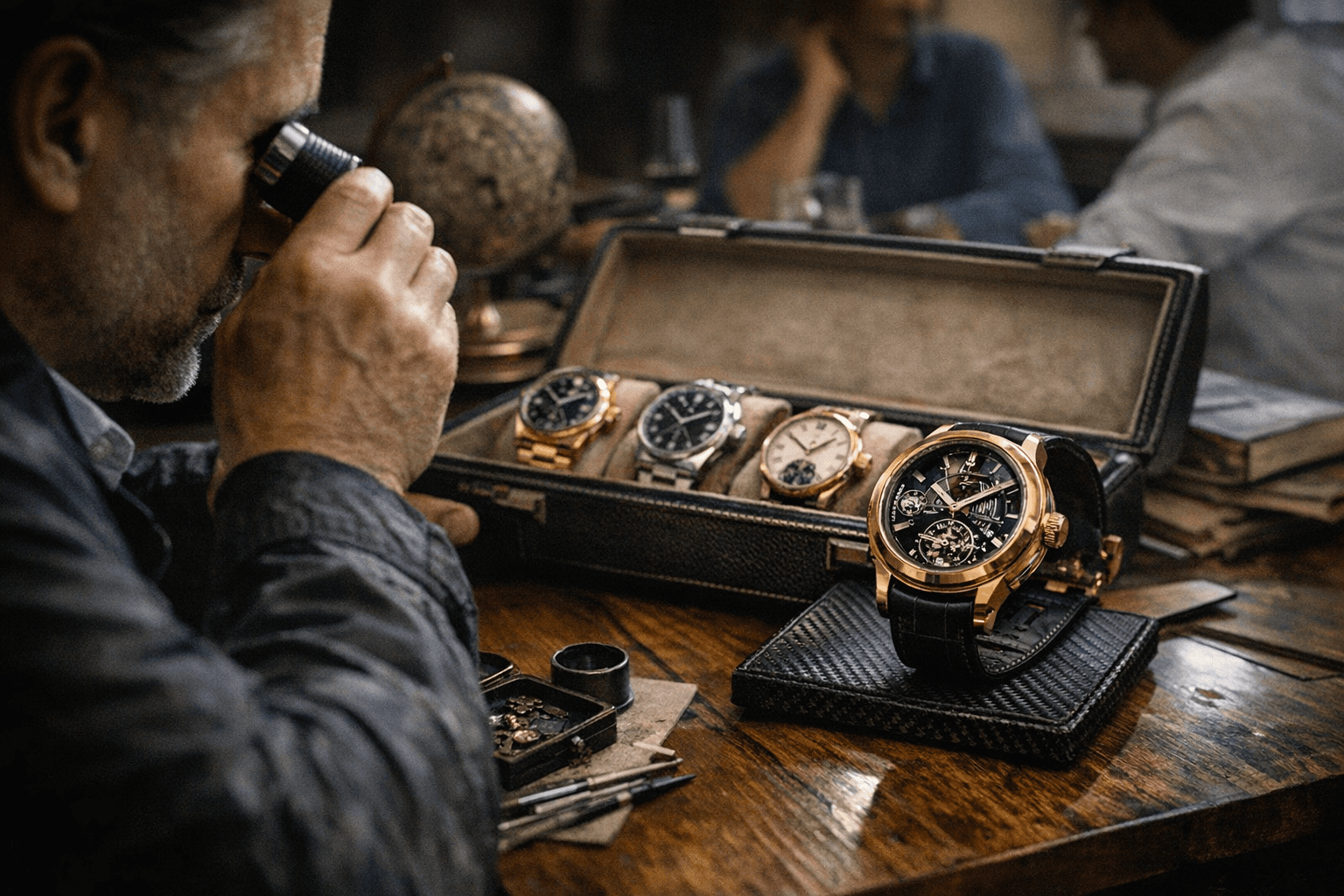
Blancpain's Grande Double Sonnerie is the watch that drew the most reverent language in the roundtable, even from the collector who admitted it was out of reach. The result of eight years of development, 1,200 technical drawings, and 21 patents, with 13 incorporated into the final movement, the calibre 15GSQ contains 1,053 individual components. It achieves what no wristwatch has done before: a grande sonnerie with two selectable melodies, the Westminster chime and a second composition co-written by KISS drummer and serious collector Eric Singer and keyboardist Derek Sherinian, played across four hammers on four notes.
What the collector community found most significant, however, was not the novelty of the second melody but the integration of the movement architecture. "There have been grand complications we've seen throughout the watch world and they are almost uniformly done as sandwiches," one panelist said. "You do the minute repeater section, then put a calendar plate on top, then the chronograph plate and so on, like sandwiches. A much harder and more interesting way to make the watch is as a fully integrated movement." The Grande Double Sonnerie also carries a perpetual calendar with retrograde date and a flying tourbillon. At CHF 1.7 million and configured to the owner's specification, it is a bespoke object more than a product. As a gift, it sits beyond most budgets, but as a benchmark for what serious collectors are using to judge ambition in 2026, nothing in the roundtable came close.
The Case for Provenance at Every Price
Not every collector in the roundtable reached for the newest release on the market. One chose an entirely different kind of answer: a vintage Blancpain perpetual calendar from the late 1980s, 33mm in yellow gold with a leap year indicator at 12. The rationale was direct and a little challenging. "To me, this watch is proof that there is still a way to get a beautiful watch for a fair price. In my vision, this represents the absolute best buy at the moment: craftsmanship, intrinsic value, beauty, classicism, high-end watchmaking, and all for a fraction of the price of a modern watch."
The Niton Prima represents a different kind of collector logic: a jumping hour watch from a revived Genevan manufacture, built around an in-house movement bearing the Geneva Seal, sold through a subscription release model that keeps supply strictly controlled. "Jumping hour complication, impeccable execution, in-house movement with Geneva Seal, very legitimate history, revived Genevan heritage and highly collectible for the subscription release." The mention signals something the broader roundtable reinforces repeatedly: in 2026, the collectors who know what they're doing are drawn less to size and spectacle than to integrity of manufacture, clarity of purpose, and the kind of supply discipline that means a piece retains meaning long after it leaves the store.
What This Tells the Gift-Giver
The roundtable's diversity is itself useful information. Serious collectors in 2026 are not converging on a single aesthetic or price tier. They are converging on a standard: watches where the reason for the watch being the watch it is can be explained in one sentence, where the complication solves a real problem or honors a real history, and where the manufacturer shows enough restraint to make the piece matter. That is, as it happens, exactly the standard a good gift should meet. The watch someone will actually wear, talk about, and remember receiving is almost never the one with the loudest marketing. It is the one with the clearest story.
This article was produced by Prism’s automated news system from verified source data, official records, and press releases, then run through automated quality and moderation checks before publishing. The system is built and supervised by the people who set the standards it runs under. Read our full AI policy.
Did this article answer your question?