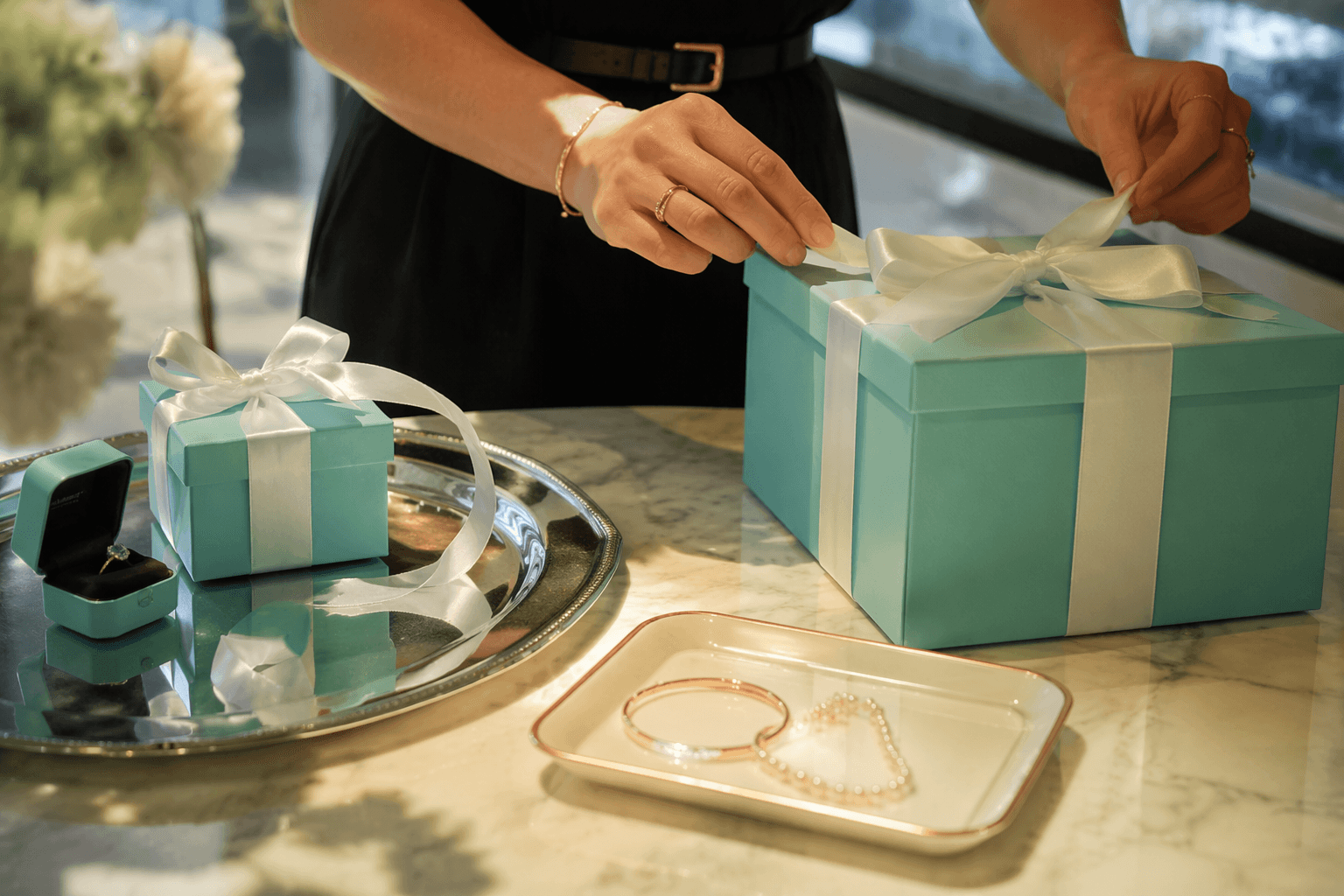
Wedding gifts to avoid, and what to give instead
The most elegant wedding gift is the one the couple will actually use. Skip the monogrammed splurge and give cash, a registry pick, or an experience instead.

The surest way to miss on a wedding gift is to buy something impressive that the couple never asked for. The most luxurious presents are the ones that fit their life, their space, and their tastes without creating extra work, which is why registry gifts, cash, and experiences keep proving smarter than status buys.
Why off-registry confidence often backfires
A recent survey of more than 1,300 Good Housekeeping readers found that 3 in 5 think small deviations from the registry are fine. But the same audience also revealed the risk: 62% of respondents who created a registry said they received an off-registry gift they did not like. That is the etiquette correction affluent guests need most, because the problem is rarely the price tag. It is the assumption that spending more automatically means giving better.
Wedding gifting has also become more flexible. Emily Post notes that modern registries now stretch from pots and pans to more playful picks like margarita makers, and registry details are still traditionally shared by word of mouth rather than printed on the invitation. The Knot goes even further, pointing out that couples now register for honeymoon items, cash funds, gift cards, and charity donations. In other words, the registry is no longer a narrow list of china and silver. It is a map of how the couple actually wants to live.
The six gifts to avoid when you want to look generous
- Random off-registry items
This is the classic mistake: a gift chosen to impress the giver, not to help the couple. If it is not on the registry and not clearly tailored to something they asked for, it risks becoming clutter with a bow. The better move is simple, either buy from the registry or give money toward a cash fund.
- Large wall art
Big art is the kind of gift that feels grand until the couple has to find a wall for it. It assumes the recipients share your taste, have the right space, and want to build a room around your choice. If you want something visually special, choose a registry item that suits their home or give an experience that adds to their life instead of their storage problem.
- Lingerie
Wedding gifts should feel intimate in spirit, not awkward in practice. Lingerie can be too personal, too specific, and too easy to miss the mark, especially when the couple has not asked for it. The luxury version of this impulse is a honeymoon contribution or another couple-centered gift that feels sensual without crossing into guesswork.
- Baby-related items
Baby gear at a wedding is less thoughtful than it sounds. It can project a future the couple has not announced and does not need to manage on your timeline. If you want to give something that hints at what is ahead, make it a general experience, cash, or a practical home item they can use together now.
- Monogrammed gifts
This is where well-meaning guests most often overestimate their own certainty. The Knot’s guidance is clear: there is no single right rule when it comes to surnames, and guests should triple-check a couple’s preferred monogram because many personalized items cannot be returned. That matters especially for brides who are not changing their last name. A monogrammed object can feel bespoke, but only if the spelling and surname choice are exactly right.
- Gifts that do not match the couple’s space or style
A gift can be expensive and still feel intrusive if it ignores how the couple actually lives. Oversized decor, color choices that fight their home, and personal items like clothes, jewelry, beauty products, and personal electronics all risk serving one spouse more than both, which is why The Knot generally leaves them off the list. The rule here is simple: if you do not know where it will go or who will use it, it is not a safe wedding gift.
What to give instead when you want the gift to feel elevated
The safest and often most generous choice is still the registry. It tells you exactly what the couple wants, whether that is tableware, linens, kitchen appliances, home decor, or one of the newer fun additions like a margarita maker. A registry gift can be luxurious precisely because it is correct: it arrives useful, wanted, and ready to live in their home.
Cash or a check remains one of the most elegant options, especially when the couple is absorbing real wedding costs. Zola says the average wedding cost in 2024 was over $30,000, and over 90% of couples were financially contributing to their own events. In that context, a gift that helps with the wedding itself, the honeymoon, or a future home can feel more considerate than another object to wrap.
Experiential gifts are the strongest off-registry alternative. Tinggly’s survey of more than 1,000 consumers found that 82% believe experiential gifts are more memorable than physical gifts, and 56% said they have given one to newlyweds. That tracks with the way people actually spend: nearly 35% wanted cash as a wedding gift, close to 30% said they give cash, and a large share spend modestly, with about a third at $50 to $100 and another 30% under $150. An experience does not have to be extravagant to feel special. It only has to be chosen with the couple in mind.
How to read the modern registry like someone who gets it
Think of the registry as the couple’s style brief, not a shopping limitation. If they have asked for honeymoon items, gift cards, or charity donations, those options are not less thoughtful than a physical present. They are simply more precise. Emily Post’s point holds up here: the best gift is the one you feel good giving and the couple feels good receiving.
That is the real etiquette shift in luxury gifting. The high-end move is no longer the biggest box or the most obvious splurge. It is the present that respects the couple’s space, surname, budget, and life as it actually is. When a wedding gift does that, it feels polished, personal, and genuinely generous.
This article was produced by Prism’s automated news system from verified source data, official records, and press releases, then run through automated quality and moderation checks before publishing. The system is built and supervised by the people who set the standards it runs under. Read our full AI policy.
Did this article answer your question?