3D Printing Brings Personalized Home Decor to Everyday Consumers
3D printing has crossed over from factory floors to living rooms, making truly one-of-a-kind home decor accessible to everyday consumers for the first time.
When Shapeways, one of the earliest consumer-facing 3D printing marketplaces, first launched its personalization tools, industry observers treated it as a novelty. What nobody anticipated was how quickly the underlying technology would mature into something a person with a laptop and a Tuesday afternoon could actually use to furnish and decorate their home with objects that exist nowhere else on earth.
That shift is now fully underway. 3D printing has migrated decisively from prototyping labs and industrial manufacturing floors into a consumer application that most people interact with the way they once interacted with Etsy: as a place to find something made specifically for them, or to make it themselves.
Why Personalization Became the Killer App
Mass manufacturing is extraordinarily efficient at producing identical objects. That efficiency is also its ceiling. A factory run optimized for scale cannot economically produce one vase with your grandmother's handwriting etched into it, or a single lamp base shaped like the outline of the town where you got married. 3D printing has no such constraint. The marginal cost of changing a design from one print to the next is essentially zero, which means every object in a production run can be different without any additional tooling expense.
That economic reality is what makes personalization the standout use-case for consumer 3D printing. It is not just a marketing angle; it is a structural advantage that no injection-molded product can replicate without enormous cost.
For gift-givers, this matters enormously. A personalized object carries emotional weight that a standard retail purchase simply cannot match, and 3D printing has made that emotional weight accessible at price points that range from genuinely affordable desktop prints to premium, material-rich statement pieces.
Custom Home Decor: What's Actually Possible Right Now
Home decor is where 3D printing's personalization advantage is most visible and most practical as a gift category. The range of what's achievable has expanded dramatically as consumer-grade printers have improved in resolution and material variety, and as online services have made ordering custom prints as straightforward as uploading a photo.
Consider the categories that translate most naturally:
- Nameplates and address signs: These are among the most popular entry points because the design brief is simple (letters, numbers, a typeface choice) and the end result is immediately functional. A custom house number sign in a matte black architectural finish, sized precisely for a specific front door, costs roughly $25 to $60 depending on material and size — competitive with anything sold at a home goods retailer, and incomparable in specificity.
- Custom planters and vases: This category rewards creativity. A planter printed in the silhouette of a pet, a city skyline, or a set of initials intertwined with botanical forms is the kind of object that generates genuine conversation. Prices for small to medium custom planters typically run $30 to $80 through online 3D printing services.
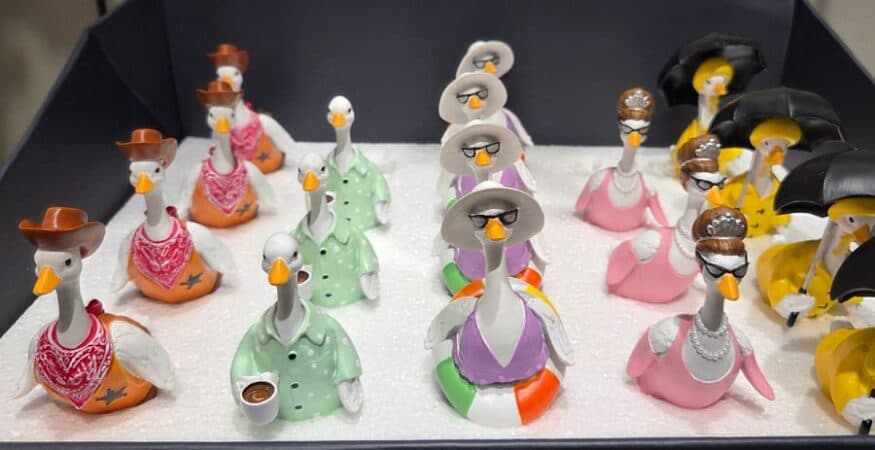
- Portrait sculptures and figurines: Facial scanning technology, now available through smartphone apps, has made it possible to translate a person's likeness into a physical object with surprising accuracy. These make genuinely remarkable gifts for milestones: a retirement, a wedding, a new baby. Expect to pay $75 to $200 for a quality single-figure print, more for multi-person compositions.
- Architectural models: For someone who just bought a house, renovated a kitchen, or built something from the ground up, a miniature architectural model of that space is a gift with almost no competition in the conventional retail market. Several online services specialize in producing these from floor plan files or photos, with prices starting around $100.
- Geometric and abstract wall art: This is perhaps the fastest-growing subcategory, driven in part by interior design trends favoring textural, three-dimensional wall installations. Modular geometric panels that can be arranged and rearranged give recipients ongoing creative control over their space. Sets start around $40 and scale upward with complexity and material quality.
Choosing Between a Service and a Home Printer
For most gift-givers, the practical question is whether to use an online 3D printing service or to print at home. Both paths are viable; they serve different situations.
Online services like Shapeways, Craftcloud, and a growing roster of regional providers handle the hardware entirely. You upload a design file (or select from a library of customizable templates), specify your material preferences, and receive a finished object in the mail. The tradeoff is turnaround time, typically five to fourteen days, and the fact that you're dependent on available design templates unless you have modeling software skills.
Home printers, led by consumer-friendly machines from Bambu Lab and Prusa, have dropped to price points between $200 and $600 for capable desktop units. They give you full creative control and same-day output, but require some learning curve and ongoing material costs. For someone who gives personalized gifts frequently, the math on owning a printer can make sense within a year or two of regular use.
For occasional gift-givers, an online service is the more practical entry point. Many services now offer design customization tools directly in the browser, no external software required, which has lowered the barrier to entry considerably.
Materials Matter More Than Most People Realize
One of the least-discussed aspects of 3D printed home decor is how dramatically material choice affects the final object's look, durability, and perceived value. PLA plastic, the most common consumer printing material, is fine for prototypes and some decorative objects but can warp in heat and lacks the finish quality of other options.
For home decor specifically, the materials worth knowing:
- Resin: Produces the highest surface detail and a finish quality closest to traditional manufacturing. Ideal for portrait sculptures and detailed figurines. More expensive and requires careful handling.
- Nylon (SLS-printed): Durable, slightly matte, and capable of fine detail without the brittleness of resin. A strong choice for planters, vases, and objects that will be handled regularly.
- Metal-infused filament or sintered metal: Available through professional services rather than home printers, these materials produce objects with genuine weight and warmth. A small sculpture or keepsake printed in bronze-infused material reads as a premium gift in a way that plastic simply does not.
- Wood-infused PLA: A composite that produces a surface texture with visible grain, well-suited to home decor pieces where a natural material aesthetic is desirable.
The Bigger Picture for Personalized Gifting
What 3D printing represents for the gift market is not just a new production method but a genuine shift in what's possible to give. The constraint that once limited personalized objects to engraving and embroidery, surface-level customization applied to a standard underlying form, no longer applies. The form itself can now be custom.
That changes the gift-giving calculation at a fundamental level. An object that could not have existed without the specific person in mind is, almost by definition, more meaningful than one that was manufactured by the millions and selected from a shelf. As the technology continues to improve in resolution, material variety, and accessibility, the ceiling on what a thoughtful person can give keeps rising.
This article was produced by Prism’s automated news system from verified source data, official records, and press releases, then run through automated quality and moderation checks before publishing. The system is built and supervised by the people who set the standards it runs under. Read our full AI policy.
Did this article answer your question?