AI and Phygital Experiences Drive Hyper-Personalization in Gifting Trends
Hyper-personalization and phygital experiences are reshaping how we give gifts, with AI now doing the emotional heavy lifting.
Gifting has always been personal, but "personal" used to mean adding a name to a mug or monogramming a tote bag. What Trend Hunter's early-March 2026 market analysis makes clear is that we've crossed into something fundamentally different: a moment where artificial intelligence and phygital experiences, those that blend physical objects with digital layers, are converging to create gifts that feel genuinely, almost unsettlingly tailored to the recipient.
This isn't a fringe forecast. Trend Hunter's Top 60 Market Trends roundup for March 2026 flagged hyper-personalization as one of the dominant signals emerging right now, and if you've been paying attention to what's actually landing well as a gift lately, you already feel it. The generic, catch-all present is losing ground. What people remember, what actually earns that "how did you know?" reaction, is specificity.
What Hyper-Personalization Actually Means in 2026
Personalization used to be a surface-level gesture. Engrave a name, pick a favorite color, done. Hyper-personalization goes several layers deeper: it uses behavioral data, preferences, past experiences, and in increasingly common cases, AI-driven insight to produce something that reflects who a person actually is rather than just what their name looks like in a serif font.
Think about what this looks like in practice. A gift isn't just a leather wallet stamped with initials; it's a wallet configured to the exact card slots, ID window placement, and slim-fold style that someone's actual daily carry requires, identified through a short AI-assisted quiz or drawn from a wishlist they didn't even know they'd been curating. The object is the same category of thing it always was. The intelligence behind it is entirely new.
For gift-givers, this shift is clarifying rather than complicated. You're not being asked to become a data analyst. You're being given better tools to act on what you already know about someone you care about.
The Phygital Layer: When a Gift Has a Second Life
Phygital, that slightly awkward portmanteau of physical and digital, describes products and experiences that exist meaningfully in both realms. In gifting, this is becoming one of the most exciting and emotionally resonant categories available.
A phygital gift might be a custom illustrated portrait that ships as a high-quality print but also unlocks a digital animation of the same image. It might be a personalized children's storybook where the physical copy is accompanied by an AR experience that brings the illustrated characters to life through a phone camera. It might be a curated vinyl record that includes a QR code linking to a playlist the giver built specifically for the recipient, with a handwritten note about why each song was chosen.
The power here isn't novelty for its own sake. The physical object provides weight and permanence, something to hold and keep. The digital layer adds depth, interactivity, and the ability to update or expand the gift over time. Together, they create a gifting experience that a single-channel present simply can't replicate.
AI as the Gift Editor You Didn't Know You Needed
The most practical application of AI in personalized gifting right now is curation and matching. Several platforms are building recommendation engines that go well beyond "people who bought this also bought" logic. They're analyzing the relationship between giver and recipient, the occasion, the budget, and increasingly, a set of inputs about the recipient's personality, interests, and current life stage.
For someone who genuinely struggles with gift-giving, this is transformative. The anxiety of getting it wrong, of giving something that signals you don't really know the person, is real. AI-assisted personalization reduces that risk by helping you articulate what you already intuitively know about someone and translate it into a specific object or experience.
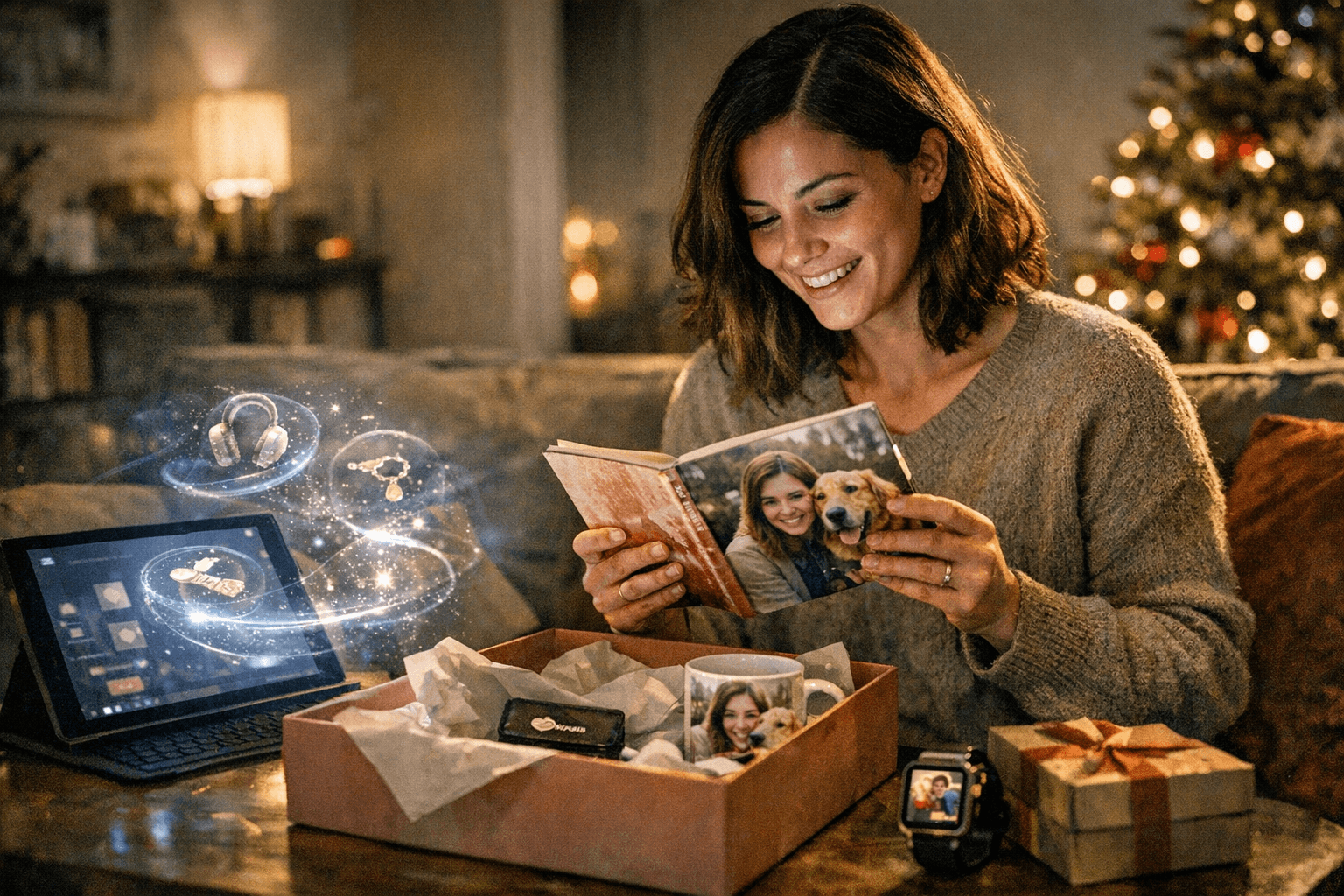
The best use of these tools isn't to outsource the emotional work of gifting entirely. It's to use them as a starting point, a first edit, and then apply your own judgment on top. AI might surface a custom star map from the night of a couple's first date as a wedding gift idea. Whether you know that date and whether it carries meaning is still entirely human territory.
What to Actually Give: Personalized Gifts Worth Choosing Now
Given where these trends are landing, here are the categories delivering the most impact:
- Custom illustrated portraits: Commission-based illustrators on platforms like Etsy offer hand-drawn or digitally painted portraits from photos. Prices range from $40 for a simple line drawing to $300+ for a detailed, framed oil-style digital painting. Best for: milestone birthdays, anniversaries, new parents.
- AI-generated personalized books: Services like Wonderbly and Lost My Name have been in this space for years, but newer entrants are using AI to make the personalization far more granular, weaving in specific nicknames, inside jokes, and relationship details. Prices typically run $35 to $65. Best for: children, new couples, close friendships.
- Phygital experience gifts: A weekend cooking class that includes a custom printed recipe book personalized with the recipient's dietary preferences and style runs roughly $120 to $200. The physical takeaway and the live experience make it land harder than either would alone.
- Personalized fine jewelry: A custom birthstone ring or a necklace engraved with coordinates of a meaningful place sits in the $80 to $400 range depending on metal and maker. This category has been strong for years, but AI-assisted design tools are making fully custom pieces accessible at non-custom prices.
- Curated subscription boxes built around a personality profile: Several newer services ask deep-dive questions about the recipient before building a box. Not the generic "coffee lover" box, but something genuinely assembled around a specific person. Expect to pay $60 to $150 for a one-time curated box.
Why This Moment Matters for Gift-Givers
The convergence Trend Hunter is tracking isn't just a market observation; it's a genuine shift in what gifting means culturally. As more of our lives move through digital channels, the physical gifts that cut through do so precisely because they feel considered, specific, and human. Paradoxically, AI is one of the tools making that human quality more achievable, not less.
The best personalized gift in 2026 isn't the most technologically sophisticated one. It's the one that makes the recipient feel like someone paid genuine attention to who they are. AI and phygital design are simply giving givers better materials to work with. The intention still has to come from you.
This article was produced by Prism’s automated news system from verified source data, official records, and press releases, then run through automated quality and moderation checks before publishing. The system is built and supervised by the people who set the standards it runs under. Read our full AI policy.
Did this article answer your question?