AI Tools Transform Gift Shopping With Smarter Ideas and Personalized Picks
AI gift tools are reshaping how we shop: 39% of consumers want AI help with gift ideas, and a "clickless" era is turning recommendation engines into storefronts.

Gift shopping has always carried a particular kind of pressure: the fear of choosing wrong for someone you genuinely care about. Now, a measurable shift is underway in how people handle that pressure. More shoppers than ever expect to rely on generative AI to guide their purchasing decisions, with over half of U.S. consumers planning to use genAI to shop online. The Bright-Gift guide, published March 16, 2026, frames this moment with precision: it's a practical resource for both gift shoppers and merchants, built around personalization tools, recommendation engines, and workflow automation. Taken together with Emarketer's consumer research, what emerges is a portrait of an industry mid-transformation.
What Shoppers Actually Want From AI
The data is clarifying, and it corrects a common assumption. Shoppers are especially likely to use AI when buying gifts for parents (41%), partners (39%), and children (35%), all categories associated with high-intent, premium purchases. But that enthusiasm is targeted, not total. Consumers report trying AI shopping primarily to find the best price (55%), for product discovery (39%), and another third cite gift inspiration as a motivating factor; just over 1 in 6 want a curated shopping experience, and 54% say using AI for shopping makes the activity easier.
Emarketer puts the picture in sharper focus: "Instead of handling the entire shopping journey from discovery to checkout, shoppers mostly want AI to help with coming up with gift ideas (39%) and product and price comparisons (33%)." This is the critical nuance for anyone building or evaluating these tools. Shoppers are not looking to hand over the wheel entirely. They want a smarter co-pilot for the hardest parts of the journey: inspiration and value-checking.
61% of Gen Z shoppers used AI tools to help with a purchase in the last year, according to a PayPal survey, and half of Gen Zers and 49% of millennials would hand over gift-buying responsibility to AI entirely if it meant avoiding stress, according to a Mastercard and Harris Poll survey. The appetite is real. But it exists alongside an important ceiling.
The $99 Ceiling and the Clickless Journey
Autonomy has a dollar limit. Emarketer identified what it calls "the limit": while 74% of consumers say they'd use agentic browsers to find deals or compare products, most cap what they'd let AI autonomously spend for them at $99. Agentic browsers, which search and compare on a shopper's behalf without requiring manual clicks through each page, represent the next frontier of AI-assisted shopping. But the $99 cap is a signal to brands and platform designers alike: consumers will trust AI to look, and largely to recommend, but they want final say over the transaction, especially for anything that qualifies as a meaningful gift.
This dynamic has given rise to what Emarketer calls the "clickless journey." As consumers lean into automated product recommendations and begin to trust generative AI shopping paths, the traditional discovery funnel, the one that runs from search to category page to product detail page to cart, is being compressed. Traffic to retail sites from genAI sources shot up 1,200% in February compared with July 2024, and has doubled every two months since last September, per Adobe. Recommendation engines, in other words, are becoming storefronts. The shopping decision is increasingly being shaped before a consumer ever arrives at a brand's website.
How AI Gift Finders Actually Work
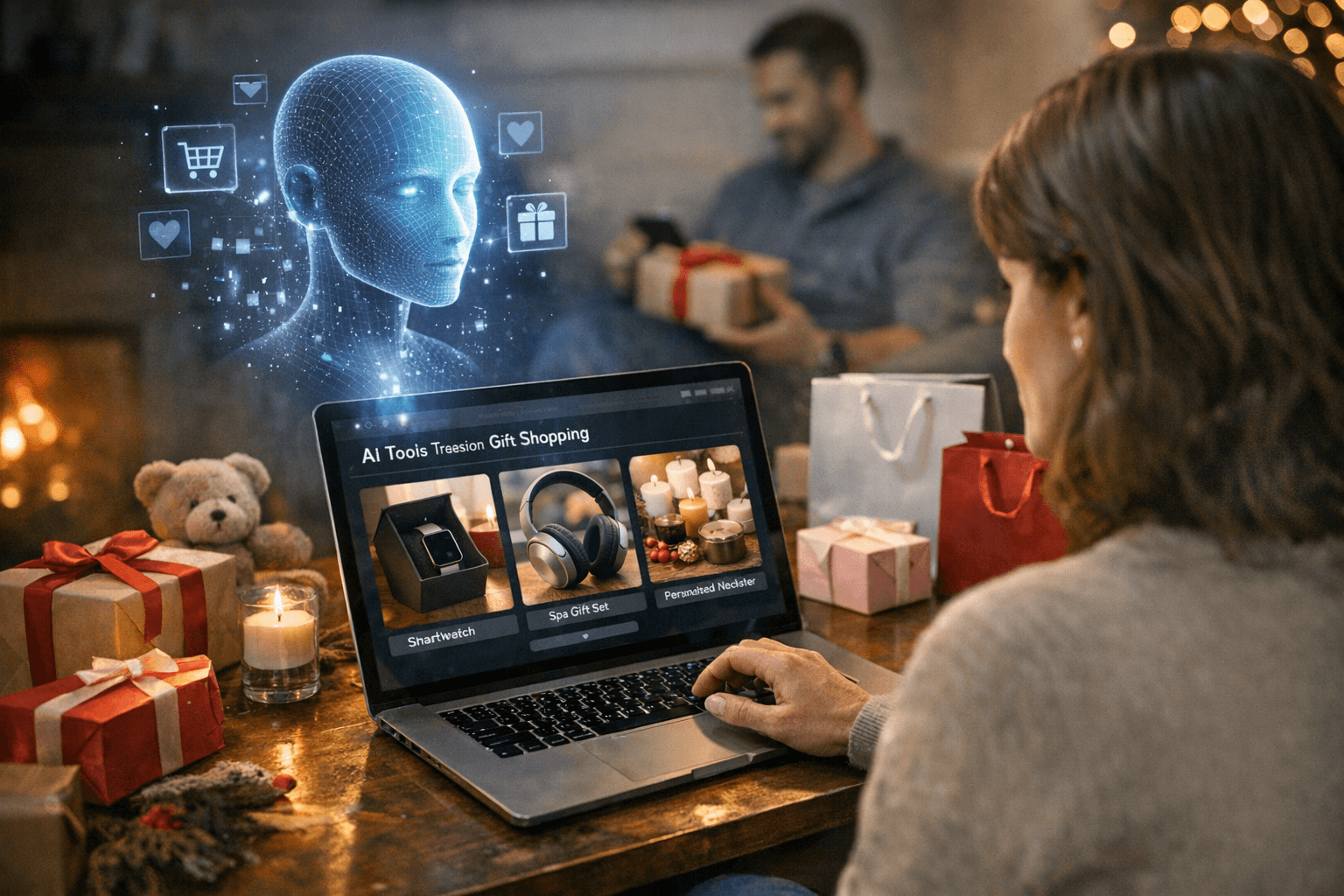
The Bright-Gift guide offers a practical explanation of the mechanics. AI gift finders transform recipient inputs into curated product suggestions, taking the information a shopper provides about the person they're shopping for and converting it into a relevant, filtered shortlist. The technology considers factors you might not immediately think of, including complementary items, trending products in a recipient's interest categories, and even seasonal availability.
The appeal lies in the technology's ability to dissect and understand complex data: AI delves into various data points, from online behavior to direct preferences shared via surveys, painting a comprehensive picture of the recipient's tastes, and by detecting patterns in data, it discerns individual preferences and makes well-informed suggestions beyond generic choices. Where a human shopper might default to a gift card when inspiration fails, an AI gift finder trained on recipient data can surface something specific and resonant.
The better tools learn from feedback. Mark options as "too expensive," "not his style," or "close but not quite," and suggestions are refined accordingly, mirroring what it would feel like to shop with a knowledgeable friend who actually knows the recipient.
What Brands Need to Do Right Now
The Emarketer analysis is unusually direct about merchant strategy, and the guidance cuts in two directions: what to show consumers, and how to structure data for the machines that now influence what consumers see.
On the consumer-facing side, the prescription is clear: "With AI becoming a trusted partner for stressful gift-buying moments like the holidays, marketers have the opportunity to frame AI features, including smart gift finders or on-site AI-powered shopping guides, as stress-reducing tools to streamline the shopping journey." The language of stress reduction resonates precisely because the pressure of gift-giving is a near-universal experience. Brands that position their AI tools as relief, rather than novelty, will connect more effectively.
During peak shopping moments, shoppers are relying less on browsing and more on asking an AI for the right answer. Because users' approaches to generative AI tools can be fragmented, marketers are working to be "agent-ready," which means placing strong product signals into formats AI already parses: creator videos, TV segments, gift guides, and social content.
On the backend, the structural work is equally urgent. Emarketer's guidance: "On the backend, brands should tailor online content, promotions announcements, and product metadata to easily surface in AI engines. As AI agents crawl for price competitiveness and relevance, the accuracy and structure of web content will become a key part of customer acquisition strategies." This is a meaningful reframe of what has traditionally been called SEO. The audience for well-structured product data is no longer only human searchers but also the AI systems that surface recommendations before a shopper ever types a query. Brands should ensure their product descriptions include keywords related to gifting occasions, recipient types, and emotional benefits; reviews that mention a product being a great gift or highlight its suitability for certain events will also be invaluable for AI-driven recommendations.
The Trust Gap Still Matters
Adoption doesn't equal full confidence. Just 43% of consumers trust information given to them by an AI chatbot or tool, according to a survey by Attest, and while that's a slight increase year over year, concerns over reliability and sourcing remain a considerable hindrance to broader genAI adoption. 2 in 5 shoppers have abandoned purchases due to inaccurate recommendations, poor chatbot experiences, and other AI-related frustrations, per an Omnisend survey.
One significant perception issue is that over three in four consumers (78%) already believe that AI shopping recommendations are influenced by advertisers, which as of January 2026 is not true. Brands building AI gift tools need to treat trust as infrastructure, not an afterthought. Accuracy in product data, transparency in how recommendations are generated, and controls that keep shoppers in the driver's seat on final purchasing decisions are not optional extras; they are the conditions under which consumers will keep coming back.
What This Shift Means for Gift-Giving
The Bright-Gift guide and Emarketer together describe something more significant than a new product category. They describe a structural change in how gifting decisions get made: less browsing, more querying; less accidental discovery, more intentional matching. Retail industry leaders see 2026 as a pivotal year in which AI disrupts the way people shop, and the gifting category, high-stakes, emotionally loaded, and often last-minute, is where that disruption will be felt first and most acutely. The recommendation engines that merchants build or optimize for today are increasingly the storefronts where holiday conversions will be won or lost tomorrow.
This article was produced by Prism’s automated news system from verified source data, official records, and press releases, then run through automated quality and moderation checks before publishing. The system is built and supervised by the people who set the standards it runs under. Read our full AI policy.
Did this article answer your question?