Cluster engagement rings rise as shoppers seek personal, ornate styles
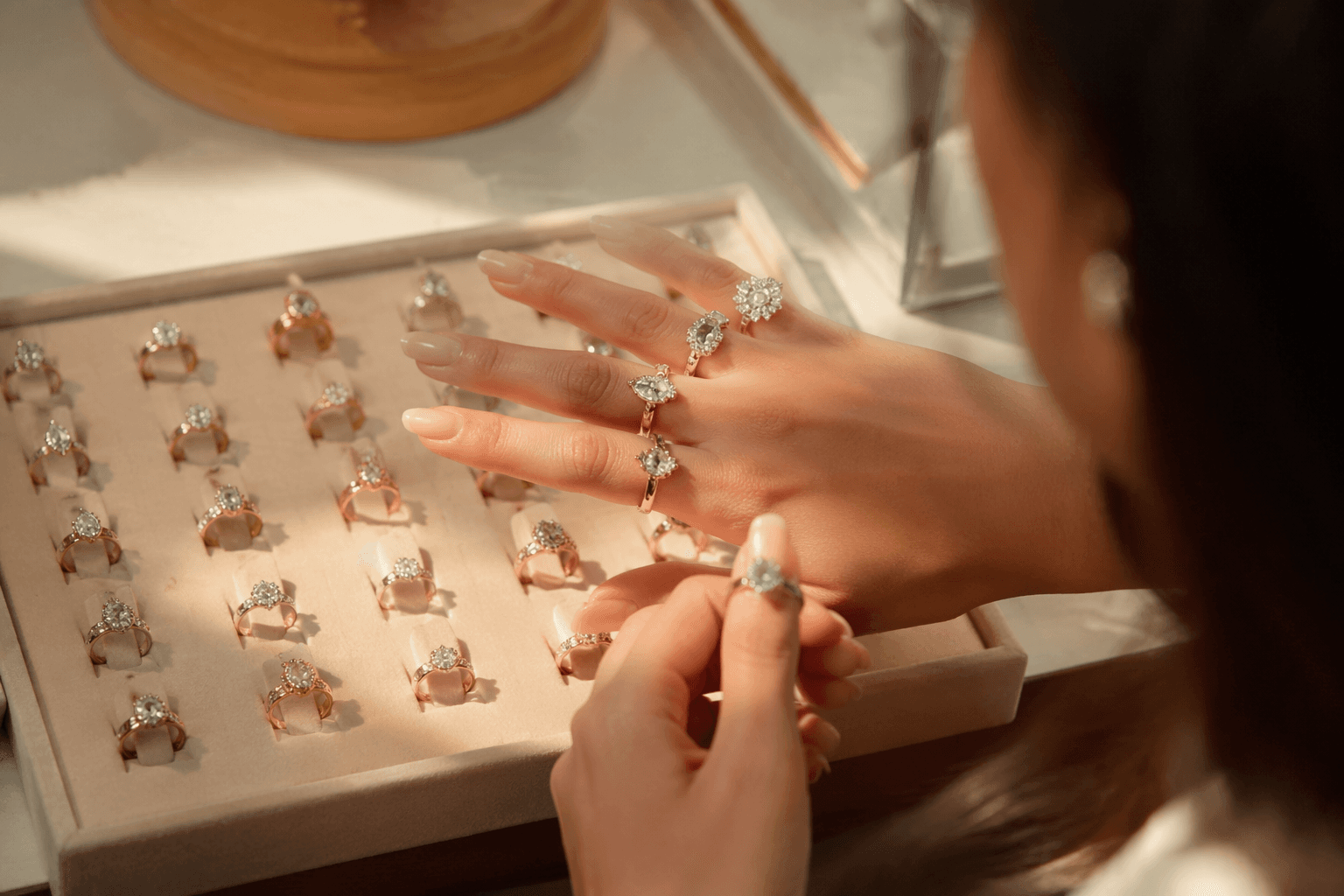
Cluster rings are climbing fast because shoppers want more personality and more sparkle for the money. The style’s appeal is self-expression, not just ornament.
Adobe Firefly prompt data shows a 112 percent jump in cluster prompts, alongside a 53 percent rise in halos and a 19 percent increase in filigree. Cluster engagement rings are back in the conversation because they make a ring feel chosen, not defaulted. Firefly first became commercially available on September 13, 2023, then returned as a broader Firefly app on February 13, 2025, which makes the prompt data a useful read on what shoppers are imagining right now.
Why the cluster feels personal
The format gives buyers room to make the ring their own. Multiple smaller stones can be mixed in shape or color, and the setting naturally accommodates a less conventional silhouette than the classic solitary center stone. The current interest is driven less by aesthetics alone and more by personalization, which is why clusters feel like a thoughtful engagement gift rather than a trend-chasing move.
Cluster designs can bring together diamonds with sapphires, rubies, or other gemstones, and that makes them a natural fit for heirloom stones, mixed-gem commissions, or a buyer who wants something with more personality than a single round brilliant.
A style with real history
The style dates to the Georgian era and runs through Victorian, Edwardian, and Art Deco variations, where multiple smaller stones were arranged to create a fuller, more elaborate appearance. Georgian clusters often used a central gemstone surrounded by smaller diamonds or gemstones, while later versions embraced more color and intricacy.
In Georgian examples, rose-cut diamonds were common, and silver settings helped create brightness; later eras brought colored stones and more ornate layouts.
The broader shift away from rigid engagement-ring rules also helps cluster rings make sense again. The old salary benchmark was a De Beers marketing invention rather than a traditional custom, which removes the pressure to treat one solitaire format as the only serious choice.
What the budget buys
Cluster rings often earn their reputation by stretching visual impact rather than raw carat weight. The style can look bigger and brighter than a classic solitaire while remaining more affordable, and that is exactly the value argument buyers respond to when they want a more ornate ring without stepping into an oversized center stone. At Brilliant Earth, a cluster setting starts at $2,090, while a petite solitaire setting starts at $790, a clean example of how added complexity and extra stones move the price upward without necessarily changing the overall feel of the ring.

That price gap is also why clusters appeal to people who want presence rather than one enormous diamond. The visual footprint is often larger than the budget suggests, which can make the ring feel more luxurious in the everyday sense: fuller, brighter, and more detailed on the hand.
Who a cluster ring suits best
- The buyer who loves color. Victorian clusters often paired diamonds with sapphires and rubies, and that tradition still works beautifully for someone who wants the engagement ring to carry more than one tone or stone type.
- The person who wants a ring with history. Georgian origins and later Art Deco influence give clusters a lineage that feels substantial, not invented for the season. If the wearer is drawn to antique references, this format offers them in a way that still reads current.
- The practical dresser. Some cluster rings sit lower on the finger than solitaire styles, which can make them easier to wear every day, even when the setting still has serious sparkle.
- The buyer who wants a ring that looks custom. At Brilliant Earth, shoppers can start with a setting or a stone, and custom cluster designs start at $2,000. That makes the category especially strong for people who want control over silhouette, metal, and gemstone mix instead of a one-note preset.
How to buy one well
The best cluster rings do three things at once: they flatter the hand, make the center of the design read clearly, and avoid feeling overbuilt. If you like antique character, look toward yellow or rose gold and stone groupings inspired by Georgian and Victorian examples. If you want a cleaner, more modern profile, keep the cluster tight and the palette restrained.
The 2026 engagement-ring market is moving toward story-driven, individualized designs, from antique cuts and colored stones to sculptural settings.
This article was produced by Prism’s automated news system from verified source data, official records, and press releases, then run through automated quality and moderation checks before publishing. The system is built and supervised by the people who set the standards it runs under. Read our full AI policy.
Did this article answer your question?