Handmade personalized gifts lean into nostalgia, texture and bold design in 2026
Personalized gifts are shifting from decorative extras to useful keepsakes, with crochet, embroidery and nostalgia-rich textures doing the heavy lifting.
The handmade gift now has to earn its place
The best personalized gifts in 2026 do more than carry a name or a monogram. They feel like something a person will actually use, touch, pack, wear, or keep within reach, which is why the most compelling handmade pieces are leaning into texture, memory, and utility at the same time.
That shift matters because the market is no longer treating personalization as a novelty. It has become a baseline expectation, especially in categories where the emotional value has to match the practical one. A gift that looks custom but lives in a drawer is losing ground to the piece that feels one-of-one and still gets used every week.
Why nostalgia is back, but not in a dusty way
Etsy’s Spring and Summer 2026 Seller Trend Report, published March 17, 2026, puts gifting and occasions, decor and style, and wedding trends at the center of the season. On Etsy’s trend pages, crochet, embroidery, and stitched textures are framed as a major moment, especially with Gen Z, and the look is described as one-of-one and suited to layering and dancing. That is a useful clue for gift givers: softness is back, but it is being sharpened by design.
WGSN’s 2026 consumer forecast points to nostalgia as a continued force in shopping behavior, and not just in the sentimental sense. The bigger idea is emotional familiarity, the kind that makes a small object feel loaded with memory. WGSN also pushes brands to celebrate small accomplishments, or “minorstones,” which is exactly where handmade gifting is headed: birthdays, promotions, new apartments, first homes, push presents, anniversaries, and the tiny wins that deserve more than a generic card.
For gift givers, that means borrowing from the past without making the result feel old-fashioned. Think stitched texture over flat surface, heirloom cues over loud branding, and objects that can live in the home or on the body instead of sitting untouched on a shelf.
The materials and motifs that make a gift feel considered
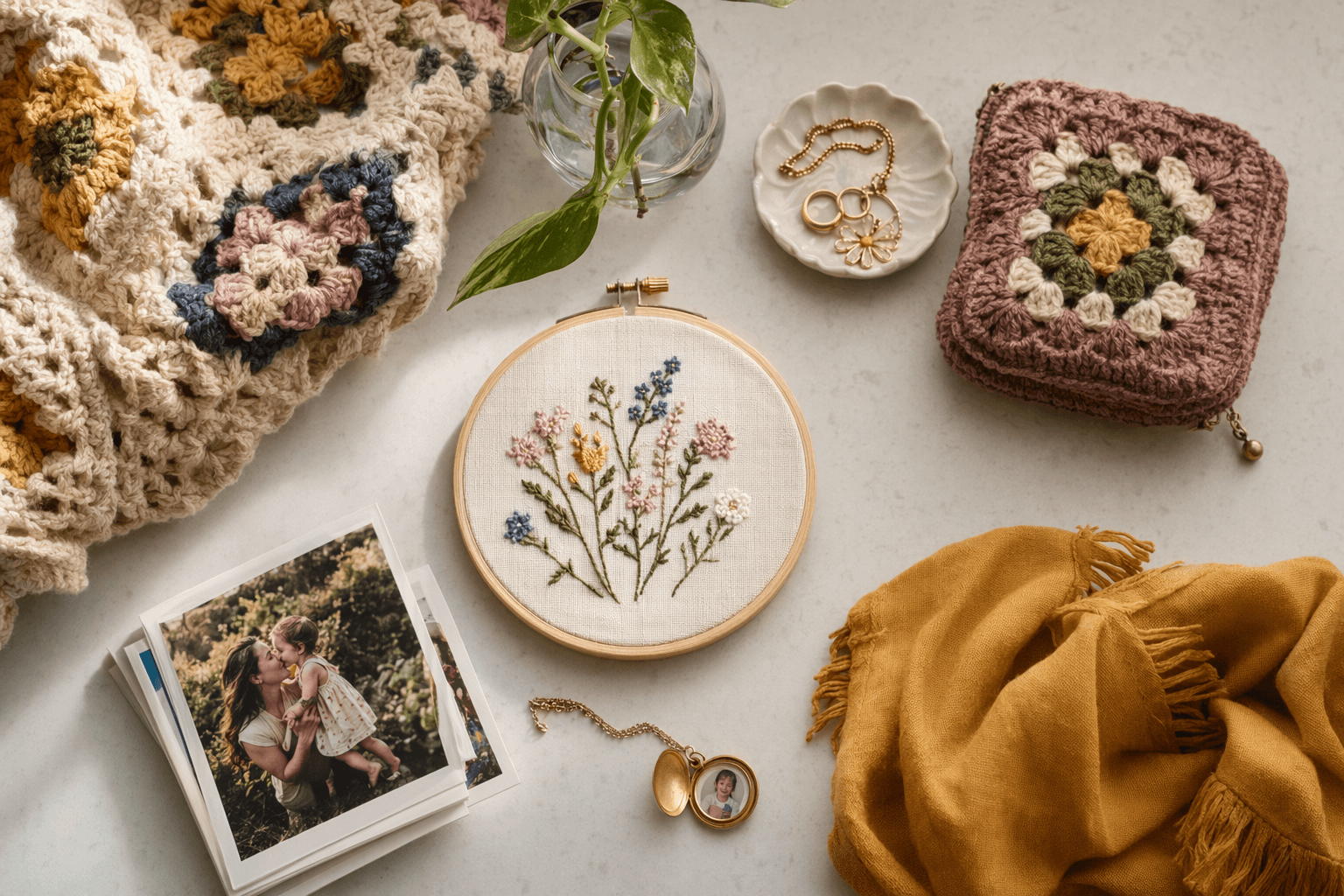
The strongest handmade gifts are increasingly built around touch. Crochet and embroidery matter because they signal time, labor, and care in a way that machine-smooth finishes cannot match. Stitched textures also carry a visual softness that reads personal before it reads precious, which is one reason they are resonating across age groups and especially with younger shoppers.
If you are making or buying personalized gifts right now, borrow these cues:
- Favor stitched surfaces, hand-finished edges, and visible construction. They make the gift feel intentionally made, not just customized.
- Use motifs that suggest memory, home, or ritual, such as florals, initials, lucky symbols, house shapes, heart shapes, or simple recurring patterns.
- Choose color stories that feel bold but usable. The trend is not shy, but the best versions still work with everyday life.
- Build in a practical function first. A gift that stores jewelry, organizes cords, carries groceries, holds cosmetics, or frames a favorite photo has staying power.
This is where the “one-of-a-kind but practical” standard becomes clear. The handmade object has to solve something, whether that is keeping essentials together or turning an ordinary routine into a small daily ritual.
Why the DIY ecosystem is strong enough to support the trend
This is not a niche craft fantasy. Mintel says 72 percent of U.S. adults completed a craft in the past 12 months, and 73 percent participated in a crafting project in the past year. That is a large enough base to explain why personalized, handmade gifting keeps expanding beyond hobby circles and into mainstream retail behavior.
It also helps explain why gift recipients have become more fluent in craftsmanship cues. They can tell when something is thoughtful versus merely decorated. A handmade pouch with a carefully chosen lining, a stitched keepsake box, or an embroidered accessory feels more generous when the making shows up in the final object.
For makers, that means the opportunity is not just in selling custom products. It is in selling better taste, better finishing, and better storytelling. If the piece carries a name, date, or inside reference, the personalization should feel integrated, not pasted on.
What the broader gift market says about the moment
The National Retail Federation projected that U.S. holiday retail sales would surpass $1 trillion for the first time in 2025, and said consumers planned to spend an average of $890.49 per person on holiday gifts, food, decorations, and other seasonal items. Those numbers show why retailers are paying close attention to gifts that feel memorable enough to justify a place in a crowded cart.
Etsy’s own business signals reinforce the same direction. On February 19, 2026, the marketplace said it returned to slight gross merchandise sales growth in the fourth quarter of 2025 and expected GMS growth in fiscal 2026. That gives more weight to what the trend pages already suggest: handmade and customized goods are not drifting to the margins, they are becoming part of the core shopping expectation.
Dayna Isom Johnson has become one of the public faces of that shift, translating trend language into something gift givers can actually use. The point is not simply that handmade is fashionable again. It is that people want gifts that feel emotionally specific and useful enough to enter real life, not just impress for the first five minutes.
How to turn the trend into a better gift today
The smartest way to shop this trend is to match texture with function. If the recipient loves jewelry, think about an embroidered roll, tray, or pouch instead of another decorative box. If the person is always on the move, look for a crocheted or stitched tote, laptop sleeve, or travel case that makes the craft visible without compromising usefulness.
The same rule applies to milestone gifts. A new baby, a new home, a wedding, or a career leap all call for something that marks the moment and still earns its keep. Personalized gifts feel luxurious when they are specific, tactile, and built to be used often. That is the real shift in 2026: the handmade gift is no longer trying to prove it was made by hand. It is proving that care, practicality, and story can live in the same object.
This article was produced by Prism’s automated news system from verified source data, official records, and press releases, then run through automated quality and moderation checks before publishing. The system is built and supervised by the people who set the standards it runs under. Read our full AI policy.
Did this article answer your question?