Personalization at Scale Is Now a Non-Negotiable Consumer Expectation in 2026
Fast Company named "personalization at scale" a top 2026 consumer trend, declaring it no longer optional — here's what's driving the shift and what it means for gifting.
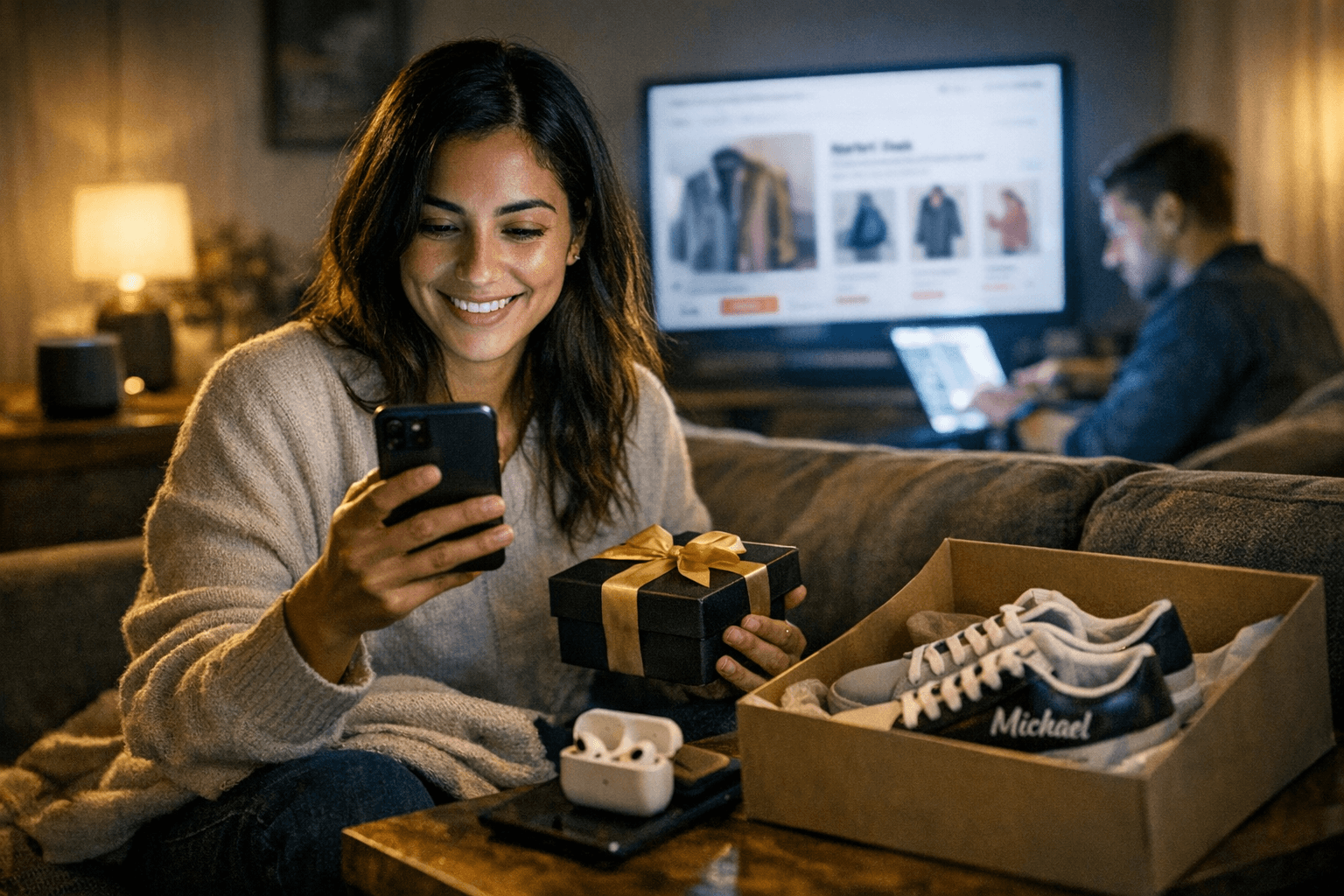
Fast Company's Executive Board published a piece on March 13, 2026, naming "personalization at scale" among five high-level consumer trends that business leaders cannot ignore this year. The framing was unambiguous: personalization has moved from "nice-to-have to a non-negotiable expectation." For anyone in the gifting space, that phrase carries real weight. It signals a fundamental recalibration in how consumers relate to the things they give and receive, and it puts pressure on every brand still treating customization as a premium add-on rather than a baseline requirement.
Why Personalization Is Now Non-Negotiable
The cultural shift toward personalized giving did not happen overnight, and COVID-19 played a measurable role in accelerating it. The pandemic fast-tracked digital adoption and heightened awareness around personalized gifting, pushing consumers toward online platforms at a moment when physical connection was limited and the emotional stakes of sending a gift felt particularly high. That behavior, once formed, did not reverse. Consumers who discovered they could order a monogrammed keepsake or a custom-printed item from their phone during a lockdown did not forget the experience when life reopened.
Underneath the technology story is a more human one: personalized items "often carry sentimental value," and the rising importance of experiential and emotionally meaningful gifts has become one of the primary forces shaping consumer preferences. People are increasingly unwilling to give, or receive, something generic when a small amount of additional effort can transform an object into a memory. That emotional dimension is what separates a gift from a purchase, and it is exactly what personalization delivers.
How Technology Made Personalization Affordable
For years, the friction point in personalized gifting was cost. Customization required skilled labor, minimum order quantities, and longer production timelines, which pushed prices up and kept bespoke gifts in a relatively niche, premium market. AI and automation have significantly changed that equation by lowering production costs and enhancing customization capabilities, making personalized gifts more accessible and affordable across a far broader consumer base.
This is arguably the most consequential development in the personalized gifts market: the democratization of bespoke. When the cost barrier drops, the expectation gap closes. Consumers who previously accepted a generic gift because a personalized one was prohibitively expensive now have no reason to settle. Brands that do not offer meaningful customization options risk appearing inattentive rather than merely limited.
The Channels Driving Reach: E-Commerce, Social Media, and Digital Infrastructure
The supply-side improvements in personalization would mean little without the distribution infrastructure to reach consumers at scale. The proliferation of e-commerce platforms and social media marketing has expanded the reach of personalized gift providers, facilitating direct engagement with target audiences in ways that were structurally impossible for small or mid-size customization businesses a decade ago. A maker of hand-stamped jewelry in one city can now serve customers across continents, photograph their process for an audience on social platforms, and fulfill orders on demand.
Increased digital penetration rounds out the demand side of this equation. As more consumers operate primarily through digital channels for discovery, comparison, and purchase, the personalized gifts market benefits disproportionately because the digital environment is where personalization tools (configurators, preview tools, name-input fields) work most fluidly. The combination of expanded reach and improved digital infrastructure has made "personalization at scale" technically achievable for providers of almost any size.
The Technology Roadmap: AR, Blockchain, Predictive AI, and Smarter Manufacturing
The next frontier moves well beyond what is already standard. Emerging technologies including AI-driven virtual try-ons, augmented reality, and blockchain for authenticity verification are positioned to enhance transparency and customer confidence in personalized products. The virtual try-on application is particularly relevant for gifting: imagine previewing how an engraved bracelet looks on a wrist, or how a custom print reads on a specific canvas, before committing to an order. AR reduces the guesswork that makes personalized gifting feel risky when you cannot inspect the item in person.
Blockchain's role in this ecosystem addresses a different anxiety: provenance and authenticity. For high-value personalized or commemorative pieces, the ability to verify that a product is exactly what the maker claims adds a layer of confidence that matters enormously to the buyer. It also positions personalized gifting more credibly within the luxury and fine goods space, where verification has long been a commercial differentiator.
On the production side, the innovation pipeline includes advanced materials for sustainable and eco-friendly products, alongside smarter manufacturing processes that enable on-demand, localized production. The on-demand model is especially significant: it removes the need for speculative inventory, reduces waste, and allows providers to fulfill highly specific customization requests without the overhead of traditional batch manufacturing. AI's role in predictive analytics extends this capability further, enabling companies to anticipate trends and customize offerings proactively rather than simply reacting to what consumers already know they want.
What Companies Should Do Now
The strategic imperatives emerging from this landscape are specific and actionable. Prioritizing investments in AI, AR, and sustainable manufacturing is the competitive baseline, not a stretch goal. Alongside technology investment, emphasizing data-driven insights and customer-centric design will be crucial in delivering tailored experiences that feel genuinely personal rather than algorithmically assembled.
Operationally, strategic collaborations with technology providers and a focus on omnichannel retail strategies will enhance both market reach and operational efficiency. A gifting brand that operates exclusively on one channel, whether a single e-commerce platform or a single retail format, is structurally limited in its ability to meet consumers where they are. The omnichannel imperative is especially acute in gifting, where discovery often happens on social media, research moves to a website, and fulfillment sometimes runs through a physical retail partner.
Fostering innovation through R&D and adopting flexible manufacturing processes will enable rapid adaptation to changing trends, a capability that matters more in a personalization-forward market than in categories with slower product cycles. Consumer taste in personalized gifting shifts with cultural moments, relationship milestones, and aesthetic cycles, and the brands best positioned to capture that demand will be those that can pivot quickly without rebuilding their production infrastructure from the ground up.
The future outlook for the personalized gifts industry is, by the available assessment, "highly optimistic, with continuous innovation expected to redefine personalization standards." Consumer expectations are moving toward more immersive and emotionally resonant experiences, and the technology to deliver them is advancing faster than most legacy gifting businesses have moved to adopt it. The brands that treat personalization as infrastructure rather than a feature will be the ones still relevant when the next five trends are named.
This article was produced by Prism’s automated news system from verified source data, official records, and press releases, then run through automated quality and moderation checks before publishing. The system is built and supervised by the people who set the standards it runs under. Read our full AI policy.
Did this article answer your question?