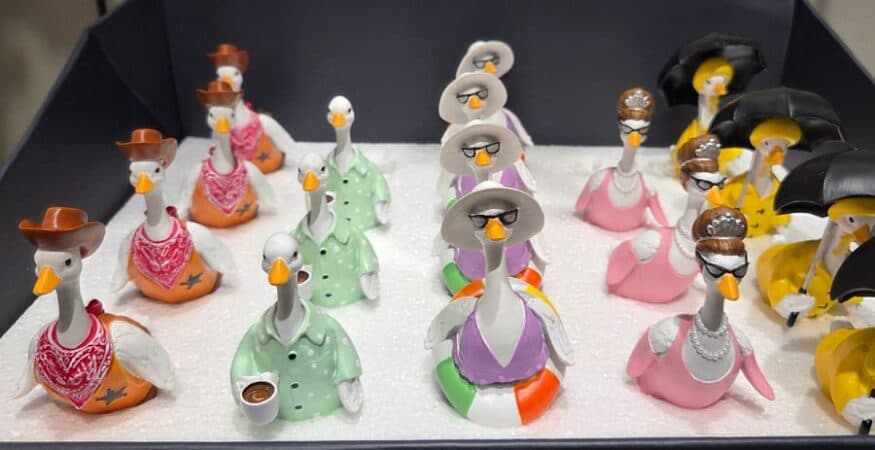
Personalized gifts and experiences drive 2026 holiday spending growth
Personalized gifts are winning because they leave a keepsake, feel intentional, and fit holiday, wedding, and corporate budgets better than generic experiences.

The new luxury is specificity
A good gift does two jobs at once: it creates a memory and leaves something behind. That is why personalized gifts are beating the old split between an experience and an object, especially when the occasion is a birthday, a wedding, a client thank-you, or the winter holidays.
The market backs that up. The personalized gifts category is projected to grow from $30.79 billion in 2025 to $33.49 billion in 2026, and another estimate places it at $34.03 billion in 2026. That kind of scale says this is no longer a niche idea for sentimental shoppers. It is a mainstream buying pattern, powered by e-commerce, printing and engraving technology, and a steady preference for gifts that feel unique and memorable.
Why the category keeps growing
The appeal of personalization is practical as much as emotional. It turns a generic purchase into something that feels selected with care, and that matters in a season when people are trying to spend wisely without looking careless. The strongest gifts now are not necessarily the most expensive ones. They are the ones that look as though they were made for one person, one household, or one very specific relationship.
That is also why customization pairs so naturally with sustainability. A well-made object that gets used for years is easier to justify than a disposable novelty, and the market for corporate gifting is already shifting in that direction. Nearly 56% of corporate buyers now prefer eco-friendly and sustainable gifts, which suggests that buyers are looking for presentation, durability, and values in the same package.
Holiday shoppers are still spending, but they are choosing more carefully
The National Retail Federation’s 2025 holiday data shows that consumers planned to spend an average of $890.49 per person on holiday gifts, food, decorations, and other seasonal items, while 91% said they planned to celebrate the winter holidays. By early December 2025, shoppers had completed just over half of their holiday shopping on average. That is a useful reminder that the season still has real momentum, but the gift has to feel right quickly.
Personalized gifts solve that problem because they make the choice legible. A monogram, an engraving, a custom message, or a bespoke detail says the giver knows the recipient well enough to make a decision with confidence. In a crowded holiday market, that clarity is worth more than flash.
When a keepsake beats a pure experience
Experiences are having a strong moment because consumers are prioritizing memories and connection over generic goods. But the smartest gifts often bridge the gap between the two. A dinner, class, trip, or tasting becomes more meaningful when it is paired with a physical object that can stay in the home or on the desk after the day is over.
That is where personalized products beat pure experiences for birthdays and weddings. Birthdays call for something that reflects identity, routine, or a private joke the recipient will understand immediately. Weddings ask for something that feels shared and lasting, which is why customization works so well for the home. The gift does not just mark the occasion; it becomes part of the couple’s new life together.
Corporate gifting is where personalization becomes strategy
Nowhere is the case for personalization clearer than in corporate gifting. The American Marketing Association has long pointed to the value of thoughtful, uniquely selected gifts in building customer relationships and future purchase intentions. In one cited corporate-gifting survey, 88% of people said they would trade in a corporate gift for something else, while 70% said thoughtful, uniquely selected gifts would encourage them to do business with a company.
That is a sobering statistic for anyone still treating corporate gifts as filler. The message is simple: a generic gift can be ignored, but a personal one can influence loyalty. When paired with sustainable materials or a low-waste presentation, it can also signal that a company understands modern expectations rather than merely satisfying a seasonal obligation.

The brands shaping the mood understand the same thing
Etsy’s holiday trend edit captures the emotional center of the category with unusual clarity. The season, it says, is about personal expression and gifts that feel “seen,” or “made to feel uniquely you.” That is exactly why personalized pieces keep outperforming the bland middle of the market: they feel emotionally edited.
Mailchimp’s holiday report, based on a survey of 9,356 respondents across multiple countries including the United States, Canada, and the United Kingdom, points marketers in the same direction. Personalization tactics help maximize revenue because people respond to offers that feel relevant rather than generic. Shopify’s 2026 retail trend reporting extends that logic into loyalty, emphasizing individualized rewards, personalized experiences, and brand experiences as the kind of touches that keep customers coming back.
What feels current now
The most current gifts are the ones that balance meaning with restraint. A personalized object should feel durable, useful, and designed for real life. It should not look like decoration for decoration’s sake. The strongest combinations are also the simplest: a customized gift that can be used often, kept for years, and tied to a specific moment without feeling overly formal.
That is why personalized and experiential gifts are not competing so much as converging. The best choice is often an experience with a physical keepsake, or a personalized object that marks an occasion the recipient will remember. For birthdays, weddings, and corporate gifting alike, that combination feels more thoughtful, more sustainable, and more worth giving than anything that could be sent to anyone.
This article was produced by Prism’s automated news system from verified source data, official records, and press releases, then run through automated quality and moderation checks before publishing. The system is built and supervised by the people who set the standards it runs under. Read our full AI policy.
Did this article answer your question?