Personalized rings are now a must-have for modern couples
Personalized rings have moved from nice extra to table stakes. The real challenge is scaling custom touches without missing the proposal date.
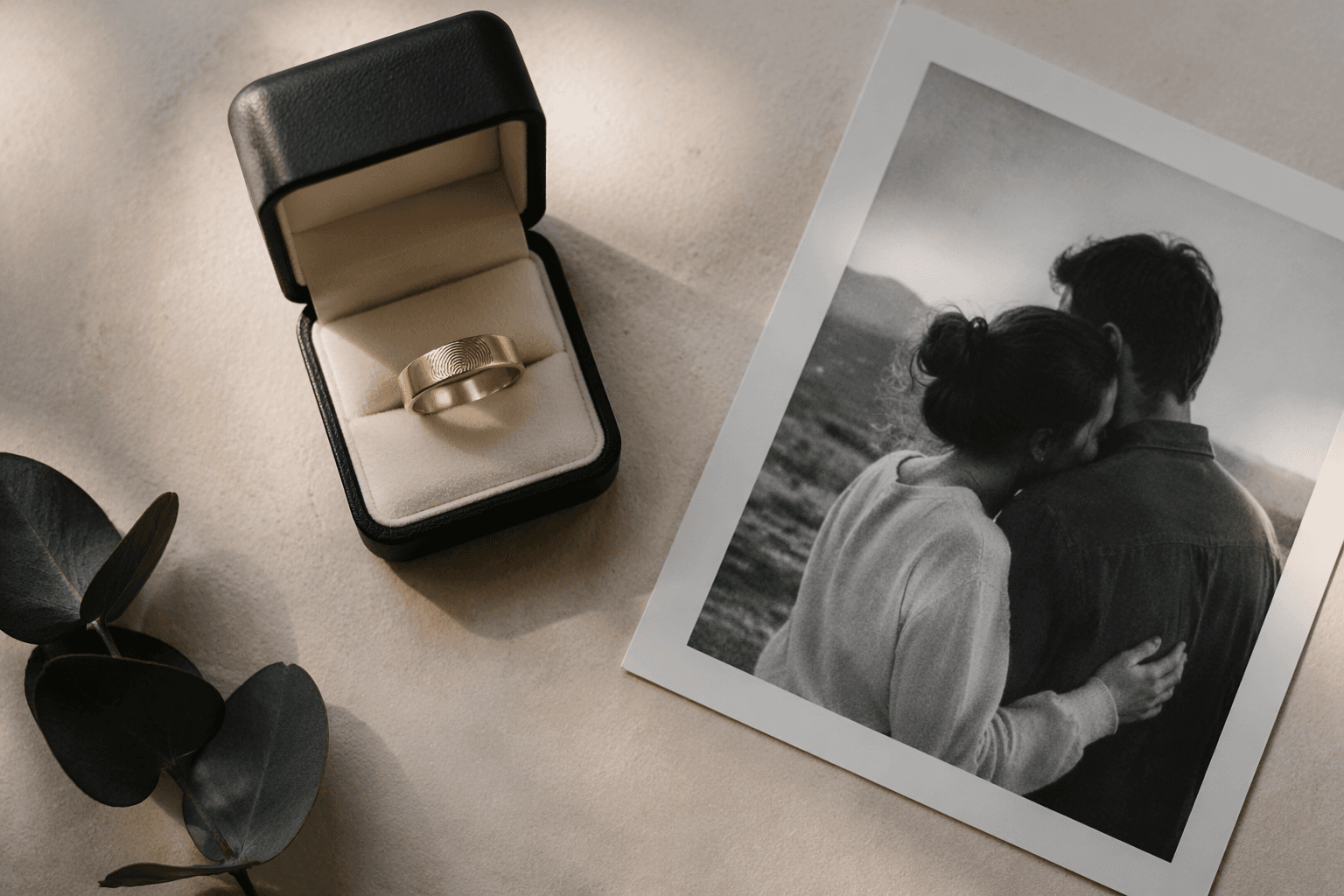
The modern engagement ring is no longer just a diamond and a deadline. It is a custom order, often built around initials, hidden engravings, mixed metals, and stone pairings that make the piece feel private before it ever gets wrapped. That shift has pushed personalized jewelry from a niche request into the center of how couples shop, spend, and decide what counts as special.
Personalization is the new baseline
Rapaport’s coverage of custom jewelry production gets the point right: buyers are not simply marking an occasion anymore, they are buying meaning. Initials, hidden engravings, distinctive stone combinations, mixed metals, and other small design decisions now shape whether a ring feels generic or unmistakably personal. In practice, that means the add-ons are no longer add-ons. They are part of the product story.
Helzberg’s 2025 Engagement & Ring Shopping Survey makes the demand impossible to ignore. In a survey of 1,000 U.S. adults ages 20 to 40, conducted online from July 24 to Aug. 13, 2025, 76% said they would invest more for a customized ring, and 47% said the ability to customize was very important. Brad Hampton, Helzberg’s chief executive, said couples want “a ring that feels uniquely theirs,” and he tied that shift to Gen Z’s habit of discovering ideas socially and communicating more directly with partners. He is describing a very practical change in the market: customization is now part of the value equation, not a bonus.
The channel split matters too. Helzberg found that 83% of respondents wanted to shop in-store, while 56% wanted the option to buy online. That is a useful reminder for anyone buying a ring as a gift or as a joint decision: people want both the intimacy of a store visit and the speed of digital browsing, because personalized jewelry now lives in both places at once.
The buying process has become a shared project
The Knot’s Real Weddings Study 2026 shows how far that shift has gone. It found that 79% of ring recipients were involved in the ring process, 64% of proposers bought in person, and 57% started searching more than six months out. The average engagement-ring spend was $4,600, with an average carat weight of 1.9 carats. That is a serious budget and a serious runway, which is exactly why personalized rings have become such a meaningful category for modern couples.
For anyone choosing a ring, those numbers change the way you think about timing and expectations. A six-month shopping window gives room for custom settings, engraving, and stone sourcing. It also explains why the best gifts in this category feel collaborative rather than mysterious. The ring is less about springing a surprise and more about getting the details right.
The style cues are getting more specific
The look of personalized bridal jewelry is expanding alongside the process. JCK has tracked rising interest in east-west settings, toi et moi designs, asymmetrical silhouettes, bold bands, antique-cut stones, colored center stones, mixed metals, and nontraditional stacks. Gen Z’s social-media exposure is a big part of that momentum, because feeds reward rings that look slightly unexpected from across a room and unmistakably individual in a close-up.
That matters when you are picking a gift for someone who has strong taste. A classic solitaire still has its place, but the momentum is clearly with styles that let the wearer make a statement through shape, metal, and stone combination. Mixed metals are especially useful for someone who switches between yellow gold and platinum jewelry. Colored center stones work for a person who wants something less conventional than a white diamond. Toi et moi and east-west settings are for the buyer who likes the ring to look like it has a point of view.
The hidden challenge is making custom feel effortless
The hard part is not adding a name or engraving a date. The hard part is keeping the whole system from wobbling once every order becomes a bespoke request. Design workflow has to move quickly enough to handle initials, engraving proofs, and stone-mix decisions without making the customer feel like she is waiting on a factory floor. Sourcing has to keep up with the appetite for colored center stones, antique cuts, and mixed-metal builds. Production capacity has to absorb the extra steps. Quality assurance has to catch the mistakes that can ruin a permanent engraving or an inscription. Fulfillment has to land on time, because a ring is usually tied to a fixed moment, not an open-ended shopping cart.
That is why permanent marking has long mattered in the category. De Beers said Forevermark reached 1 million diamond inscriptions in 2014, a milestone that shows how deeply provenance and personalization have been linked in fine jewelry for years. The difference now is scale. What used to be a premium touch on select pieces is becoming the expectation across the bridal market.
Signet Jewelers, which owns KAY, Zales, Jared, and other banners, said in 2021 that 80% of bridal customers in its surveys expressed interest in some customization for their bridal or wedding rings. It also said customers could design jewelry from scratch, build from pre-selected features, or work one-on-one in-store with a bridal expert. That is the model the category is drifting toward: enough structure to keep production efficient, enough flexibility to preserve the one-of-one feel.
Why this matters for the ring you actually buy
At the current scale of the market, the brands that win will be the ones that can keep the custom experience polished without turning it into a bottleneck. Statista projects worldwide jewelry revenue at US$408.64 billion in 2026, which explains why personalization is being treated less like a styling detail and more like a growth strategy. The winners will not just be the houses with the prettiest settings. They will be the ones that can promise a ring that feels singular, then deliver it cleanly, accurately, and on time.
This article was produced by Prism’s automated news system from verified source data, official records, and press releases, then run through automated quality and moderation checks before publishing. The system is built and supervised by the people who set the standards it runs under. Read our full AI policy.
Did this article answer your question?