Personalized Wedding Gifts Rise as Shoppers Favor Crafted, Durable Keepsakes
Shoppers are bypassing registry crystal for laser-engraved keepsakes as personalized wedding gifts surge in a global market now estimated at $34 billion.
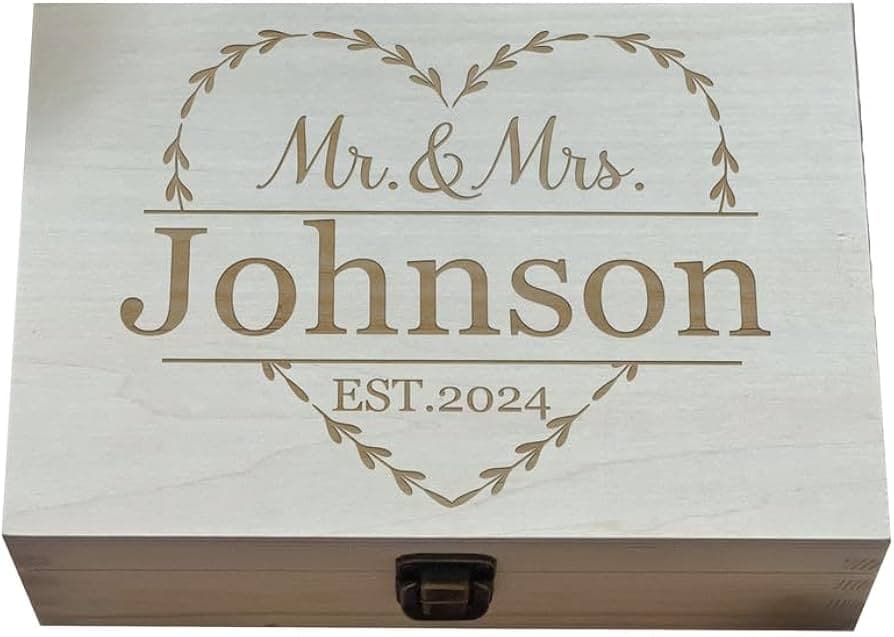
The engraved keepsake box has quietly displaced the crystal vase as the wedding gift of the moment. Across gift guides and editorial roundups compiled this April, a consistent pattern has emerged from wedding gifting coverage: couples are receiving fewer generic formal items and more handcrafted, personalized pieces built to outlast the thank-you notes.
The categories drawing the most attention are specific: locally sourced gift baskets, engraved keepsake boxes, handcrafted kitchen tools, and artwork personalized to the couple, such as custom renderings of a wedding venue with the newlyweds' names and date. What connects these choices is permanence. Each carries a detail that makes it functionally impossible to regift, and that specificity is precisely the appeal. Guides curated this season by CT Insider and BuzzFeed both converged on this same cluster of recommendations, signaling that the shift from decorative to durable is no longer a niche preference.
The timing tracks with broader market movement. The global personalized gifts sector is estimated at $34.03 billion in 2026, on a trajectory toward $61.66 billion by 2035 at a compound annual rate of 6.7%. In the United States, the segment was valued at $9.69 billion in 2024 and is projected to reach $14.56 billion by 2030. Wedding occasions rank among the primary demand drivers, alongside anniversaries and birthdays.
Independent sellers have positioned themselves at the center of this shift. Small-batch artisans, Etsy studios, and independent makers are fielding strong wedding season demand for laser engraving and debossing across wood, leather, glass, and metal. These are permanent personalization methods, meaning the name or date pressed into a cutting board or etched into a glass carafe is not a sticker or a printed label but a structural part of the object itself. That distinction matters to shoppers who want a gift that reads as intentional. Nearly 50% of wedding attendees give an off-registry gift, according to The Knot's 2024 Real Guests Study, which means a significant portion of the market is actively seeking something that feels more considered than a scanned barcode.
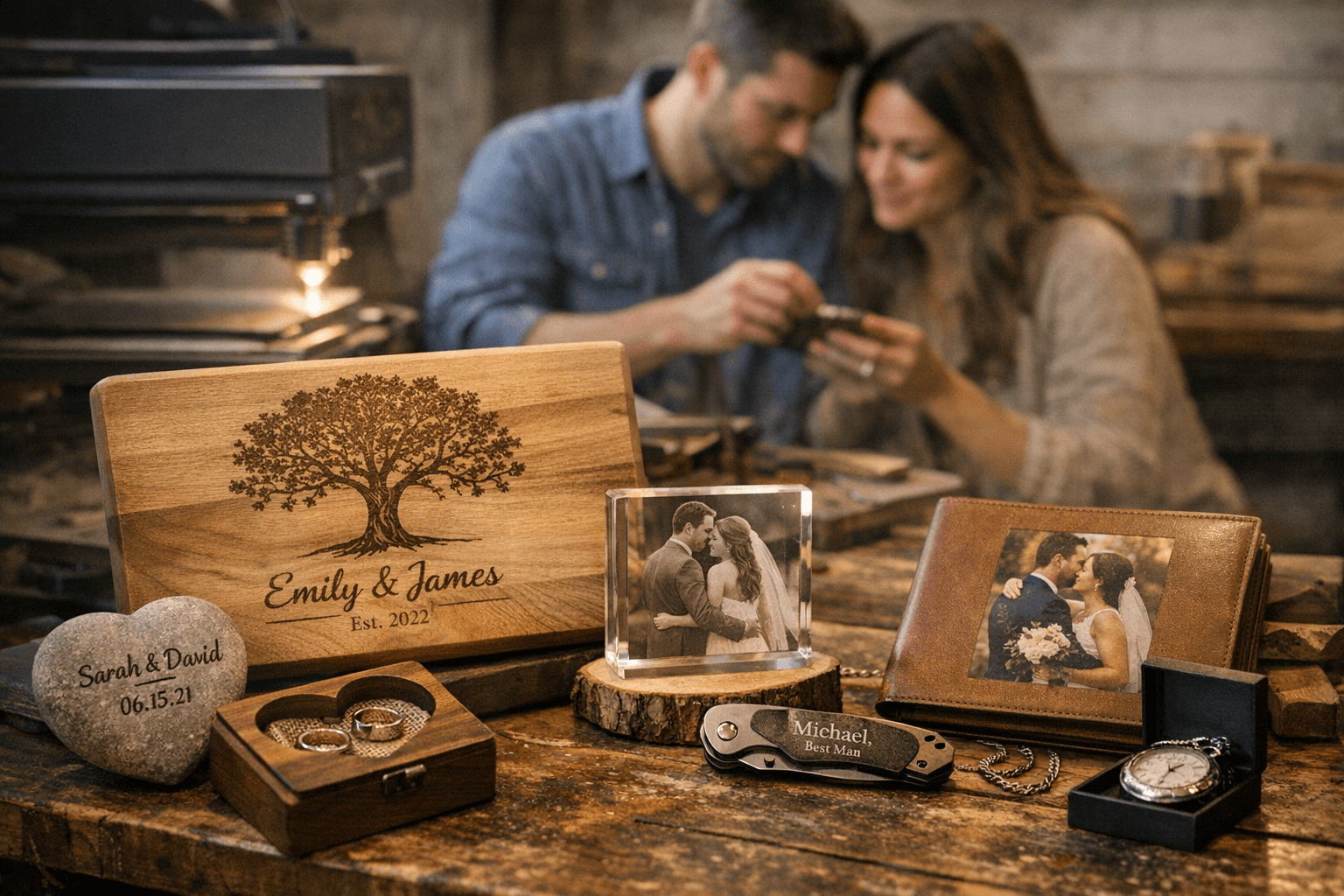
The average wedding gift costs around $150, with most shoppers spending between $50 and $200. Within that range, personalized kitchen tools and keepsake boxes from independent makers compete favorably with department store alternatives, particularly when the product page communicates the maker's process and the personalization method clearly. Research across the gifting sector has found that 70% of recipients view personalized gifts as evidence of deeper emotional investment from the giver, a dynamic that carries particular weight in wedding contexts.
For vendors, lead times have become a competitive differentiator. Wedding purchases are deadline-driven, and shoppers choosing between two comparable engraved pieces will frequently choose the one with the clearer production and shipping timeline. Storytelling on product pages, specifically about the craft behind the personalization, is also emerging as a conversion factor in a category where the method is as meaningful as the product.
This article was produced by Prism’s automated news system from verified source data, official records, and press releases, then run through automated quality and moderation checks before publishing. The system is built and supervised by the people who set the standards it runs under. Read our full AI policy.
Did this article answer your question?