Sotheby’s blue diamond winner can create a bespoke jewel
Sotheby’s $8.7 million blue diamond win comes with a rarer perk: the buyer can turn it into a bespoke jewel. At this level, personalization is the status signal.
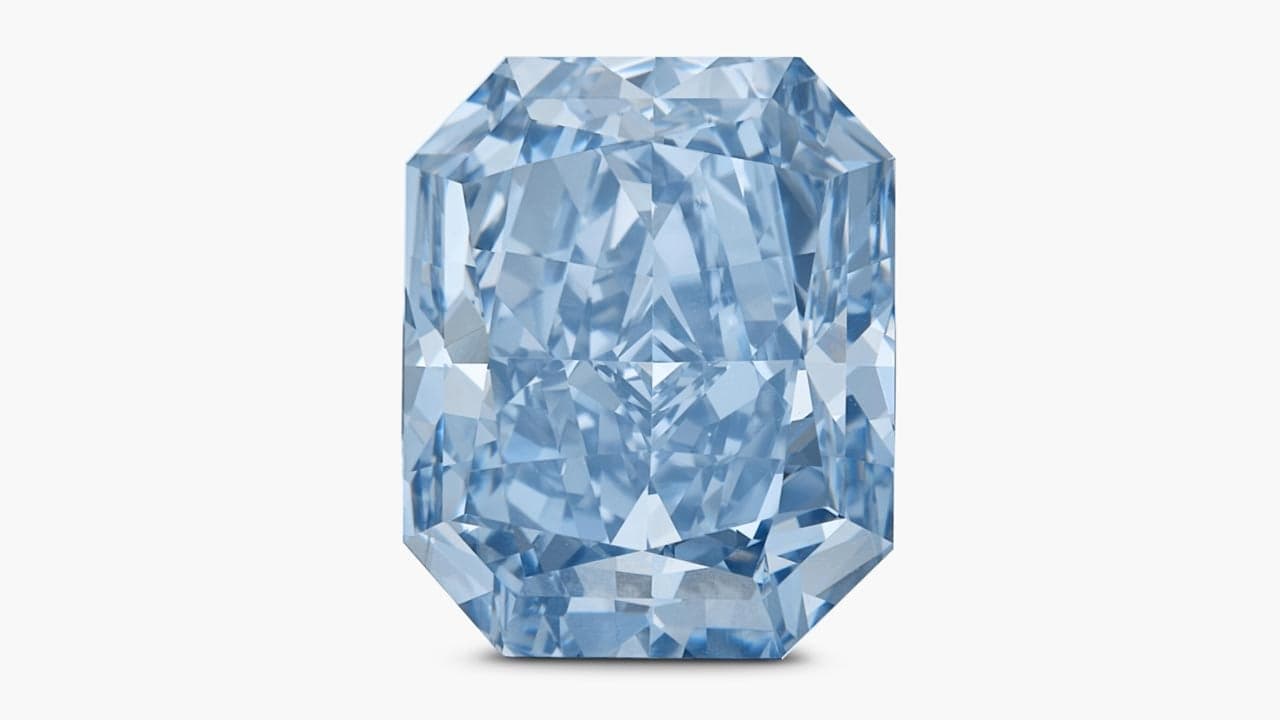
The best part of Sotheby’s blue-diamond sale is not the $8.7 million hammer price. It is the follow-through: the winning bidder can turn the 10.02-carat stone into a bespoke jewel through Sotheby’s Bespoke, which makes this feel less like an auction lot and more like the most expensive gift brief in the room. The June 16 New York High Jewelry auction included 119 lots, and the top five jewels were all colored diamonds, a neat snapshot of where the top of the market is placing its money.
The real luxury move is what happens after the bid
The headliner was a 10.02-carat, fancy-intense-blue, VS2-clarity, cut-cornered rectangular modified brilliant diamond, a stone Rapaport said carried an estimate above $6 million. It sold for $8.7 million and ended up as the highest-priced jewelry lot sold in the New York spring auction season. That matters because personalization at this level is not about choosing between two settings. It is about taking one of the rarest materials in the room and deciding exactly how it will be worn, gifted, and remembered.
This is the kind of gift that works when the object itself has to do more than sparkle. It has to mark a sale of a company, a marriage, a birth, a milestone birthday, or a family chapter where an ordinary luxury watch or bracelet would feel too easy. The stone becomes the raw material for a story, and the custom design turns that story into something permanent.
Why blue diamonds carry so much heat
Blue diamonds sit in a class of their own because the color comes from trace amounts of boron in the diamond lattice, which is a rare geological accident, not a styling trick. Sotheby’s says only five blue diamonds over 10 carats had come to auction at the time cited in its De Beers Blue material, and none were above 15 carats. That is the kind of scarcity that changes how collectors talk about a jewel. It stops being an accessory and starts looking like an event.
The Mediterranean Blue is the clearest recent benchmark. The 10.03-carat fancy vivid blue diamond sold in Geneva on May 13, 2025 for $21.5 million after a nearly three-minute bidding battle. JCK identified the buyer as an American private collector and said the rough was found in 2023 at the Cullinan mine in South Africa, then studied for more than a year before it was shaped. For anyone trying to understand why a blue diamond can become a gift object with almost mythic cachet, that sequence says it plainly: rarity, patience, expertise, and the right buyer.
What Sotheby’s Bespoke actually offers
Sotheby’s Bespoke launched in late summer 2025, and National Jeweler described it as the first and only custom jewelry design service from a major auction house. Sotheby’s presents it as a private, meticulously tailored high-jewelry journey, one that can reimagine a cherished heirloom or create an entirely original masterpiece. In practice, that means the buyer is not just choosing a jewel from a case. They are working with gem specialists and master artisans to shape the final object around a specific person or occasion.
That is the part that makes this story useful beyond the auction room. Sotheby’s says the service offers complete design flexibility, and its own examples go well beyond blue diamonds. One scenario is sourcing a 20-something-carat D-flawless emerald cut diamond for a ring; another is turning that center stone into a matching necklace. For a family gift, that kind of flexibility is the difference between buying something precious and commissioning something that actually belongs to the recipient’s life.
The other reason this matters is institutional. Sotheby’s says the service is reserved for its most discerning clients, drawing on its 280-year history and global network of workshops and suppliers. At the top end of the market, that history is not decorative. It is what reassures a buyer that the stone, the setting, and the workmanship will all live up to the price.
Who a jewel like this is really for
This is not the gift for someone who wants a pretty box on a holiday morning. It is for the person who already has the conventional luxury boxes checked and cares more about provenance, rarity, and control. Think of the collector who values a 10.02-carat fancy-intense-blue diamond the way others value a first edition, or the partner who wants an anniversary piece that no one else can duplicate.
It is also a smart model for commemorative gifting because personalization at this level does real work. A re-set family stone can preserve history without feeling dated. A newly commissioned jewel can turn a record-setting auction result into a future heirloom. And because the buyer can collaborate on the design, the finished piece can do something most luxury purchases cannot: it can carry the exact memory the giver wants attached to it.
Why the market is leaning this way
The June 16 sale tells the larger story. A 119-lot New York auction headlined by a blue diamond and surrounded by other colored stones is not just a coincidence of inventory. It is a sign that the top of the jewelry market is rewarding objects with clear identity, visible rarity, and a backstory that can survive the leap from auction catalog to private collection. Forbes called the 10.02-carat diamond the highest-priced jewelry lot sold during the New York spring auction season, which helps explain why this kind of object gets attention far beyond the usual collector circles.
That is the shift worth watching for gifting. Personalization is no longer a soft luxury cue. At the highest level, it is a power signal: the buyer can source the rare stone, commission the design, and decide exactly how the final jewel will be worn. In other words, the gift is not just the diamond. It is the authority to turn a diamond into something singular.
This article was produced by Prism’s automated news system from verified source data, official records, and press releases, then run through automated quality and moderation checks before publishing. The system is built and supervised by the people who set the standards it runs under. Read our full AI policy.
Did this article answer your question?