Top Personalized Promotional Gift Trends Shaping Business Gifting in 2026
Forget logo pens — business gifting in 2026 is about NFC notebooks, nostalgic building sets, and drinkware that earns a permanent spot on someone's desk.
Business gifting has always been about visibility, but the logic behind what actually works has shifted dramatically. The promotional products earning real estate on desks, in gym bags, and on kitchen counters in 2026 share a common thread: they combine genuine utility with a layer of personalization that feels considered rather than corporate. The days of disposable tchotchkes are giving way to a more thoughtful approach, one built around durability, emotional resonance, and increasingly, technology.
The enduring dominance of everyday drinkware
Custom drinkware continues to be the most popular promotional product category in 2026, and the reason is almost embarrassingly simple: people use these items every day, often multiple times. A branded ceramic mug sitting on a desk generates impressions during every meeting, every coffee break, every video call background appearance. An insulated tumbler carried on a commute becomes a walking billboard with legs. Businesses deploy them across onboarding kits, retail promotions, and corporate gifting precisely because they deliver consistent impressions and have universal appeal — few gifts work as well across such a wide range of recipients and contexts. When you need something that will not end up in a donation pile by February, drinkware remains the safest and most effective bet in the category.
Sustainable luxury: bamboo, textiles, and the reusable bag renaissance
The tension between premium quality and environmental responsibility has largely dissolved in 2026's most forward-thinking gifting programs. Companies increasingly prefer functional, long-lasting promotional gifts including bamboo office essentials and promotional textiles, treating sustainability not as a compromise but as a selling point. Reusable bags, in particular, have grown even more popular as sustainability becomes a priority for consumers. These bags offer oversized imprint areas and are constantly seen in grocery stores, offices, gyms, and public transportation, meaning a single bag generates ongoing brand exposure across every errand and commute. Companies deploy them for trade shows and thank-you gifts because they are highly practical at a low cost per impression.
The underlying business case is straightforward: eco-conscious items show your brand cares about more than business results. Choosing recycled, responsibly sourced, or reusable merchandise helps reduce waste and strengthens your reputation as a forward-thinking organization. That positioning matters increasingly to both employees evaluating company culture and clients who apply the same values lens to their vendor relationships.
Phygital gifting: when a notebook connects to the internet
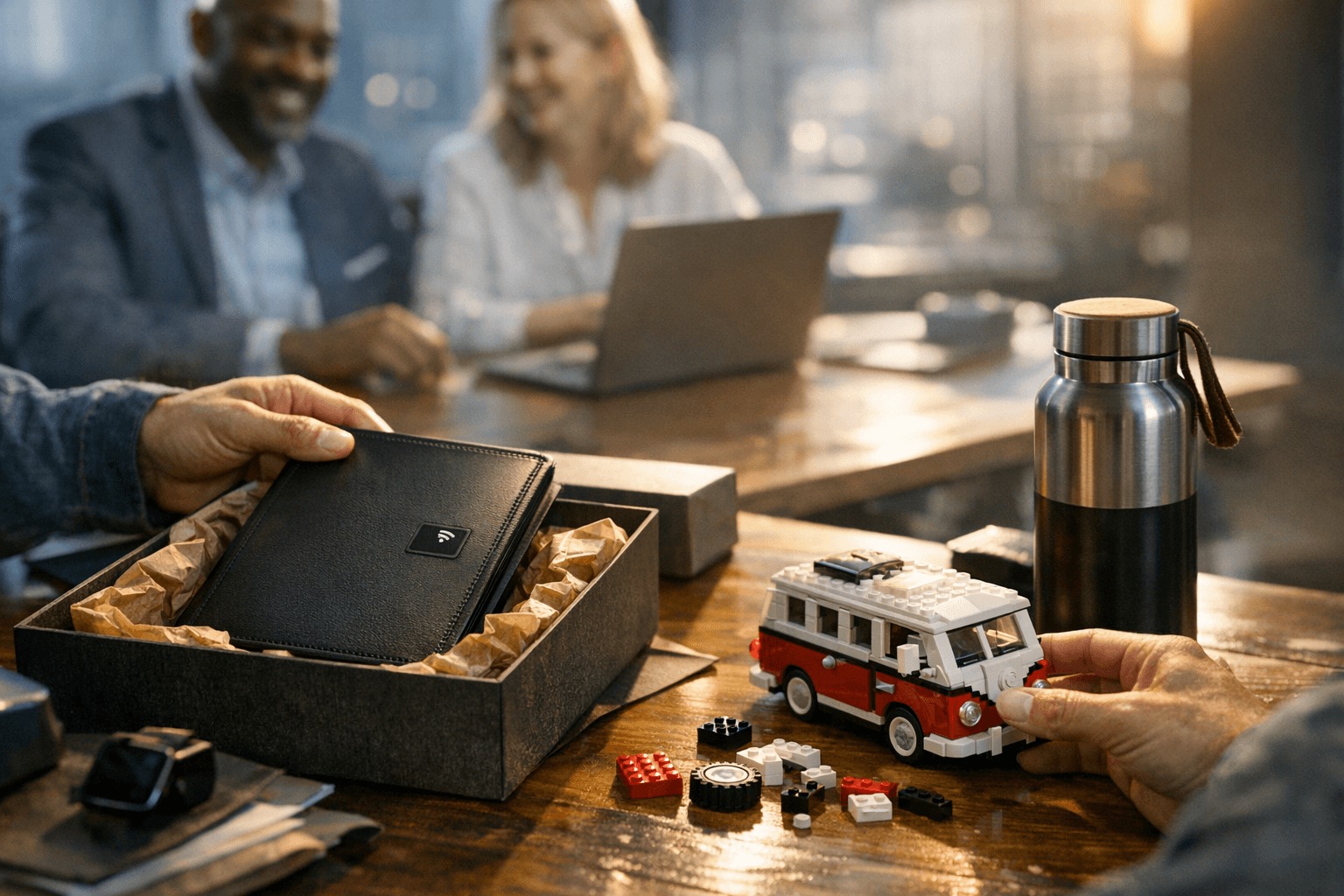
The most technically ambitious trend reshaping promotional products right now is what the industry calls "phygital" gifting — the fusion of physical and digital elements. These gifts use technology like QR codes or NFC tags to unlock exclusive digital experiences or personal video messages, adding a layer of interactivity that makes the unboxing process much more memorable and engaging. The concept sounds abstract until you encounter a specific example: packaging that unlocks a personalized "thank you" video from the CEO, or an NFC-enabled notebook that syncs handwritten notes to digital devices.
Other executions include physical items that grant access to exclusive online workshops or events, and interactive AR labels that tell the story of a gift's origin. The practical effect is that a single physical object becomes a portal to something larger, turning a promotional item into an experience. For distributed teams where in-person moments are rare, that kind of memorable touchpoint carries outsized weight.
Nostalgia and play: the surprising morale driver
One of the more counterintuitive findings in 2026's gifting landscape is how effectively playful, nostalgic items are performing in professional contexts. Items that evoke warmth and comfort provide a welcome relief from high-pressure work, and these gifts add a human touch to professional relationships that helps build a more approachable and friendly company culture. The logic is not sentimental — it is strategic.
The specific products leading this trend are imaginative in execution:
- Custom building block sets that represent company milestones or projects
- Vintage-inspired notebooks and pens with modern functionality
- Playful desk toys that serve as stress relievers during difficult tasks
- Branded board games or puzzles for team-wide relaxation sessions
- Retro-designed stationery that triggers warmth without sacrificing practicality
A custom building block set commemorating a product launch or company anniversary does something a branded pen cannot: it tells a story, invites interaction, and stays on the desk because it is genuinely enjoyable to handle. That staying power is the whole point.
High-end tech, wellness, and curated kits
The top corporate gift trends for 2026 focus on hyper-personalization, sustainable luxury, and mental wellness. Professionals increasingly want high-quality corporate gifts that offer long-term utility, and the category of premium tech gadgets sits at the intersection of all three priorities. Tech accessories land well because they are genuinely useful and visibly quality-conscious in a way that generic branded items are not.
Curated self-care kits and specialized gift boxes have emerged as particularly effective tools for strengthening professional relationships across distributed teams. When a remote employee or a client in another city receives a thoughtfully assembled box of eco-friendly office essentials and wellness items, the physical object communicates investment and care in a way that a digital message cannot replicate. Companies that have leaned into this format report meaningful improvements in employee retention and relationship quality with distributed partners. Comfort items like candles or branded socks might sound modest, but their practicality and alignment with the broader wellness focus make them reliable inclusions in curated kits.
Food-based items: the shareability advantage
Custom-wrapped chocolates, branded popcorn bags, and personalized snack boxes create instant delight and a strong emotional impact in a way that durable goods simply cannot. These products are particularly effective for conferences and seasonal gifting campaigns because they trigger an immediate, positive response. Critically, people often share edible treats with colleagues, families, or roommates, extending your brand's visibility well beyond the initial recipient. A single personalized snack box can generate multiple brand impressions across an afternoon in a shared office, which represents exceptional value for the cost.
Custom notebooks and journals: the quiet workhorse
Custom notebooks and journals remain a stable, dependable category in business gifting, and their versatility makes them a reliable anchor in gift packages. They pair naturally with vintage-inspired pens for a nostalgic bundle, serve as the physical object in NFC-enabled phygital executions, and appeal broadly enough to work across industries and seniority levels.
How to choose what to send
The practical framework for navigating all of this starts with a question Mondaymerch frames well: are you recognizing employees, thanking clients, or promoting at events? Each objective points toward a different product profile. Employee recognition calls for something personal and high-quality — a premium tech accessory or a curated wellness kit signals genuine appreciation in a way a commodity item does not. Client gifting benefits from items with strong daily visibility, like drinkware or a well-designed notebook. Event promotion rewards practicality and portability, where eco-friendly tote bags with large imprint areas carry the most consistent ROI.
Across all three contexts, the consistent principle is choosing items that combine practicality with personality, selecting high-quality, functional products that reflect a brand's values rather than just broadcasting a logo. In 2026, the promotional products that actually work are the ones recipients want to keep — and that distinction, more than any specific product category, is what separates effective business gifting from wasted budget.
Know something we missed? Have a correction or additional information?
Submit a Tip