U.S. Personalized Gifts Market Surges Toward $14 Billion by 2030
The U.S. personalized gifts market hit $9.69B in 2024, driven by AI design tools that now let shoppers see a live preview before checkout, with $14.56B projected by 2030.

The U.S. personalized gifts market registered $9.69 billion in 2024 and is on track to reach $14.56 billion by 2030, compounding at 7.03% annually. The number signals something more precise than gift-giving inflation: shoppers are paying more deliberately, steering away from off-the-shelf options toward items built specifically for one person. That shift in intent, not just volume, is what makes the growth durable.
Technology is the engine underneath it. High-speed laser engraving and digital textile printing have compressed what once took two weeks into two days, sometimes overnight. AI-assisted design tools, now embedded in platforms like Shutterfly and Personalization Mall, generate live previews of an engraved wine glass or monogrammed throw before checkout, replacing guesswork with visual confirmation. Fewer surprises on delivery means fewer returns, higher satisfaction scores, and repeat purchases at the next occasion.
Home décor and accessories hold the largest slice of category share at 21.8%. Personalized wall art, engraved clocks, and name-engraved signs are the top performers within that group, most commonly bought for weddings, anniversaries, and housewarmings. Non-photo personalization, meaning customization through engraving, embroidery, etching, and embossing rather than photograph prints, remains the dominant product type overall. Photo-based gifting is the faster-growing segment, driven by mobile camera quality and one-click upload features that have made the format far less cumbersome than it was five years ago.
The competitive landscape has split into two distinct lanes. Shutterfly, Etsy, Personalization Mall, Cimpress, and Hallmark compete for scale and breadth; boutique and artisan sellers are targeting narrower demographics, including eco-conscious buyers and tech-forward millennials, with sharper value propositions. A 2025 Shopify analysis found that 73% of buyers prefer products made from responsibly sourced materials when options are presented side by side; for personalized goods specifically, that preference is stronger because the item reads as a gift rather than a commodity. Suppliers have responded fast: recycled metals in jewelry, FSC-certified wood, organic cotton apparel, and bamboo-based home décor have moved from niche to mainstream across print-on-demand catalogs.
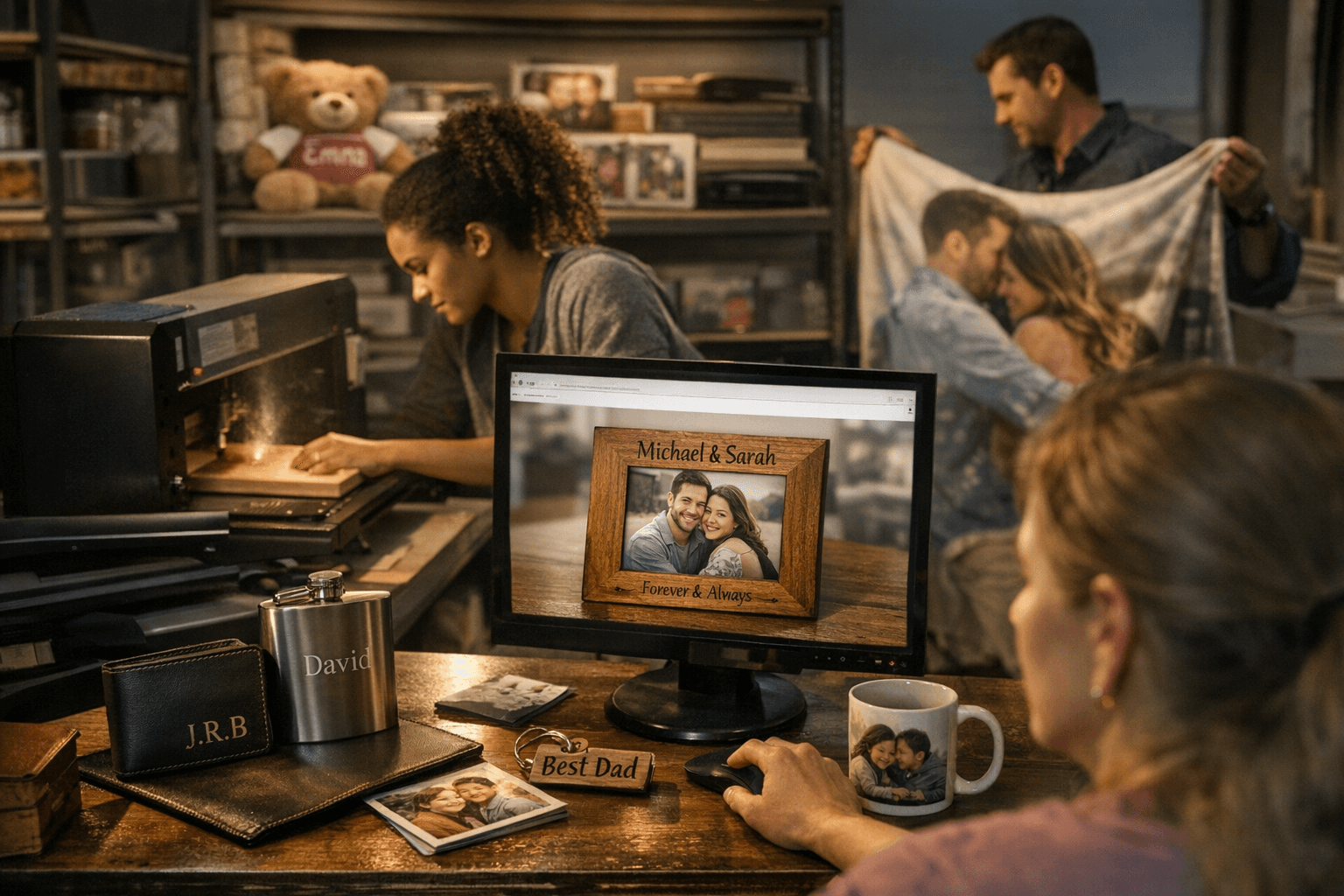
Online retail is where the volume is consolidating. The digital channel in U.S. personalized gifting is growing at a CAGR above 7%, supported by faster logistics and mobile-first checkout design. With mobile commerce projected to account for 59% of all online retail in 2025 and climbing toward 63% by 2028, designing and ordering a custom item from a phone in under three minutes is no longer a competitive differentiator; it is the baseline expectation.
Four questions reliably separate a memorable gift from an expensive-looking afterthought: how specific the personalization actually is (a shared memory or inside reference versus a first name on a generic object), whether the platform offers a true real-time preview before payment clears, how the production timeline aligns with your actual need date given that even expedited laser engraving still requires buffer time, and whether the base material holds its own without the customization. A well-chosen $60 engraved item in solid wood or recycled silver will outlast a $200 photo-printed cushion that fades after eight washes. The technology to get personalization right has never been more accessible; the mistake to avoid is treating the custom text as the whole gift rather than the finishing touch on something already worth keeping.
This article was produced by Prism’s automated news system from verified source data, official records, and press releases, then run through automated quality and moderation checks before publishing. The system is built and supervised by the people who set the standards it runs under. Read our full AI policy.
Did this article answer your question?