Walmart’s AI push aims to make shopping more personalized
Walmart is turning AI into an occasion planner, with Sparky building gift-ready plans around budget, reviews and timing. The promise is relevance; the risk is a generic experience at scale.
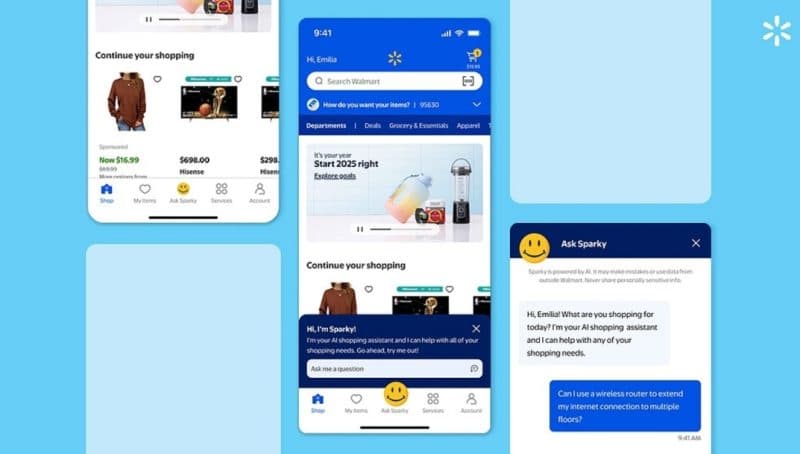
Walmart is trying to make shopping feel less like searching and more like explaining what you actually need. For gift buying, that shift matters: the company’s Sparky assistant can take a prompt like “I need party ideas!” and turn it into a coordinated plan with decorations, food and gifts, all kept within budget. That is the promise of AI-powered gifting at mass retail, a faster path from intent to a basket that looks thoughtful instead of improvised.
The strategy sits inside Walmart’s “Adaptive Retail” push, unveiled on Oct. 9, 2024, when the company said it would use AI, generative AI, augmented reality and immersive commerce to create hyper-personalized shopping across Walmart stores, Sam’s Clubs, apps and virtual environments. Walmart said its retail-specific LLM family, Wallaby, was trained on decades of its own data, and that its customer support assistant had been upgraded to recognize customers from the start and handle tasks such as finding orders and managing returns. In gifting terms, that kind of recognition can save a rushed shopper from repeating the basics when a birthday delivery goes sideways or an anniversary order needs to be changed at the last minute.
Walmart expanded that vision on June 6, 2025, saying Sparky could synthesize reviews, compare options and help customers plan, buy and move through an occasion with more confidence. The retailer’s 2025 Retail Rewired Report gave that ambition a consumer signal: 27% of respondents preferred AI shopping suggestions, slightly ahead of the 24% who preferred influencer endorsements, and 69% said shopping speed was very or somewhat important. That helps explain why AI is being aimed at gift shopping, where the most useful answer is often not the prettiest product but the one that arrives on time, fits the budget and feels specific to the recipient.

The numbers suggest Walmart is already getting traction. In February 2026, the company said Sparky users had order values about 35% higher than non-users, and that roughly half of its app users had tried it. Walmart U.S. president and CEO David Guggina called the shift “intent-driven commerce,” which is exactly what mass-market gifting has long lacked: a way to decode occasion, recipient and spend without making the result feel templated.
The harder part is what happens when personalization becomes industrialized. Walmart has also said its AI strategy is “surgical,” with agents built for highly specific tasks and core capabilities reused across the business, a sign that the company knows personalization comes with a cost in model sprawl, governance and compute. As Doug McMillon put it in August 2024, Walmart had used multiple large language models to create or improve more than 850 million pieces of data in its product catalog. That scale can make gifting smarter, but it can also make it feel too efficient for its own good if the human touch disappears.
This article was produced by Prism’s automated news system from verified source data, official records, and press releases, then run through automated quality and moderation checks before publishing. The system is built and supervised by the people who set the standards it runs under. Read our full AI policy.
Know something we missed? Have a correction or additional information?
Submit a Tip