Mother’s Day pushes unburdening gifts, from no-cook dinners to free time
This year’s most luxurious Mother’s Day gift is less stuff, more relief: dinner handled, help booked, plans made, and one new mother left with real time.

The new luxury is less work
The smartest Mother’s Day gift this year is not another object. It is the thing new mothers rarely get in abundance: a day with fewer decisions. The unburdening trend takes push-present thinking and turns it outward, toward meals that arrive already handled, outings that are already planned, help that is already booked, and recovery time that is protected instead of politely suggested.
That shift feels especially right because the work mothers carry is so often invisible. Pew Research Center has found that mothers in the United States still take on more caregiving responsibilities at home than fathers, and that in many working families, scheduling and sick days fall more heavily on moms. In Pew’s 2023 parenting survey, 40 percent of U.S. parents with children under 18 said they were extremely or very worried their child might struggle with anxiety or depression at some point. The background stress is not abstract. It is built into the day.
Why “unburdening” feels like the right gift language
A 2023 systematic review indexed by the American Psychological Association found that women perform the larger proportion of mental labor, especially around childcare and parenting decisions. Harvard researchers describe that same burden as cognitive labor, the unseen planning and worry work that keeps a household running. That is what makes a well-chosen Mother’s Day gift feel luxurious: not the box, but the release.
The most thoughtful gifts are the ones that remove a task from the mother’s mental stack. A meal that appears without ordering. A calendar that fills itself. A sitter, cleaner, or postpartum helper who is already confirmed. That kind of giving is not flashy, but it is deeply elegant because it answers the real need of the moment.
Mother’s Day has always carried this tension
The push toward less performative gifting also fits the holiday’s own history. Anna Jarvis, widely credited with founding Mother’s Day, later feared that it had become too commercialized. TIME traces the first Mother’s Day to May 10, 1908, organized in West Virginia and Pennsylvania. That origin story matters now because it reminds us that the day was meant to honor mothers, not simply to move merchandise.
Unburdening gifts bring the holiday back to that purpose. They are less about proving taste and more about recognizing what the mother actually needs after birth, after recovery, and after months of carrying the family’s invisible logistics. The gesture reads as modern, but the instinct is old-fashioned in the best way: attention first, transaction second.
What a modern push present looks like now
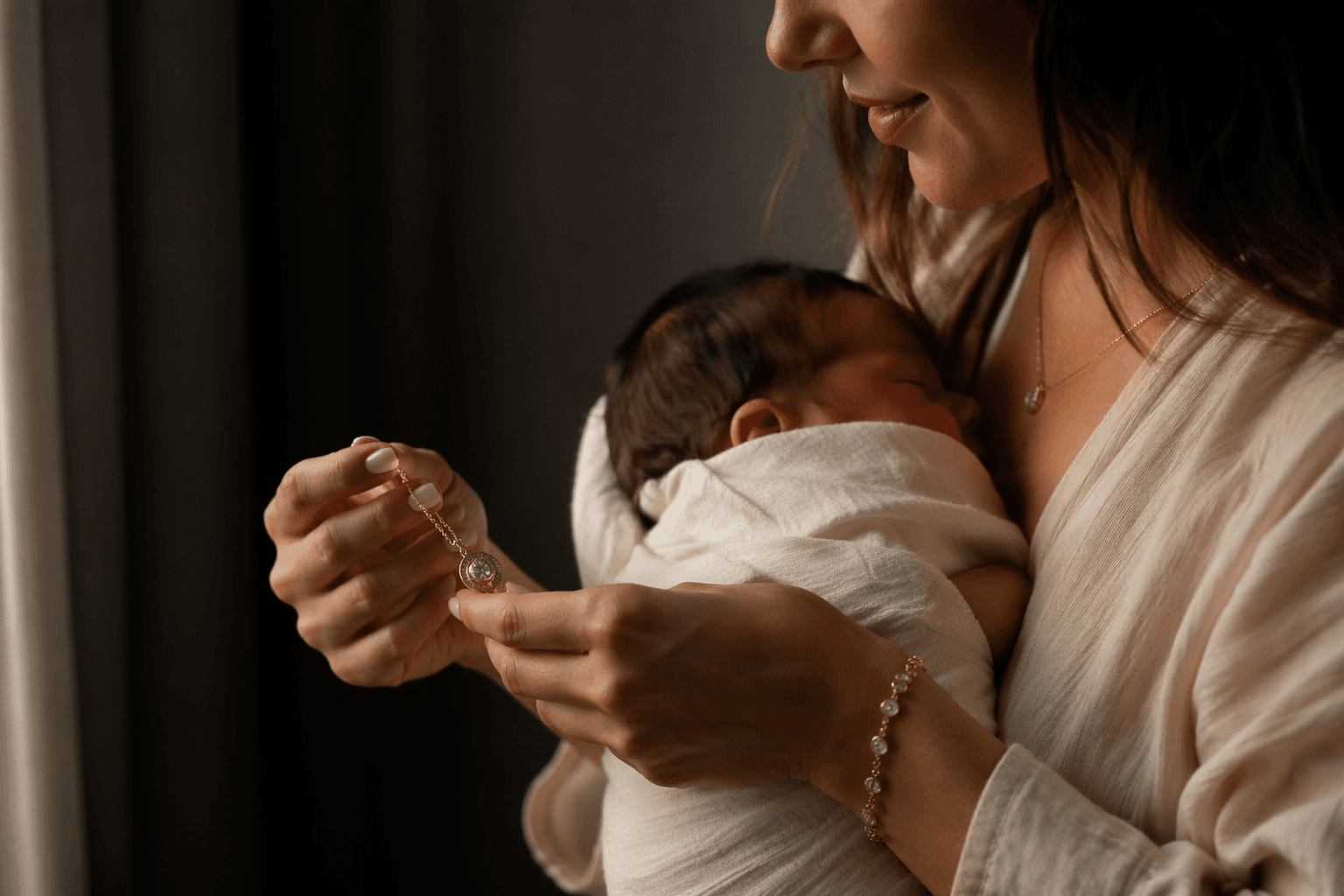
TODAY defines a push present as a gift given around the time of birth, usually from a parenting partner to the pregnant person. It can be as small as a candle or robe, or as major as jewelry, a car, or a vacation. That range is part of the appeal, but it is also why the category now feels ripe for reinterpretation. The best push present does not have to be expensive. It has to feel like relief.
TODAY’s earlier survey coverage found more moms opposed to push presents, which is a useful reminder that the idea has never been universally beloved. The Bump’s recent coverage treats it as a matter of personal preference, not a fixed obligation. That is the right way to think about it. The point is not to deliver a symbol of motherhood. It is to deliver support that matches the mother.
The gifts that do the most by asking the least
No-cook dinner arrangements
This is the most immediately useful unburdening gift, and it is the easiest to justify. It is for the mother who is feeding a household while also healing, nursing, sleeping in fragments, or trying to remember the last time she sat down before 8 p.m. The cost is the price of dinner, but the value is the removal of every choice attached to it.
A great version is fully decided in advance: the meal is ordered, scheduled, and confirmed, with leftovers planned if that helps. It should not create another task, such as “choose a restaurant” or “figure out delivery.” The luxury here is not the food itself. It is that nobody has to think about dinner at all.
Pre-mapped outings
A pre-planned outing works beautifully for the mother who wants time outside the house but does not want to organize it. Think of it as a gift of structure: reservations made, timing set, transportation arranged, and the day paced around her recovery and energy level. The expense can be modest or high, but the real cost is simply taking planning off her plate.
This is especially good for partners or family members who know the mother would love to feel like herself again, but not if that means deciding where to go, when to go, or whether the baby bag is packed. The right outing feels calm before it even begins.
Booked postpartum help
This is the most unmistakably practical version of luxury. A few hours of postpartum help, a cleaner, a meal service, or a night of support can matter more than any decorative gift because it addresses the conditions of everyday life. It is for the mother whose mental load is already too full and who needs fewer promises and more hands.
The value is obvious: instead of giving another item to manage, you give time back. That is worth far more than a bouquet when the sink is full, the laundry is multiplying, and the mother is trying to recover while staying present.
Recovery-friendly care packages
If you do want a physical present, make it feel hospital-ready and genuinely comforting. TODAY’s framing is useful here because it includes small comforts like candles or robes, which can be lovely when they are chosen for softness and ease rather than spectacle. A recovery-friendly package should feel like it was assembled by someone who understands the first weeks after birth.
Keep it simple, clean, and useful. A robe that is actually soft. A candle that makes a room feel more human. Small comforts with no complicated instructions. The best version of this gift does not ask the mother to become a hostess or a stylist. It lets her be the person recovering.
Free time, protected
The most valuable push present may be the one that looks like nothing at all: a block of uninterrupted time. No errands. No family obligations. No decision-making. No pressure to “make the most” of the day. For a new mother, free time is not empty space. It is recovery, rest, and the chance to think one thought all the way through.
That is the real meaning of the unburdening trend. It recognizes that the most generous gift is not more to open, but less to carry. In a holiday shaped by love, labor, and a long history of commercialization, the clearest sign of care is still the same: take something off her list.
This article was produced by Prism’s automated news system from verified source data, official records, and press releases, then run through automated quality and moderation checks before publishing. The system is built and supervised by the people who set the standards it runs under. Read our full AI policy.
Did this article answer your question?