Push Presents Make a Meaningful Statement for New Mothers This Season
Push presents honor the extraordinary work of birth — here's how to choose one that actually means something.
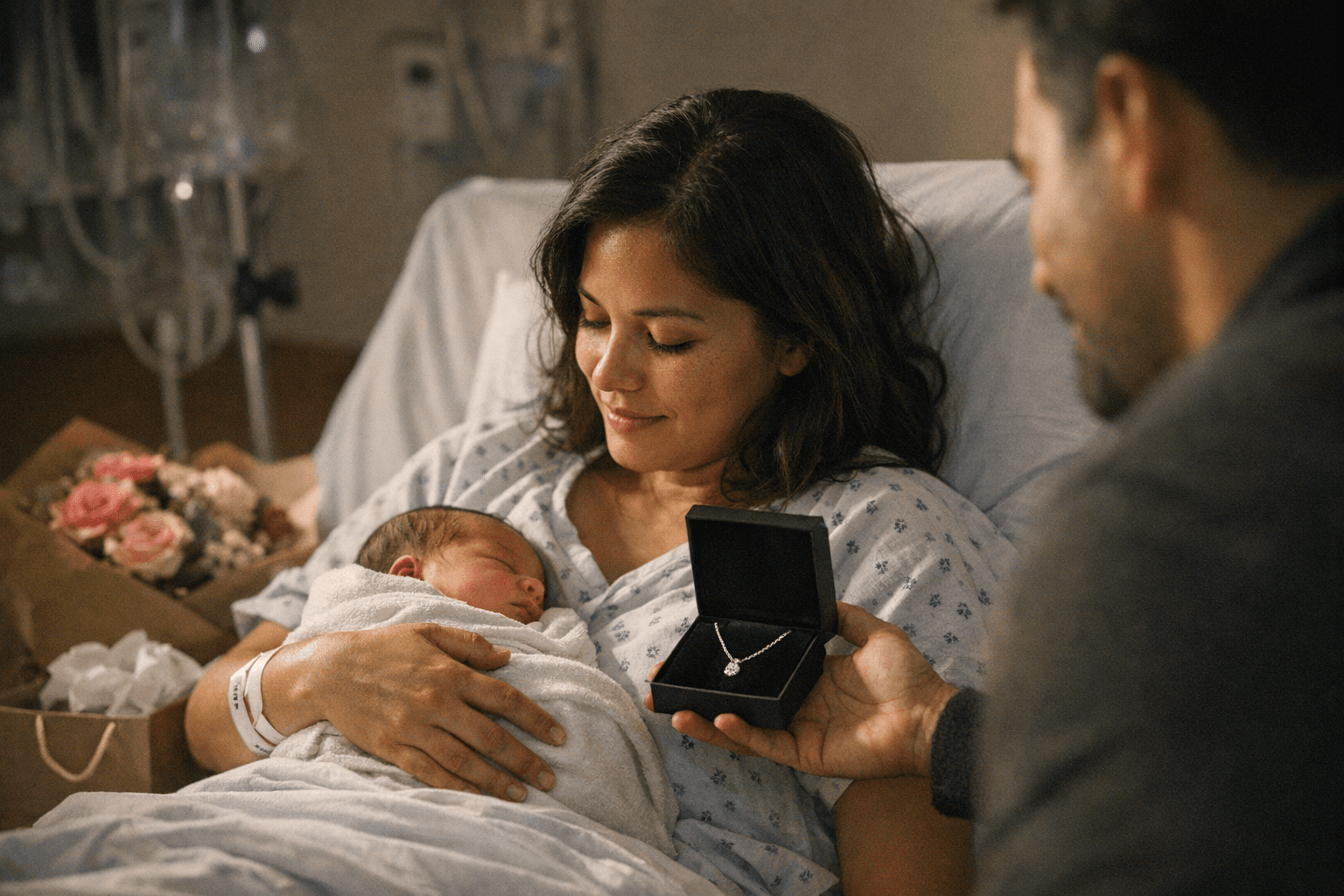
There's a moment, somewhere between the exhaustion and the overwhelming love, when a partner looks at the person who just did the hardest thing a human body can do and thinks: I need to mark this. That instinct has a name now. Push presents, the gifts given to a mother around the time of birth, have moved well beyond trend status into genuine tradition, and the best ones feel less like purchases and more like punctuation marks on a life-changing moment.
The pressure to get it right is real. This isn't a birthday gift or a holiday gesture. It's an acknowledgment of something profound, which means a generic candle or a bouquet won't land the way you hope. The good news: when you know what you're looking for and who you're shopping for, the decision gets a lot clearer.
What Makes a Push Present Different
The distinction between a push present and any other gift comes down to intention. This is not about price, though some of the most meaningful options do carry real weight in that department. It's about choosing something that says: I see what you just did, and I want you to have something that lasts as long as the love behind it.
That framing rules out anything consumable and anything too practical. A diaper bag, however beautiful, sends the wrong message. A hospital-grade nursing pillow does not say "you are extraordinary." The best push presents fall into a few clear categories: fine jewelry, personalized keepsakes, luxury self-care, and experiences deferred for when life settles.
Fine Jewelry: The Classic for Good Reason
Jewelry remains the most popular push present category, and it's not hard to understand why. It's wearable, lasting, and carries symbolic weight that a gift card simply cannot. The question is which direction to go.
For the mother who loves quiet elegance, a delicate birthstone ring or a thin pavé band is a piece she'll reach for daily without thinking about it. Solitaire pendants with the child's birthstone in yellow gold read as simultaneously modern and heirloom-quality. Prices for meaningful fine jewelry start around $300 for sterling silver with genuine stones and climb toward $3,000 and beyond for solid gold with diamonds.
If your budget allows for something more significant, consider a piece she might not buy herself: a tennis bracelet in the $1,500 to $4,000 range, or a signet ring personalized with the baby's initial or birth date. Signet rings have had a sustained cultural moment and show no signs of fading, which means this is an investment in something she'll wear for decades, not just seasons.
For the mother who values craft over flash, independent jewelry designers often produce more distinctive work at comparable prices. A hand-forged gold band with an organic texture or a bezel-set sapphire from a small studio will feel more personal than anything pulled from a department store case.
Personalized Keepsakes: For When Sentiment Is the Point
Not every new mother wants jewelry, and that's worth respecting. Personalized keepsakes work especially well for someone who fills her home with meaning rather than adorning herself with it.
Custom illustration portraits, particularly those rendered in a fine art style, have become a genuinely beautiful option. Artists on platforms like Etsy produce framed portraits of families, including the new baby, in gouache or watercolor for $150 to $500. The better ones require a longer lead time, so ordering during pregnancy rather than after delivery is the move.
A first edition of a meaningful book, inscribed with a handwritten note, works beautifully for a literary-minded mother. Think: a first edition of the novel she read in college that changed her, or a beautiful illustrated edition of a children's classic she plans to read to her child for years. Prices vary wildly depending on edition and condition, from $40 to several hundred dollars.
Custom map prints marking the exact location and time of birth, engraved lockets with the baby's footprint, and hand-stamped silver cuffs with names and dates all live in this category too. These gifts tend to be priced accessibly, typically $80 to $250, and carry an emotional punch that outperforms their cost.
Luxury Self-Care: Because She Needs to Come Back to Herself
The postpartum period is physically demanding in ways that catch most people off guard. A thoughtfully assembled self-care gift acknowledges that reality with grace rather than cheerfulness.
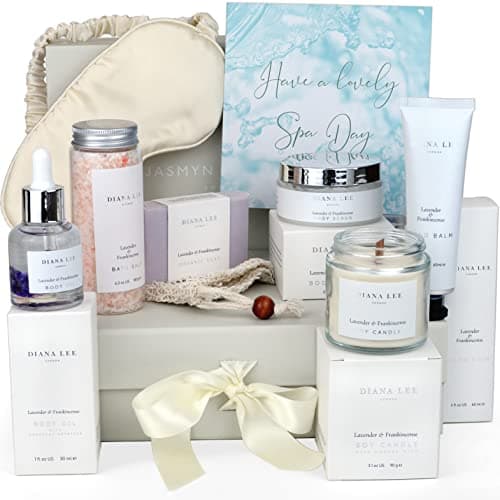
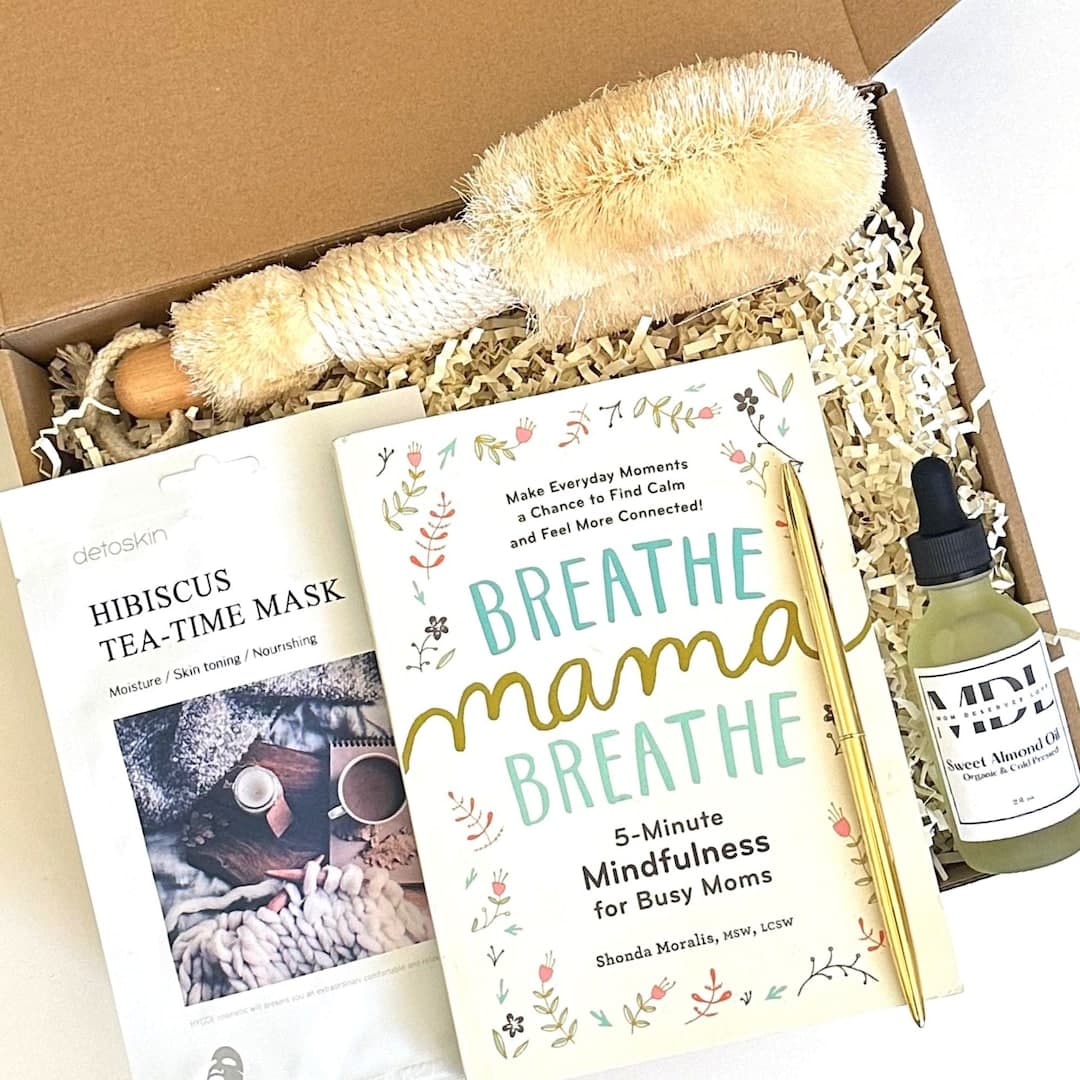
A cashmere robe from a brand like Barefoot Dreams or Naadam (priced between $150 and $350) is one of those gifts that feels indulgent in the best possible way. Pair it with a high-quality body oil, a silk pillowcase, and perhaps a gift certificate to a spa treatment she can redeem in the coming months, and you've built something that addresses the specific, embodied experience of early motherhood.
For the mother who's been craving a good night of sleep more than anything else, a weighted blanket from a brand like Bearaby, starting around $250, combines function with genuine luxury. This is one of the rare push present categories where practical and meaningful can overlap honestly.
Skincare sets from brands like Tatcha or La Mer occupy the higher end of this category, with curated sets running $200 to $600. These work best when you actually know her skincare preferences rather than guessing. A luxurious body butter and a quality face mist can feel just as special at a fraction of the price if they're brands she loves.
Deferred Experiences: The Gift That Arrives Later
Some of the most memorable push presents aren't things at all. A weekend trip for two, booked for six months out with accommodation already covered, gives a new mother something powerful: something to look forward to. A reservation at a restaurant she's been wanting to try, a professional photography session to capture the new family, or a series of postnatal yoga classes all carry genuine meaning.
The key with experience gifts is specificity. A vague promise to "plan something" doesn't land. A printed card detailing exactly what's been booked, when, and where makes the gift real before it's even happened.
Getting the Timing Right
Push presents are typically given in the delivery room or within the first few days postpartum, though there's no rule that says it must happen immediately. Some partners prefer to give the gift at a quieter moment, once mother and baby are home and the initial chaos has settled. What matters is that it arrives with intention and a few sincere words, spoken or written.
Whatever you choose, the gift earns its meaning not from its price tag but from the clarity of what it says: this moment matters, you matter, and some things deserve to be marked forever.
Know something we missed? Have a correction or additional information?
Submit a Tip