The best push present gift ideas that mum will love (UK guide)
Raising a baby costs around £8,460 in year one in the UK; the push present is one of the few things in that blur chosen purely for her, so make it count.
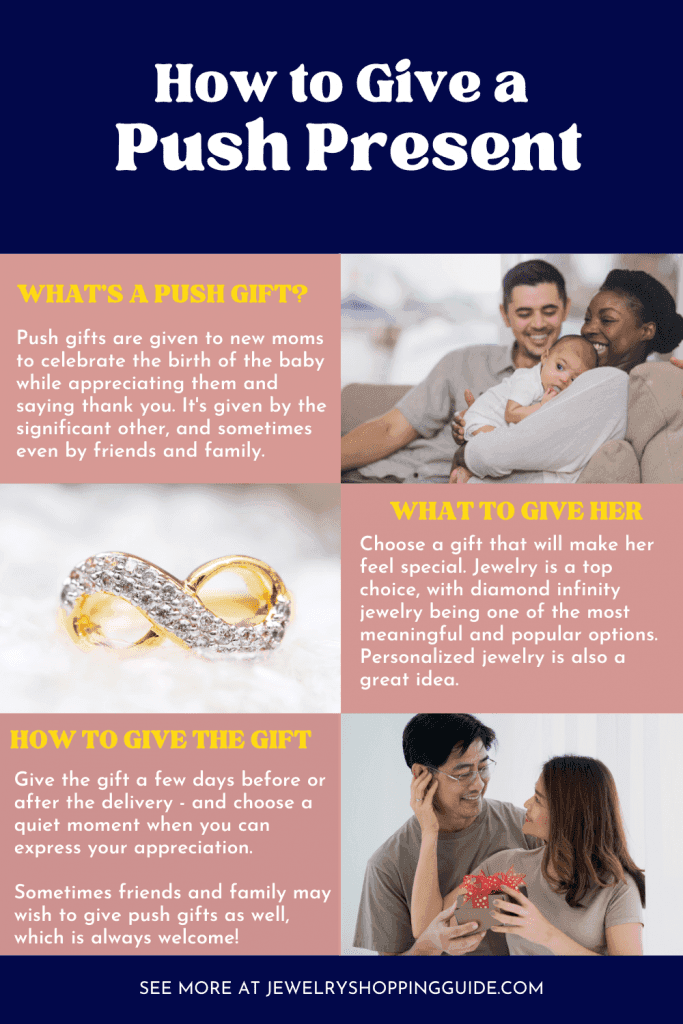
There is a very specific moment when the push present decision becomes urgent. It is not nine months into a carefully curated pregnancy. It is 11pm the night before a due date, or a hurried phone search from a hospital car park while a partner labours inside. The window is narrow, the stakes feel high, and most gift guides offer the same recycled list of birthstone pendants and pamper hampers without telling you who, exactly, those things are actually right for.
Push presents have been miscast as a social-media invention, a recent tide of #pushpresent posts suggesting they emerged from Instagram around 2015. In fact, the tradition of marking a birth with a meaningful gift to the mother has roots stretching back centuries in South Asian and European jewellery customs. What has changed is the language around it, and, more usefully, the vocabulary of what counts. A push present does not need to be a diamond. It needs to be chosen for her, not for the occasion.
Start with the matrix, not the price tag
Before you look at a single product, answer three questions: What is your budget? Is she sentimental or practical? And is this her first baby or her second? Those answers will eliminate roughly two-thirds of every gift guide you will find. The sections below are structured around those choices, with additional guidance for C-section recovery and breastfeeding mums, where the right gift is genuinely different.
Under £50: small but impossible to get wrong
This budget rewards specificity over grandeur. A personalised wine label on a bottle of her favourite Champagne or Sauvignon Blanc, saved for when she is ready to drink, is both a joke and a gesture. It costs under £20 and lands with disproportionate warmth. Custom photo frames, engraved with a birth date or a short phrase, sit in this bracket too, and they have a longer shelf life than most gifts because they become part of the house.
For the sentimental mum, a hand or footprint kit is one of the most genuinely useful things in this price range. The best versions, sold by UK craft and keepsake shops, come with non-toxic ink pads and a mount-ready print card. The practical caveat: do this within the first two weeks while the feet are still newborn-small. An engraved keyring, stamped with the baby's name or birth date, serves the same purpose with a fraction of the effort and sits at around £15 to £30 depending on the metal finish.
£50 to £150: where the most consistent choices live
This is the bracket where push presents do their best work. A birthstone necklace, either a simple pendant or a small drop design, gives the gift a permanent personal reference without requiring a major commitment. UK jewellers including Merci Maman and Posh Totty Designs offer sterling silver and gold-fill options in this range, with engraving included. For everyday wearability, choose a chain length that works under clothes and a stone setting that lies flat; a claw-set pendant worn during feeding or babywearing can catch and snag.
A postnatal massage voucher, booked through platforms like Urban or Treatwell in most UK cities, sits between £60 and £120 and is arguably the highest-impact gift in this entire guide for the first two to three weeks postpartum. It is one of the few things that directly addresses how her body feels rather than how the occasion looks. Pair it with a note specifying that it is to be used when she is ready, not immediately: many postnatal massage therapists recommend waiting at least two weeks, longer after a C-section.
Pamper sets in this bracket are worth buying only if they are genuinely curated rather than a department store box of body lotion and a face mask. Look for sets built around fragrance-free formulations, since many new mums find strong scents overwhelming in the early weeks. Neal's Yard and Weleda both sell postnatal-specific ranges that work within this budget.
£150 and above: when the moment calls for something lasting
Fine jewellery at this level justifies its price when it is built to last decades rather than seasons. Name-engraved necklaces in solid gold or sterling silver from makers like Monica Vinader (whose London-based engraving service starts around £150) carry a weight and finish that cheaper alternatives do not. A birthstone ring, sized correctly for postpartum fingers (which are often still slightly swollen), is a considered choice; call ahead to check the retailer's resizing policy because getting the fit wrong is the most common regret in this category.
Doula support and night-nurse vouchers represent a different kind of investment entirely. A postnatal doula session in the UK typically runs between £30 and £60 per hour, and gifting a block of four to six hours of postnatal support costs between £150 and £360 depending on the provider. This is the push present for the practical mum who will value sleep and expert guidance over a jewellery box, and it is almost universally underused as a gift idea. Meal delivery services, including those from Gousto or HelloFresh gifted as a three-month subscription, occupy a similar space: invisible in the moment but remembered warmly for months.
C-section recovery: a genuinely different list
For a mum recovering from a C-section, the gift brief changes. Anything requiring her to sit forward, bend, or manage a tight waistband in the first six to eight weeks is a bad idea in practice, even if it looks beautiful in a box. Gifts that work best here include: a cashmere or bamboo robe that opens at the front and requires no pressure on the incision site; a meal delivery subscription (particularly valuable because standing at a stove is uncomfortable); and a postnatal massage specifically from a therapist trained in C-section recovery, which is a distinct specialism from general postnatal massage. Ask when booking.
Breastfeeding and pumping mums: comfort over ceremony
A mum who is breastfeeding or exclusively pumping is spending between four and eight hours a day in a chair or on a sofa in the early weeks. The most thoughtful gifts acknowledge this: a high-quality water bottle she will actually use (Hydro Flask and Stanley both have wide UK availability), a well-reviewed hands-free pumping bra, a curated book or audiobook subscription, or a cosy nursing pillow cover that replaces the functional but uninspiring standard issue. Jewellery is still a valid choice here, but keep it short-chain and clasp-back rather than anything that might dangle during a feed.
First-time versus second-time mum
The first-time mum is often in genuine shock, even if the birth went smoothly. A sentimental keepsake, something that acknowledges the seismic scale of what just happened, tends to land better than a practical gift she has to figure out how to use. The second-time mum usually knows exactly what she needs and has less patience for ceremony. Ask her directly, or ask her partner who knows her well: "Does she want something for the house, something to wear, or something that means she gets a night's sleep?" The answer will narrow the field immediately.
UK delivery and engraving: plan ahead or have a back-up
The single most common push present failure in the UK is a personalised item that arrives ten days after the birth. Etsy sellers and platforms like Not On The High Street are excellent sources, but engraving and personalisation typically adds five to ten business days to standard delivery, and some sellers pause for weekends. If the due date is within two weeks, order personalised jewellery now or choose a retailer with in-house engraving. John Lewis and Next both offer next-day delivery on a wide range of gifts without personalisation and have straightforward UK returns. Monica Vinader ships engraved pieces within three to five working days from its London studio. For anything from an independent maker, message the seller directly to confirm their current lead time before checkout.
What not to buy
Avoid anything primarily designed for the baby: a personalised baby blanket or a keepsake box for the nursery is a gift for the home, not for her. Skip fitness equipment or anything with an implied timeline for her body to return to something. Do not buy a gift card without a thoughtful explanation of what it is for; a blank Selfridges card says "I ran out of ideas." And resist the urge to buy something elaborate that requires assembly, charging, or maintenance in the first weeks home.
The number that puts it all in perspective
Research published in 2026 calculated the total cost of raising a baby through their first year in the UK at approximately £8,460, covering formula, nappies, clothing, and equipment. That figure represents a significant financial and physical commitment made largely on behalf of someone else. The push present, whatever form it takes and whatever it costs, is one of the few things in that entire first year that is chosen specifically, deliberately, for her. That intention is what separates a push present from a token, and it is worth taking the time to get it right.
Let me now format this properly as the final output.
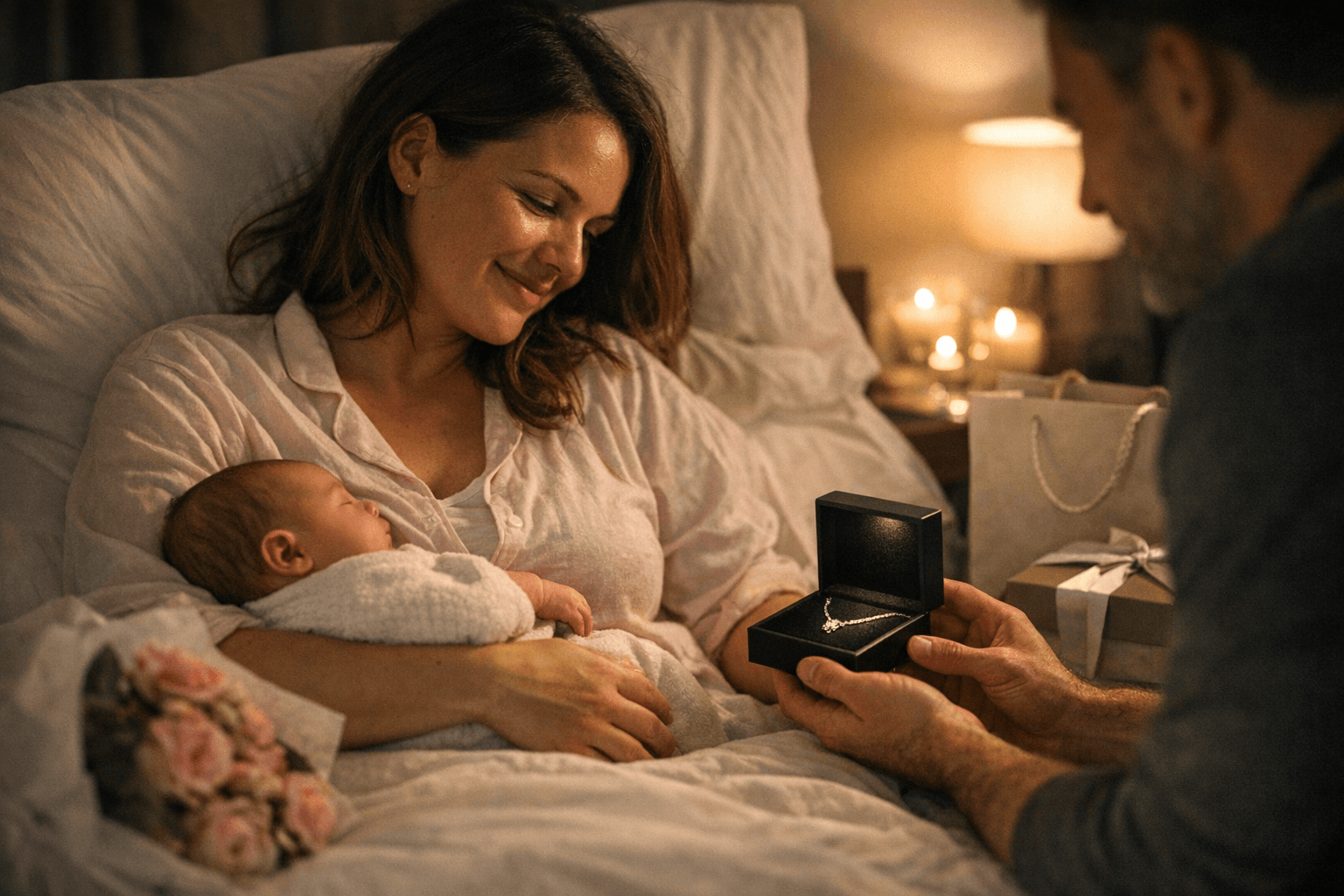
There is a very specific moment when the push present decision becomes urgent. It is not nine months into a carefully curated pregnancy. It is 11pm the night before a due date, or a hurried phone search from a hospital car park. The window is narrow, the stakes feel high, and most gift guides offer the same recycled list of birthstone pendants and pamper hampers without telling you who, exactly, those things are actually right for.
Push presents have been miscast as a social-media invention. The hashtag arrived around 2015, but the tradition of marking a birth with a meaningful gift to the mother has roots stretching back centuries in South Asian and European jewellery customs. What has changed is the language around it and, more usefully, the vocabulary of what counts. A push present does not need to be a diamond. It needs to be chosen for her, not for the occasion.
Start with the matrix, not the price tag
Before looking at a single product, answer three questions: What is your budget? Is she sentimental or practical? And is this her first baby or her second? Those answers will eliminate roughly two-thirds of every gift guide you will find. The sections below are structured around those choices, with additional guidance for C-section recovery and breastfeeding mums, where the right gift is genuinely different.
Under £50: small but impossible to get wrong
This budget rewards specificity over grandeur. A personalised wine label on a bottle of her favourite Champagne or Sauvignon Blanc, saved for when she is ready to drink, is both a joke and a gesture, and it lands with warmth that is entirely disproportionate to its price. Custom photo frames, engraved with a birth date or a short phrase, sit in this bracket too and have a longer shelf life than most gifts because they become part of the house.
For the sentimental mum, a hand or footprint kit is one of the most genuinely useful things in this price range. The best versions come with non-toxic ink pads and a mount-ready print card. The practical caveat: do this within the first two weeks while the feet are still newborn-small. An engraved keyring, stamped with the baby's name or birth date, serves the same purpose with a fraction of the effort and sits at around £15 to £30 depending on the metal finish.
£50 to £150: where the most consistent choices live
This is the bracket where push presents do their best work. A birthstone necklace, either a simple pendant or a small drop design, gives the gift a permanent personal reference without requiring a major commitment. UK jewellers including Merci Maman and Posh Totty Designs offer sterling silver and gold-fill options in this range, with engraving included. For everyday wearability, choose a chain length that works under clothes and a stone setting that lies flat: a claw-set pendant worn during feeding or babywearing can catch and snag.
A postnatal massage voucher, booked through platforms like Urban or Treatwell in most UK cities, sits between £60 and £120 and is arguably the highest-impact gift in this entire guide for the first two to three weeks postpartum. It is one of the few gifts that directly addresses how her body feels rather than how the occasion looks. Pair it with a note specifying it is to be used when she is ready: many postnatal massage therapists recommend waiting at least two weeks, and longer after a C-section.
Pamper sets in this bracket are worth buying only if they are genuinely curated rather than a department store box of body lotion and a face mask. Look for sets built around fragrance-free formulations, since many new mums find strong scents overwhelming in the early weeks. Neal's Yard and Weleda both sell postnatal-specific ranges that work within this budget.
£150 and above: when the moment calls for something lasting
Fine jewellery at this level justifies its price when it is built to last decades rather than seasons. Name-engraved necklaces in solid gold or sterling silver from makers like Monica Vinader carry a weight and finish that cheaper alternatives cannot match. A birthstone ring sized correctly for postpartum fingers, which are often still slightly swollen, is a considered choice: check the retailer's resizing policy before buying, because getting the fit wrong is the most common regret in this category.
Doula support and night-nurse vouchers represent a different kind of investment entirely. A postnatal doula session in the UK typically runs between £30 and £60 per hour, and gifting a block of four to six hours of postnatal support costs between £150 and £360 depending on the provider and region. This is the push present for the practical mum who will value sleep and expert guidance over a jewellery box, and it is almost universally underused as a gift idea. Meal delivery subscriptions, such as Gousto or HelloFresh gifted across three months, occupy a similar space: invisible in the moment but remembered warmly for much longer.
C-section recovery: a genuinely different list
For a mum recovering from a C-section, the gift brief changes significantly. Anything requiring her to sit forward, bend, or manage a tight waistband in the first six to eight weeks is a poor choice in practice, however beautiful it looks in a box. Gifts that work best here include a cashmere or bamboo robe that opens at the front and places no pressure on the incision site, a meal delivery subscription (particularly valuable because standing at a stove is uncomfortable for weeks), and a postnatal massage specifically from a therapist trained in C-section recovery, which is a distinct specialism from general postnatal massage. Ask when booking.
Breastfeeding and pumping mums: comfort over ceremony
A mum who is breastfeeding or exclusively pumping is spending between four and eight hours a day in a chair or on a sofa in the early weeks. The most thoughtful gifts acknowledge this reality: a high-quality insulated water bottle she will actually use, a well-reviewed hands-free pumping bra, a curated book or audiobook subscription, or a cosy nursing pillow cover that replaces the standard-issue version. Jewellery remains a valid choice here, but keep it short-chain and clasp-back rather than anything that might dangle during a feed.
First-time versus second-time mum
The first-time mum is often in genuine shock, even if the birth went smoothly. A sentimental keepsake, something that acknowledges the scale of what just happened, tends to land better than a practical gift she has to figure out how to use. The second-time mum usually knows exactly what she needs and has less patience for ceremony. Ask her partner directly: "Does she want something for the house, something to wear, or something that means she gets a night's sleep?" The answer will narrow the field immediately.
UK delivery and engraving: plan ahead or have a back-up
The single most common push present failure in the UK is a personalised item that arrives ten days after the birth. Etsy sellers and platforms like Not On The High Street are excellent sources for personalised pieces, but engraving and customisation typically adds five to ten business days to standard delivery, and many sellers pause for weekends. If the due date is within two weeks, order personalised jewellery immediately, or choose a retailer with in-house engraving and shorter turnaround. John Lewis and Next both offer next-day delivery on a wide range of non-personalised gifts and have straightforward UK returns policies. Monica Vinader ships engraved pieces within three to five working days from its London studio. For anything from an independent Etsy maker, message the seller directly to confirm current lead times before checkout: most will reply quickly and honestly about what is achievable.
On sizing: UK jewellery sizing differs from US ring sizing conventions by roughly half a size to a size, so if ordering from an international retailer, double-check the conversion chart. Postpartum ring sizing in particular is worth leaving until around six weeks after birth, when swelling has typically resolved, unless you are buying an adjustable band.
What not to buy
Avoid anything primarily designed for the baby: a personalised baby blanket or a keepsake box for the nursery is a gift for the home, not for her. Skip fitness equipment or anything with an implied timeline for her body to change. Do not give a gift card without a specific explanation of what it is for; a blank department store card signals an absence of thought. Resist the urge to choose something elaborate that requires assembly, charging, or maintenance in the first weeks home. And avoid anything heavily scented, particularly in the early weeks, when hormonal shifts make many new mums sensitive to fragrance.
The number that puts the whole decision in perspective
Independent research published in 2026 calculated the total cost of raising a baby through their first year in the UK at approximately £8,460, covering formula, nappies, clothing, and equipment. That figure represents an enormous financial and physical commitment made largely, in the immediate sense, on behalf of someone else. The push present, whatever form it takes, is one of the few things in that entire first year chosen specifically and deliberately for her. That intention is what separates a push present from a token, and the difference between the two has nothing to do with how much it costs.
Know something we missed? Have a correction or additional information?
Submit a Tip