What Moms Actually Want Most From Push Presents, According to Trends
The best push present is not the flashiest one. It is the one that feels like relief, recognition, or a thing she will actually use every day.

Push presents can look absurd in a headline and completely sensible in real life. When TODAY covered Campbell “Pookie” Puckett’s Hermès bag, it pegged the gift at about $35,000, but Motherly’s community data tells a more ordinary story: 62% of moms had not received a push present, 35% had, and 3% expected one soon. That split says everything about the category. It is still emotionally loaded, still divisive, and still mostly about whether the gift feels like care or just theater.
Why push presents keep showing up
Push presents are not a centuries-old universal custom. TODAY was already calling them a growing U.S. trend in 2015, and by 2024 the outlet was still framing them as a gift a parenting partner might give before birth, in the delivery room, or after the baby arrives. What to Expect found that the topic remains divisive, with a community post drawing more than 100 responses that were split pretty evenly. In other words, this is less a social rule than a relationship test, which is why the best version is always specific to the person who just gave birth.
The categories moms actually respond to
Keepsake jewelry, for the mom who wants something she can wear every day
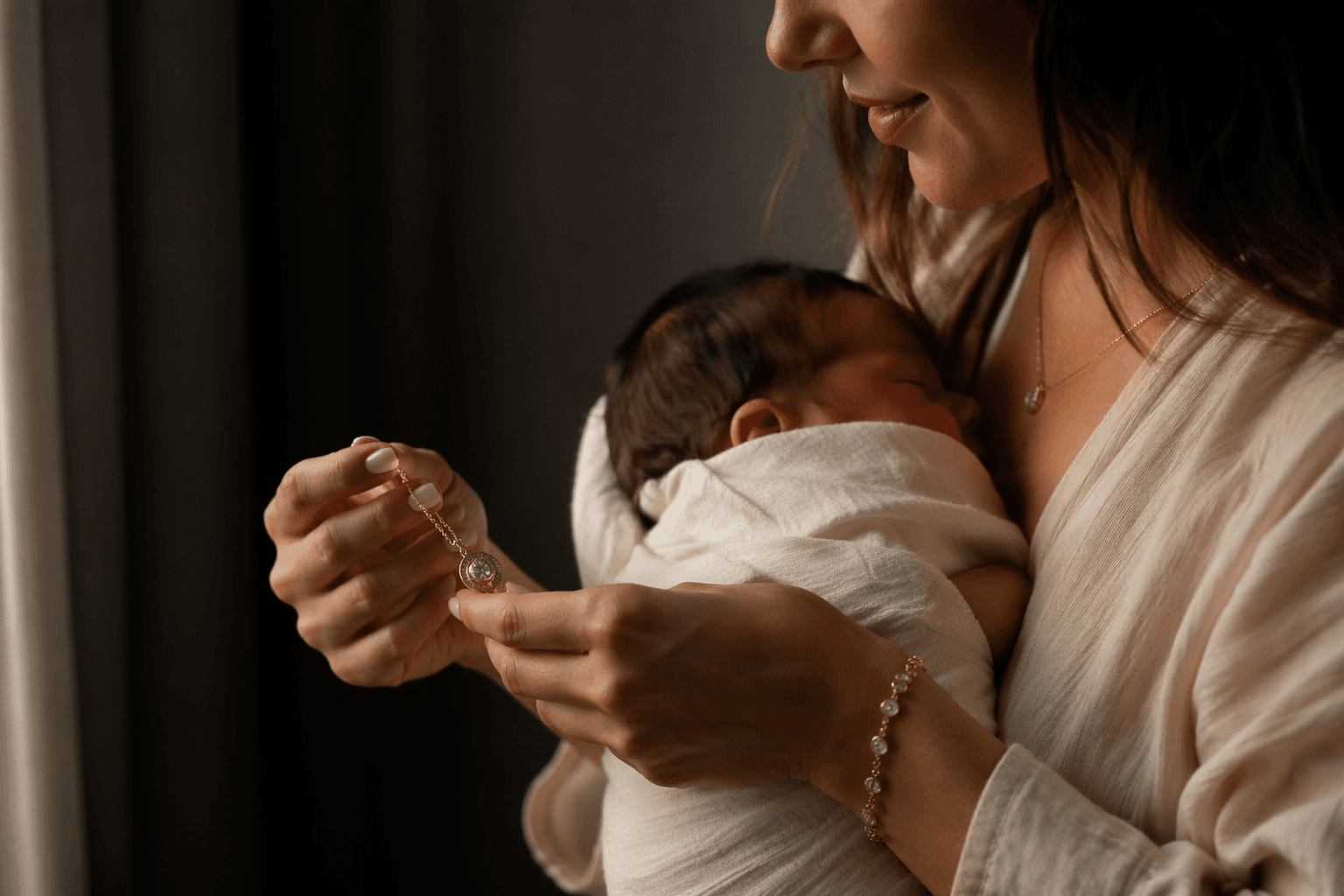
If she loves jewelry, this is still the most emotionally legible push present. Mejuri’s Sia Birthstone Pendant Necklace is $168 and feels heirloom-adjacent thanks to 18k gold vermeil and lab-grown white sapphire, while Uncommon James gives you a softer landing point with a Birthstone Pendant Necklace at $55 or a personalized Vertical Bar Necklace at $68. The difference matters: the Mejuri piece reads like a future keepsake, while the Uncommon James versions are better if she likes to stack, layer, and keep things low-key.
The sweet spot here is personalization that actually means something. Birthstones, initials, and engraved dates work because they are anchored to one specific baby and one specific moment, not just a generic “new mom” label. If she does not already wear necklaces, skip the jewelry and move straight to something she will touch every day instead.
Recovery-focused self-care, for the mom who wants comfort more than sparkle
This is where push presents get more practical and, honestly, more useful. Cleveland Clinic says postpartum starts immediately after childbirth and generally lasts six to eight weeks, with some symptoms lasting months after birth, so a gift that makes recovery feel softer is not frivolous at all. Motherly’s framing of the category also reflects that shift, with moms responding to sentimental keepsakes but also to gifts that make life easier in the thick of the postpartum stretch.
For a gift that feels luxe without being precious, Parachute’s Cloud Cotton Robe is $129, and it is the kind of thing a new mom will actually live in while feeding, resting, and shuffling between bed and couch. If you want a smaller indulgence, Diptyque’s classic 6.7-ounce candles are $90, which is a real treat but not the kind of present I would give by itself unless it is paired with something more useful. The robe is the better standalone buy; the candle is the better add-on.
Practical help, for the mom whose body and schedule need real support
Sometimes the right push present looks more like supplies than sentiment. Frida’s Postpartum Recovery Essentials Kit is $49.99, and the Labor and Delivery + Postpartum Recovery Kit is $99.99, with items like a peri bottle, disposable underwear, pads, liners, foam, and a caddy. That is not glamorous, but it is exactly the sort of thing that can make the first bathroom trips and recovery days feel less brutal.
This category matters because the postpartum window is not a quick afterthought. The American Academy of Pediatrics says complications can occur from pregnancy through one year after delivery, and untreated perinatal mental illness can significantly affect a child’s development and health across the life course. That makes practical help feel less like a consolation prize and more like a gift that respects the reality of what she is carrying, physically and emotionally.
Tech that makes daily life easier, for the mom who needs fewer interruptions
Tech is the quiet overachiever in this category. Apple’s AirPods Pro 3 are $249, while AirPods 4 with Active Noise Cancellation are $179 if you want a lower-priced version of the same basic idea: fewer interruptions, better sound, and a little more control over a chaotic day. For a mom who is pumping, commuting, or taking calls while holding a baby, that kind of gift is not flashy, it is functional.
Breastfeeding and pumping parents are a particularly good match for this lane. Elvie’s wearable breast pump starts at $299.99 for a single and $549.99 for a double, and the appeal is obvious: it is designed to be discreet, app-controlled, and less tethered to the wall than a traditional pump. If the mom in your life is living by the clock, this is the present that buys back a sliver of time.
A simple rubric for deciding whether it feels thoughtful
- Thoughtful if it fits the life she is actually living right now, like a birthstone necklace for a sentimental dresser, a robe for someone recovering at home, or a wearable pump for a breastfeeding parent.
- Performative if the price tag is doing all the talking and the gift ignores sleep loss, recovery, or whether she will ever use it again. Push presents have always carried a little debate, but the best ones do not need defending because they solve something real.
- Best matched to parenting reality when the gift follows the workload: jewelry for the sentimental mom, self-care for the exhausted mom, practical recovery gear for the body still healing, and tech for the parent who needs fewer steps between one task and the next. That is also why newer gift coverage keeps circling back to clothing, breast pumps, skin care, tech gadgets, and self-care finds.
The best push present is worth buying when it behaves like recognition with receipts: something she will wear, use, or feel during the hardest stretch of recovery. If it is only about spectacle, it fades fast; if it fits her life, it becomes part of the story of those first weeks, which is exactly why the tradition survives.
This article was produced by Prism’s automated news system from verified source data, official records, and press releases, then run through automated quality and moderation checks before publishing. The system is built and supervised by the people who set the standards it runs under. Read our full AI policy.
Did this article answer your question?