Younger shoppers favor wearable gifts as Mother’s Day spending hits record $38 billion
Only 11% of moms say flowers are their top wish, even as Mother’s Day spending is set to hit a record $38 billion and younger buyers lean toward wearable gifts.
Flowers still rule Mother’s Day shopping, but they no longer tell the whole story. Only 11% of moms say flowers are what they want most, even as the National Retail Federation and Prosper Insights & Analytics project a record $38 billion in spending for 2026, with shoppers budgeting an average of $284.25 each. That would top last year’s $34.1 billion and the previous high of $35.7 billion in 2023, a reminder that the holiday remains emotionally powerful even as the gift mix keeps shifting.
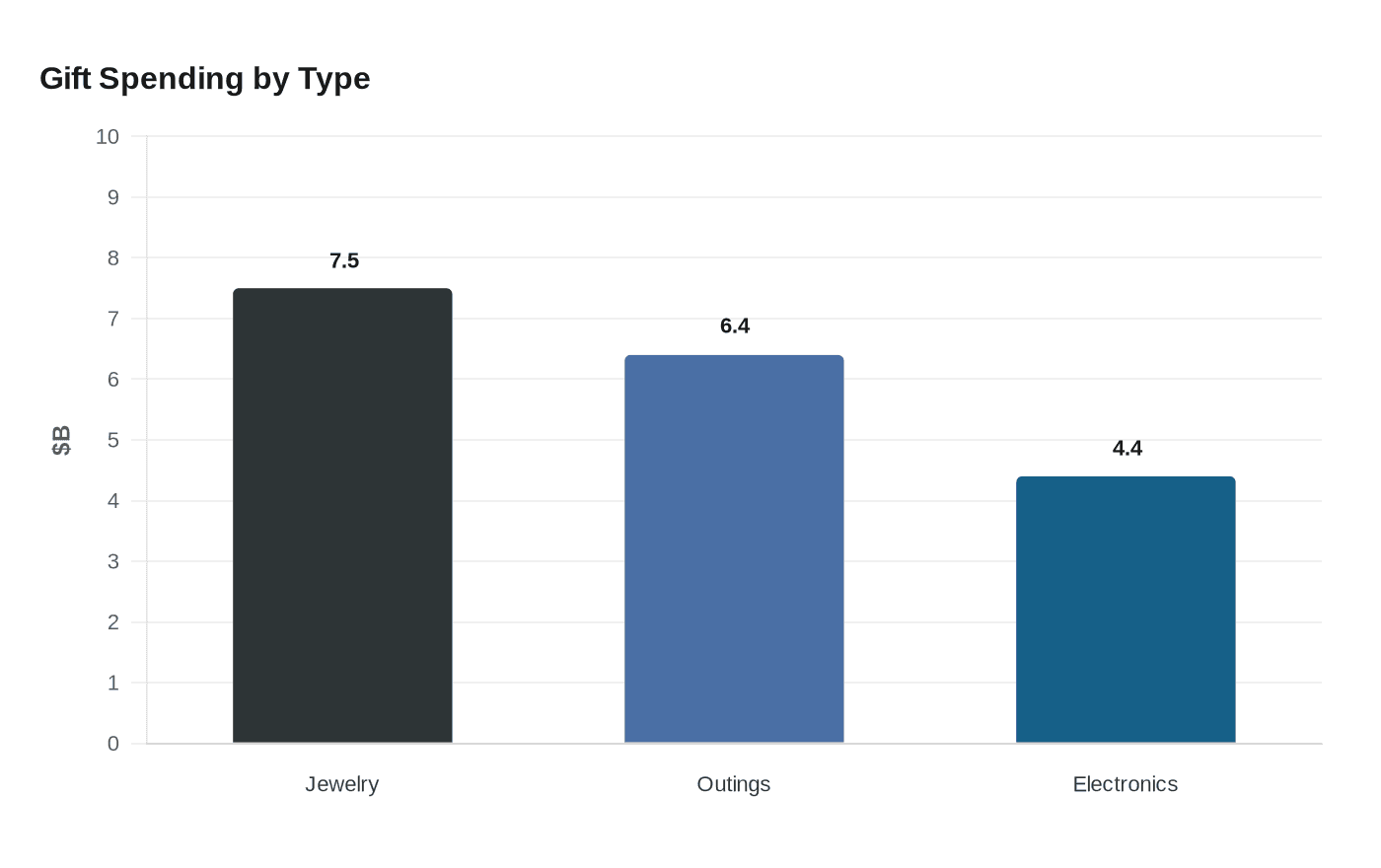
The split is generational. Flowers are still the most popular planned purchase at 75%, followed closely by greeting cards at 74%, special outings at 63%, gift cards at 55% and clothing or clothing accessories at 51%. Yet the biggest spending category is jewelry at $7.5 billion, ahead of special outings at $6.4 billion and electronics at $4.4 billion. Mark Mathews, chief economist at the National Retail Federation, said consumers are still “gifting from the heart” despite economic uncertainty, while Phil Rist of Prosper said electronics are crossing $4 billion in expected spending for the first time in the survey’s history.
For gift buyers trying to avoid something that feels generic, the age of the recipient matters. CivicScience found older moms, those 45 and older, are most interested in meals out with family and flowers, while younger moms under 45 lean toward handmade gifts, apparel, jewelry and electronics. That makes the cleanest push-present logic easy to see: if the goal is something a new mother can wear or use every day, jewelry, a polished accessory or a well-made piece of clothing will usually feel more personal than another bouquet on the counter.
Younger shoppers are pushing the market in that direction. NRF says millennials and Gen Z are the age groups most likely to give experiences such as concerts and sporting events, and CivicScience says Gen Z gift-givers are the most likely to plan to spend $100 or more and to buy electronics and tickets. CivicScience also found that intent to buy clothing, shoes and accessories has reached its highest level in its data, while the likelihood of buying flowers has slipped three percentage points since 2023.
RetailMeNot’s separate survey points to a more budget-conscious mood, with 72% of U.S. consumers planning to shop for Mother’s Day and an average intended spend of $93, down from $360 last year. Taken together, the numbers show a holiday that still runs on flowers and meals, but increasingly rewards gifts that feel worn, used and remembered long after the day itself has passed.
Know something we missed? Have a correction or additional information?
Submit a Tip