33 Practical Self-Care Kit Ideas for Comfort, Calm, and Coping
43% of U.S. adults feel more anxious than last year — here are 33 specific items to fill a self-care kit that actually helps.
Forty-three percent of U.S. adults told the American Psychiatric Association they felt more anxious in 2024 than the year before, up from 37% in 2023 and 32% in 2022. Gallup found that 48% of Americans reported "a lot" of stress the day before they were surveyed. And yet only one in four U.S. adults spoke with a mental health professional in 2024. That gap between rising anxiety and limited professional access is exactly why a thoughtfully assembled self-care kit matters so much as a gift right now.
The wellness economy reflects this need in numbers: the Global Wellness Institute reported the sector hit a record $6.3 trillion in 2023, growing four times faster than the global pharmaceutical industry. But a meaningful self-care kit doesn't require a large budget. What it requires is intention. The 33 items below are organized by function, from immediate physiological relief to longer-term coping tools, so you can pick across categories to build something genuinely useful.
Physiological Comfort
1. Herbal tea sampler
A multi-blend sampler covering chamomile, lavender, peppermint, and ginger covers both sleep support and daytime calm. The American Psychiatric Association's 2024 poll found that 40% of adults name sleep as a top mental health factor, making a bedtime tea ritual one of the most directly impactful items in any kit.
2. Microwaveable heating pad
Moist heat pads that wrap around the neck and shoulders offer immediate muscle relief, which is particularly relevant given that 53% of U.S. adults name stress as their single biggest mental health factor. A reusable rice or clay-bead pad is compact enough for any box size.
3. Cozy socks
Thick, warm socks address one of the most immediate and underrated physiological comfort triggers. They're tactile, they're practical, and in every price range.
4. A cozy mug
A heavy ceramic mug with good weight in the hand turns any tea or hot drink ritual into a grounding sensory moment. Pair it with the herbal sampler for a complete morning or evening anchor.
5. A favorite comfort snack
One small, specific food item the recipient loves signals that you paid attention. It transforms the kit from a generic package into something personal. Dark chocolate, trail mix, or a specialty cookie tin all work.
Sensory and Pampering
6. Sheet face masks
A pack of three to five sheet masks gives the recipient multiple use occasions rather than a single-use luxury. Look for formulations with calming ingredients such as aloe vera, green tea, or centella asiatica.
7. Aromatherapy essential oil roller
Pre-diluted rollers in lavender, eucalyptus, or bergamot are one of the most portable self-care tools available. BetterUp describes how meditation and sensory anchoring "centers you in the present and keeps your mind from replaying stressful moments," and an aromatherapy roller is a quick, pocket-sized version of that effect.
8. Bath salts
Epsom salt blends with lavender or eucalyptus serve dual purpose: magnesium absorption for muscle tension and aromatic calm. A wide-mouth jar is the most practical packaging for gifting.
9. Bath bombs
A set of three to four bath bombs adds a visual and aromatic dimension to bathtime and signals to the recipient that a full, unhurried soak is the plan. They're especially effective for the 68% of Gen Z and younger millennials who report frequent burnout and rarely prioritize recovery rituals.
10. Calming candle
A soy or beeswax candle in a grounding scent (sandalwood, bergamot, or vanilla) creates immediate environmental cues for wind-down. Scent is one of the fastest sensory pathways to mood regulation.
11. Soothing lip balm
A rich, fragrant balm, particularly one with calming essential oils, is a small but reliable sensory comfort. Shea butter or beeswax formulas with lavender are a practical choice.
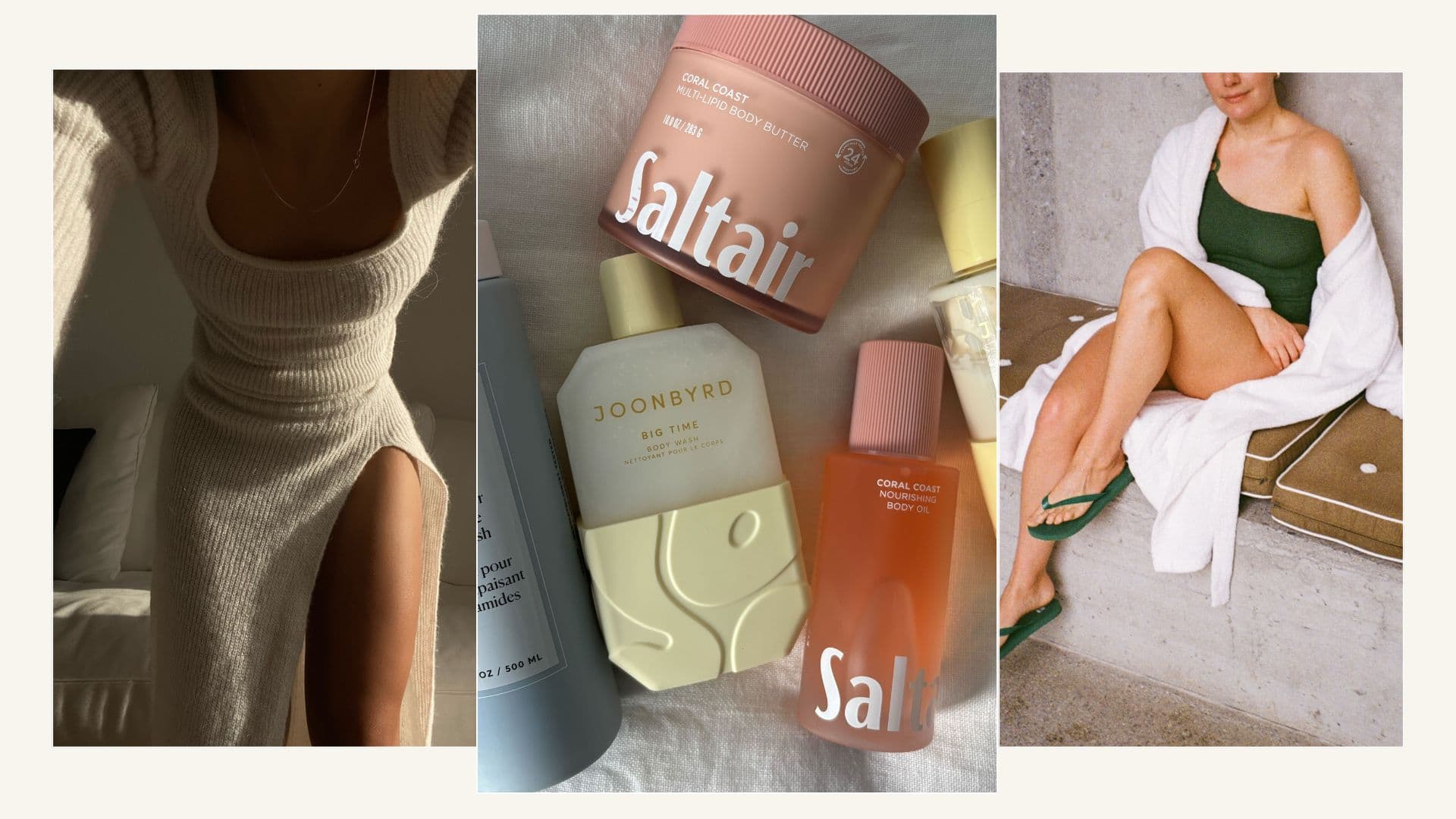
12. Body lotion or hand cream
A quality hand or body cream with a calming scent turns a daily routine into a brief, tactile self-care moment. Look for formulas with shea, jojoba, or oat extract for both scent and skin benefit.
13. Body scrub
A sugar or salt scrub acts as both a physical exfoliant and a tactile ritual. DIY versions with coconut oil, sugar, and a few drops of essential oil cost under $10 to make and feel genuinely luxurious.
14. Essential oil diffuser
A compact ultrasonic diffuser with a starter set of oils gives the recipient a repeatable, room-filling sensory tool. The U.S. personal care products market hit $73.17 billion in 2023, and aromatherapy devices are among the fastest-growing categories within it.
Mental Health Supports
15. Gratitude journal
A structured gratitude journal with dated prompts, rather than a blank notebook, removes the friction of knowing what to write. Even short daily entries are clinically linked to reduced anxiety markers.
16. Mood tracking journal
A journal with simple mood-check-in prompts helps users identify patterns over time. This is especially valuable for the 43% of U.S. adults reporting heightened anxiety, who often struggle to pinpoint what drives their stress without a consistent log.
17. Affirmation cards
A deck of 52 weekly affirmation or self-reflection cards provides a daily low-effort mental health touchpoint. Cards with prompts focused on self-compassion and grounding are particularly effective for high-burnout recipients.
18. Mindfulness prompt cards
Distinct from affirmations, mindfulness prompt cards offer specific, in-the-moment exercises like box breathing instructions or a two-minute body scan. These are ideal for the person who wants to practice mindfulness but doesn't know where to start.
19. A self-care menu
A handwritten or printed card listing 10 to 15 small, specific activities the recipient enjoys makes self-care accessible during moments of low motivation or overwhelm. The menu format acknowledges that starting is usually the hardest part of any coping strategy.
20. Crisis and mental health resource card
A small card with the SAMHSA National Helpline (1-800-662-4357), the 988 Suicide and Crisis Lifeline, and the Crisis Text Line (text HOME to 741741) is the single most important item in any kit assembled for someone navigating hard times. It costs nothing and signals deep care.
21. Adult coloring book with colored pencils
Adult coloring books offer structured, repetitive activity that occupies the hands and quiets the overactive brain without requiring sustained focus or creative energy. Including a set of quality colored pencils makes the activity immediately usable.
22. A copy of The Relaxation Response
Dr. Herbert Benson and Miriam Z. Klipper's 1975 Harvard-grounded classic has sold over 6 million copies and remains the foundational clinical text on at-home stress relief. Benson's research showed more than 60% of all healthcare visits are stress-related, and his book offers practical, evidence-based techniques that cost nothing to practice once you've read it.
Mindfulness and Creativity
23. A puzzle (500 to 1,000 pieces)
Puzzles provide a focused, screen-free activity with a clear completion state, making them one of the most effective tools for breaking the anxiety loop of rumination. A 500-piece puzzle is achievable in a single sitting; a 1,000-piece puzzle stretches the reward across multiple sessions.
24. An inspirational or personal growth book
Choose a title specific to what the recipient is navigating, grief, burnout, relationship stress, or career change, rather than a generic wellness bestseller. Specificity turns this from filler into a message.
25. A mindfulness app gift card or subscription
The global self-care apps market was valued at approximately $3 billion in 2024 and is projected to grow at 18.7% annually through 2033. A one-month or three-month gift subscription to a meditation or sleep app makes the barrier to starting essentially zero.
26. Stress ball or fidget tool
Tactile tools like squeeze balls, smooth stones, or textured rings address the physiological side of anxiety by engaging the nervous system through touch. They're discrete enough to use at a desk or in a waiting room.
27. A low-maintenance plant or succulent
A small succulent or pothos cutting adds a living, calming element to the recipient's space. Research consistently links exposure to plants with reduced cortisol levels; a small desk plant is one of the few self-care gifts that compounds in benefit over time.
Personal Touches
28. A handwritten note
No printed card substitutes for a handwritten note that names specifically why this person matters and what you see in them. It is, by a wide margin, the item most likely to be kept and reread. Personalization is what transforms a collection of products into a genuinely meaningful gift.
29. A curated playlist
Write the playlist title and song names on a card, or send a shared link, and explain why you chose each song. Music is one of the fastest and most reliable mood-regulation tools available, and a playlist built with care signals attention to who the person actually is.
30. A photo or small keepsake
A physical photograph printed at wallet or 4x6 size, of a shared memory, a place the recipient loves, or a pet, adds an anchor of warmth to the kit. Digital photos exist in abundance; a printed one is already rare enough to feel intentional.
31. A spa or experience gift card
A gift card to a local spa, float tank center, or yoga studio extends the kit's impact beyond the immediate unboxing. It invites the recipient to invest in a full dedicated recovery session.
32. A personalized coping plan card
A single index card listing the recipient's three most effective known stress-relief activities, written in your own words based on what you know about them, is more useful than any generic checklist. "When you're overwhelmed: walk to the park, call your sister, make chamomile tea" is actionable in a way that a store-bought card simply cannot replicate.
33. A reusable box or basket for the kit itself
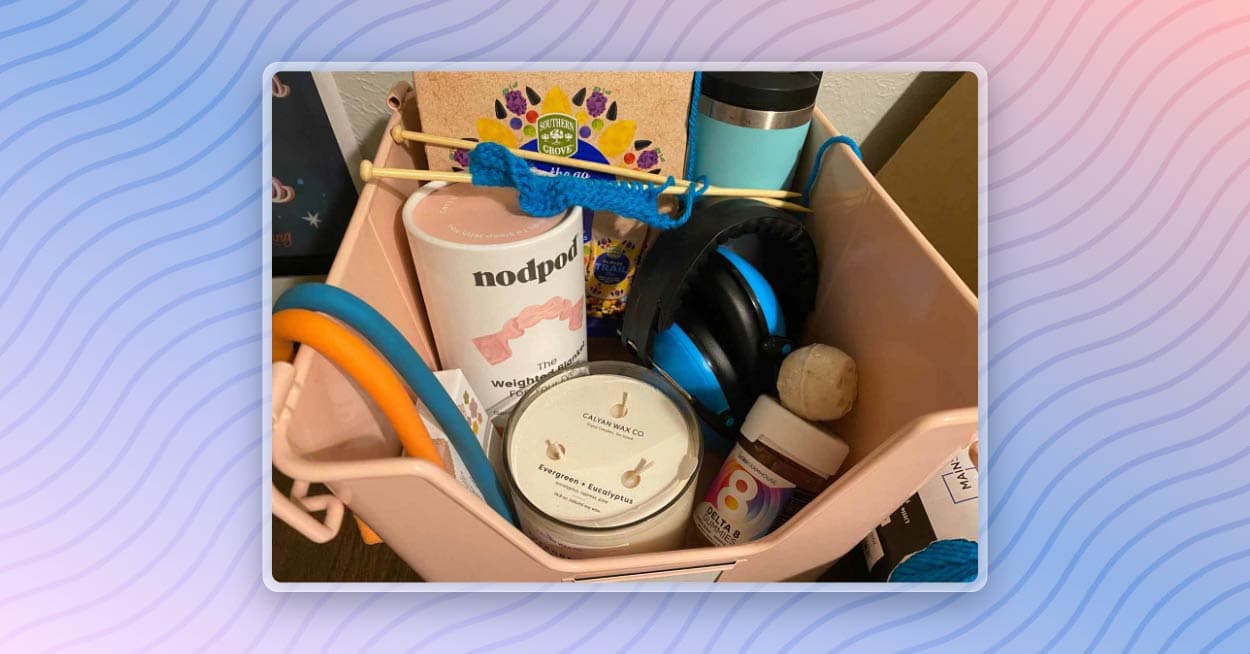
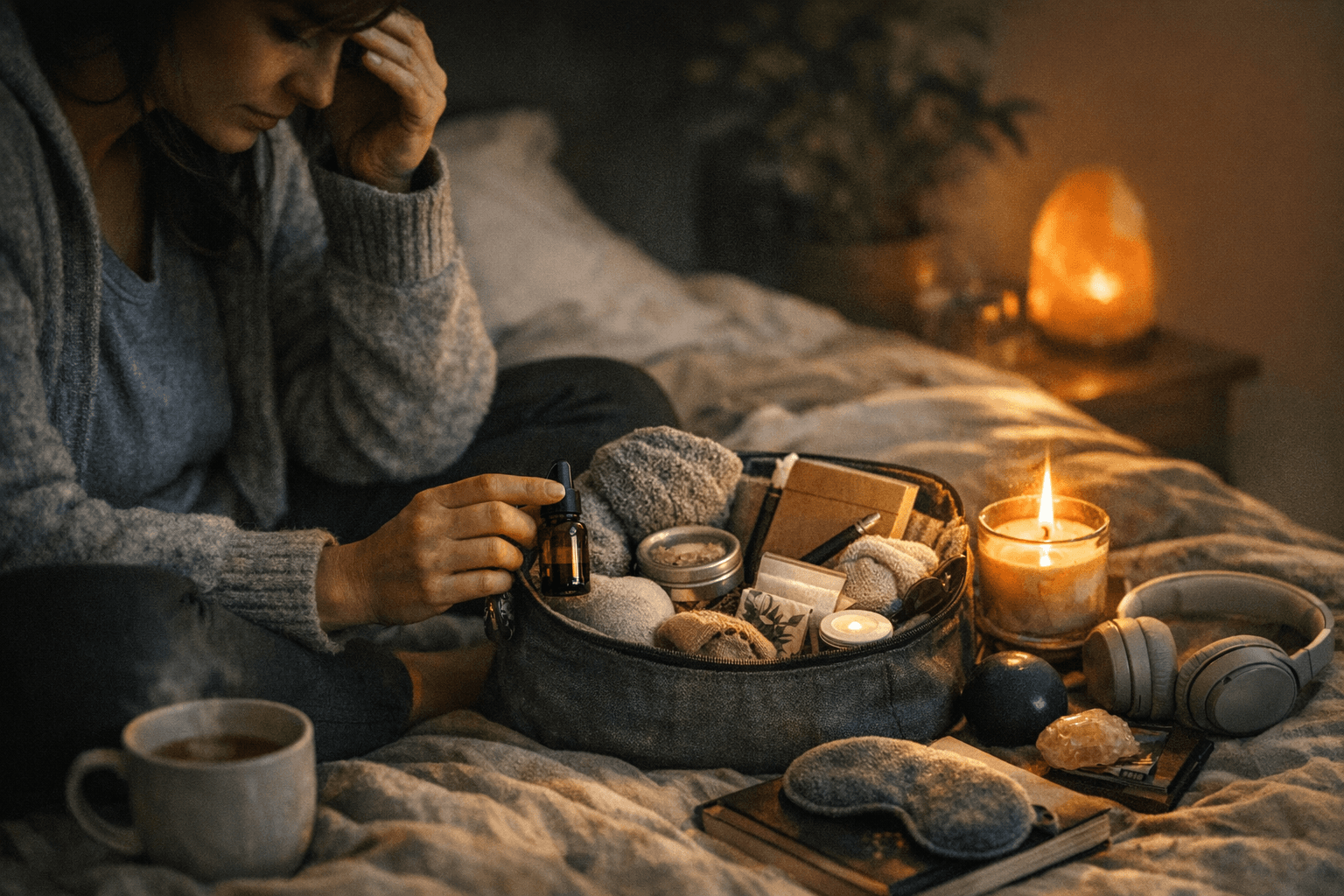
The container matters. A woven basket, a fabric-lined wooden box, or a quality reusable tote gives the kit a home after the initial unboxing. When a self-care kit has a dedicated drawer or shelf space, it becomes part of a routine rather than a one-time gesture.
The science behind self-care as a genuine therapeutic tool traces back to Dr. Benson's work at Harvard Medical School, which began in 1968 when practitioners of Transcendental Meditation arrived to have their stress-reduction claims formally studied. Benson described his resulting framework as "simply a scientific validation of age-old wisdom," and the items in any well-built kit follow that same logic: none of them are magic, but all of them are evidence-grounded ways to meet the body and mind where they are. That combination of the physiological, the sensory, and the deeply personal is what separates a self-care kit that gets used from one that gets shelved.
Know something we missed? Have a correction or additional information?
Submit a Tip