How to choose fair trade flowers for a more mindful gift
Fair trade flowers make self-care feel more intentional: choose credible seals, seasonal stems, and local growers for a gift that lands softer.
Flowers can be one of the most comforting self-care gifts you can give, but the best bouquet is the one that feels nurturing instead of disposable. That means looking past the pretty first impression and thinking about where the stems came from, who grew them, and whether the bouquet was produced with any real standard behind it. The scale matters too: the United States imported nearly $3.3 billion worth of cut flowers, plants, and nursery stock in fiscal 2022, and fresh-cut roses alone topped $800 million.
Why the sourcing story matters
This is a global trade, not a tiny local purchase. USDA’s Colombia analysis says that country’s cut flower industry has become a $2.4 billion export sector, supplying about 60 percent of flowers sold in the United States, and nearly 80 percent of Colombia’s production goes to the American market. The USDA report from Bogotá was prepared by Alvaro Ortega and approved by Andre Bradley, while an earlier USDA report on the same industry was approved by Michael Conlon, which is a useful reminder that the bouquet on your table is part of a tightly tracked international supply chain.
That scale is exactly why certifications matter. Fairtrade warns that flower production can involve low wages, poor working conditions, and a heavy environmental footprint, so a seal is not decoration, it is the thing that tells you somebody checked the farm against a standard. Gonzaga Mungai, Fairtrade International’s global manager South for Flowers and Young Plants, has been one of the clearest voices pushing that point: fair flowers are meant to support workers and communities, not just make a vase look good.
The labels worth trusting
If you want the simplest filter, look for third-party certification, not vague language about being “eco” or “thoughtful.” Rainforest Alliance, Fair Trade, and Veriflora are all independent programs that verify flowers were grown to ecological and social standards, but they do not all focus on the same things. Rainforest Alliance centers ecosystems, water, soil, and working conditions; Fair Trade emphasizes worker pay and community investment; Veriflora is tailored specifically to cut flowers and potted plants.
Fairtrade is especially useful if you want the broader policy story behind the bloom. The current Fairtrade Standard for Flowers and Plants is dated 15.10.2023, with the next review expected in 2028, and its five chapters cover General Requirements and Commitment to Fairtrade, Social Development, Labour Conditions, Environmental Development, and Trade. In practice, that is the kind of framework that turns a bouquet from a mood purchase into a more accountable one.
It also helps to understand how long this movement has been around. Fairtrade labelling began in the 1980s, after the collapse of world coffee prices helped spark the first certification label, and flowers eventually became part of that same effort to clean up global commodity supply chains. That history matters because it shows Fairtrade is not a trend piece, it is a long-running attempt to make trade fairer.
How to shop for a bouquet that feels more thoughtful
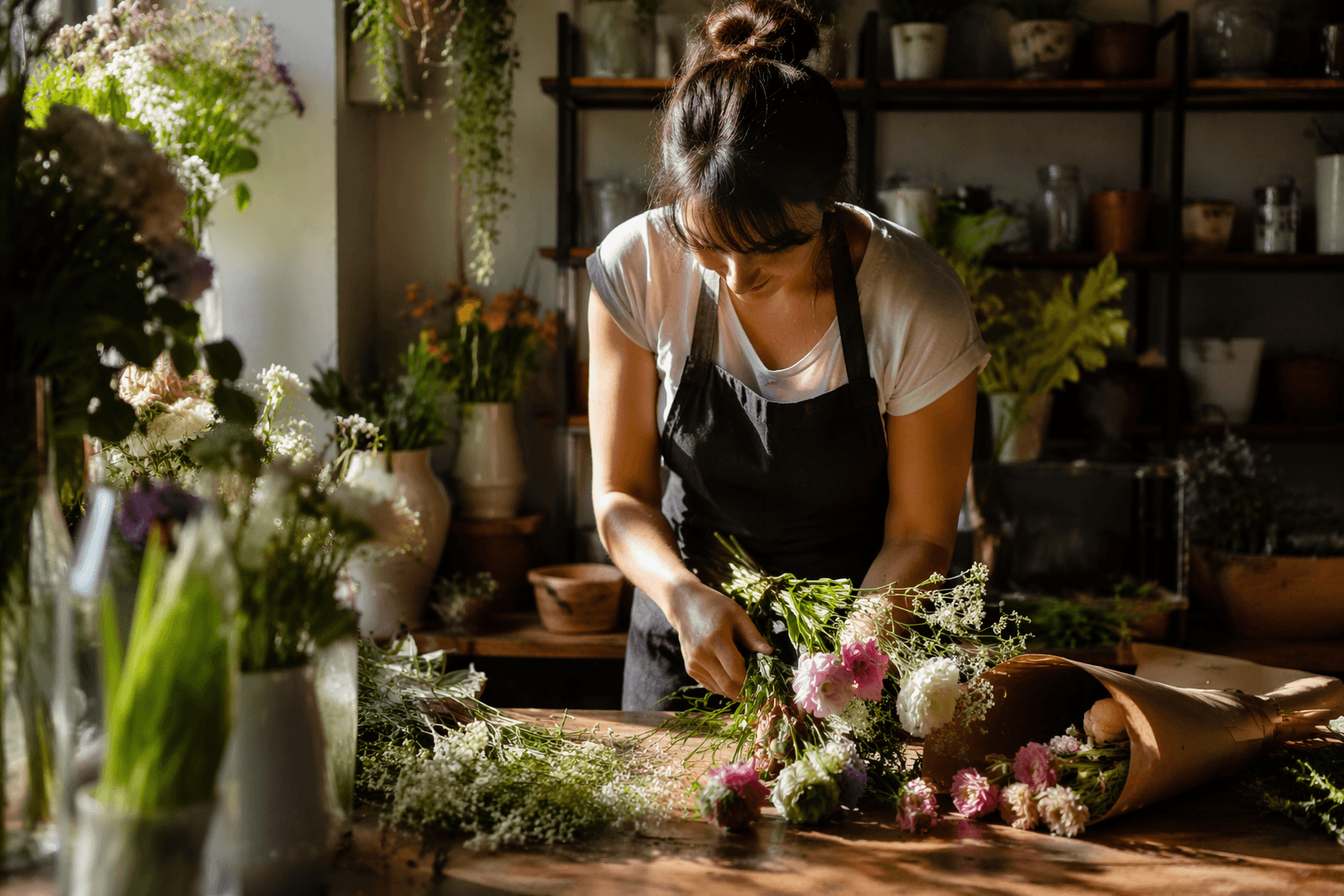
The easiest shortcut is also the most practical one: buy local and seasonal whenever you can. The Good Trade’s guidance is blunt about this, and it is right. Farmers’ markets and flower subscription services are usually more transparent about sourcing than large retailers, and “locally grown” or “seasonal” on the label is a good sign that someone paid attention to how the flowers were produced.
Here is the fastest way to shop with more confidence:
- Ask the florist where the flowers were grown. A real answer is better than a pretty marketing phrase.
- Look for a certification seal from Rainforest Alliance, Fair Trade, or Veriflora. Third-party verification is the difference between a claim and a check.
- Favor local, seasonal stems when the goal is a lighter footprint and a more personal gift. That choice usually feels calmer and less wasteful, which is exactly the point of self-care gifting.
- If you want the bouquet to last longer in the recipient’s life, consider a Veriflora-certified potted plant instead of cut flowers. It is the more living gift, especially for someone who prefers something they can keep tending.
Organic belongs in the mix too, especially if you are trying to cut down on the chemical story behind the stems. On its own, organic is a better farming cue than a generic “natural” label, but it is strongest when it appears alongside a real farm name, a seasonally appropriate stem choice, or another credible certification.
Who each kind of flower gift is best for
For the friend who treats flowers like an exhale, a locally grown mixed bouquet is the smartest buy. It feels softer and less performative than a giant imported arrangement, and because the stems are seasonal, the bouquet usually looks more like what is actually thriving right now instead of what happened to survive a long haul. That makes the gift feel calmer, which is exactly what a self-care present should do.
For a Valentine’s Day gift, fair-trade roses are the most thoughtful version of the classic move. USDA says about 22 percent of Americans bought flowers for Valentine’s Day in one recent year, adding roughly $2.3 billion to the economy, so this is already a high-pressure floral moment. Choosing roses with a credible seal keeps the gift romantic without pretending the supply chain is invisible.
For someone who loves plants more than cut stems, Veriflora-certified potted plants are the better self-care gift. They are designed for flowers and potted plants, which makes them a more natural fit for a person who likes to nurture something over time rather than enjoy a bouquet for a few days and toss it. It is a stronger gift when you want the gesture to keep living on the windowsill.
For the person who always asks where things come from, the best choice is the most transparent one you can find. A local florist, a farmers’ market bunch, or a subscription service that names the grower will almost always feel more considered than a generic grocery-store bouquet, because the sourcing is part of the gift rather than an afterthought. In a market this large, that little bit of clarity is what makes the flowers feel intentional instead of impulsive.
A mindful bouquet does not need to be extravagant to feel special. It just needs a credible trail back to the farm, a season that makes sense, and a reason to believe the flowers were grown with care for people as well as beauty. That is what turns a bunch of stems into a gift that actually rests well on the conscience.
This article was produced by Prism’s automated news system from verified source data, official records, and press releases, then run through automated quality and moderation checks before publishing. The system is built and supervised by the people who set the standards it runs under. Read our full AI policy.
Did this article answer your question?