LED masks and microcurrent devices make luxe self care gifts
Beauty tech has graduated from novelty to meaningful gifting, with LED masks and microcurrent tools offering a spa-like ritual that can feel truly considered.
Why beauty tech suddenly feels like a premium gift
The smartest self-care gifts right now are not another jar on the vanity. They are devices that turn a routine into an experience, which is exactly why LED masks, microcurrent tools, and other at-home beauty gadgets have moved into the luxe-gifting conversation. EUPHORIA’s April 2 guide captures the shift well: the category has moved from products that sit on the skin to tools that actively work on it, and by 2026 it says the space has fully matured.
That matters for gifting because luxury is partly about how a present behaves in daily life. A beauty device feels personal, useful, and a little indulgent every time it is unboxed and used. It is the kind of gift that does not disappear into a drawer after the holidays, especially when the recipient already loves skincare but wants something that feels more elevated than another serum.
LED masks, for the person who wants visible ritual
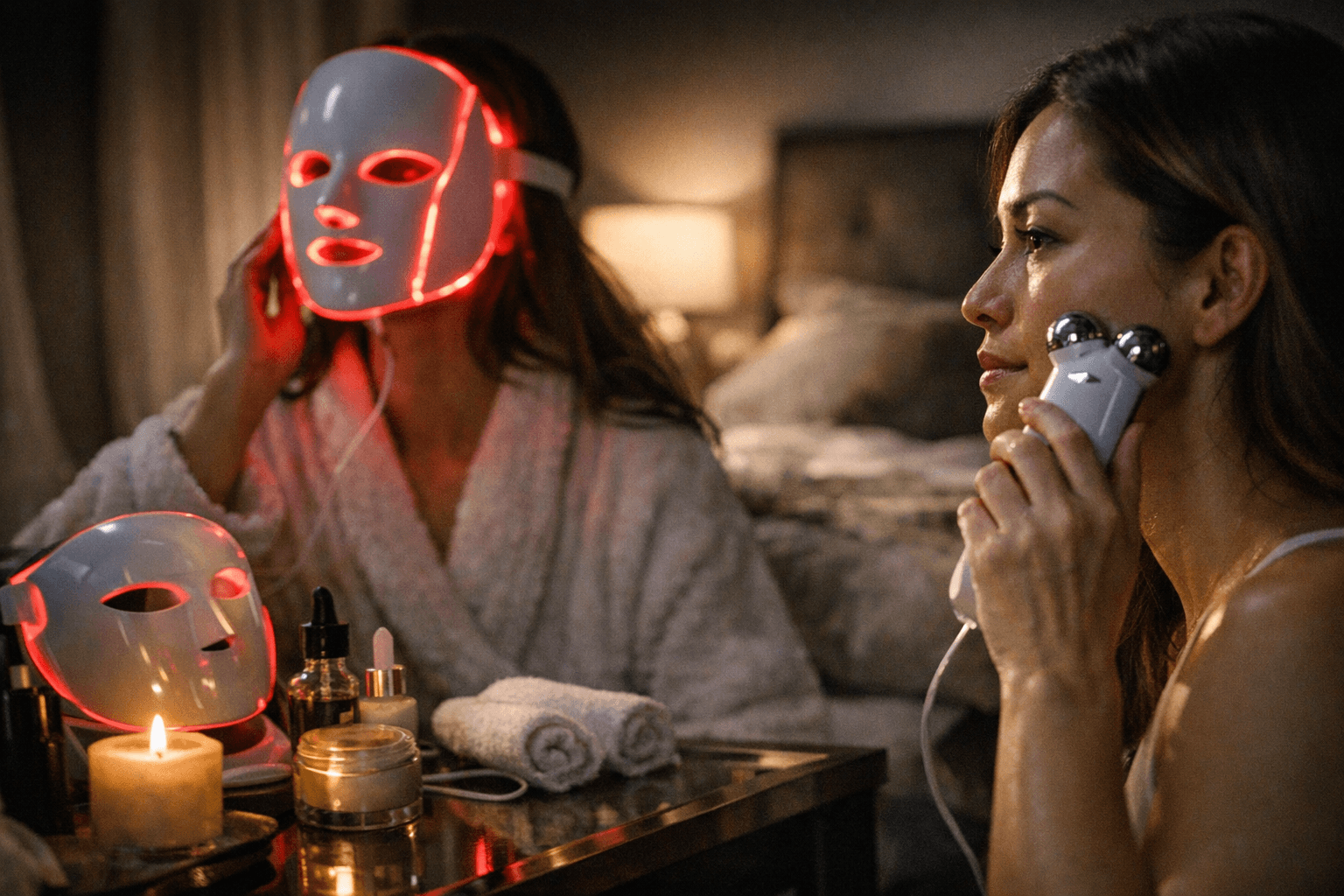
LED masks are the clearest expression of beauty tech as a gift. They look dramatic, they create a scheduled pause in the day, and they deliver the kind of spa-adjacent experience that makes a present feel more expensive than its materials alone might suggest. Research literature describes LED phototherapy as a nonthermal, noninvasive light treatment used for therapeutic outcomes, which helps explain why these masks have moved well beyond trend status.
The FDA has cleared several at-home light-based devices through its 510(k) pathway, including the LED Light Therapy Mask K221775, intended for full-face wrinkles or mild to moderate acne vulgaris, and the reVive Light Therapy Wrinkle and Acne LED Device K223482, an over-the-counter LED device for wrinkles and mild to moderate inflammatory acne. The LED Mask Platinum Exclusive MD K232795 is also cleared for full-face wrinkles with red light and infrared light and mild to moderate acne vulgaris. Those specific indications matter, because they make the category feel less like decorative gadgetry and more like a considered addition to a skincare regimen.
This is the gift to give someone who already enjoys a proper ritual, a clean vanity setup, and the satisfaction of seeing a device do something measurable-looking, even if the payoff is gradual. It is especially appealing for a person who treats skincare like a nightly reset. The main luxury here is not just the device itself, but the feeling that 10 quiet minutes can become part of a serious routine.
Microcurrent devices, for the recipient who loves a polished, high-maintenance result
Microcurrent devices sit in a slightly different lane. Where LED masks are about light and recovery-minded ritual, microcurrent tools speak to the person who likes a firmer, more sculpted-feeling routine and enjoys the idea of a beauty tool that works with deliberate, repeated use. A 2024 peer-reviewed paper notes that home beauty devices using radiofrequency, microcurrent, and LED have gained widespread attention because they are claimed to improve skin tightness and elasticity, which is exactly the sort of promise that makes this category feel premium.
The FDA’s Microcurrent Facial Device K244004 is classified under transcutaneous electrical aesthetic purposes, which gives the segment regulatory credibility without turning it into a miracle claim. In practical gifting terms, that makes microcurrent a better fit for someone who already uses devices, likes a disciplined routine, and values the sense of refinement that comes from consistent use. It is not the flashiest present on the list, but it can be the most satisfying for a recipient who cares about the ritual as much as the result.
If LED masks are the “press play and relax” gift, microcurrent is the “hands-on and committed” gift. That distinction helps when you are choosing for a partner, a sister, or a friend who likes products that feel more advanced than decorative. It is the one to consider when the recipient already has excellent skincare basics and is ready for a step that feels more technical.
Where the science gives the gift credibility
Part of what has made this category feel gift-worthy is that it is no longer floating entirely on aesthetics. The American Academy of Dermatology says board-certified dermatologists may recommend at-home red-light devices after in-office treatment to help maintain results, while also noting that more research is needed to determine exactly how effective they are. That balance is useful for buyers: it signals real-world utility without pretending the devices are a substitute for medical care.
The FDA’s 510(k) process adds another layer of clarity. The agency says a 510(k) submission shows a device is substantially equivalent to a legally marketed device and can be marketed subject to general controls. In plain English, that means these products are not free-for-all novelty items. They occupy a regulated space that gives them more legitimacy than the average beauty gadget, even if they still depend on proper use and realistic expectations.
For anyone buying in this category, that combination of spa-like pleasure and regulatory seriousness is part of the appeal. It makes the gift feel thoughtful rather than gimmicky, which is a major dividing line in luxury gifting.
How to choose the right device for the right person
The best beauty-tech gift is less about the loudest claim and more about the recipient’s habits.
- Choose an LED mask for someone who loves ritual, downtime, and a visible self-care moment.
- Choose microcurrent for someone who enjoys a more hands-on, technique-driven routine.
- Choose any at-home light device only if the recipient is likely to use it consistently, because these are gifts that reward repetition more than impulse.
- Choose the most established FDA-cleared options when you want the present to feel grounded in real use, not just packaging.
This is also where budget becomes part of the judgment. Beauty tech sits in the premium tier because the value is in the experience, the engineering, and the frequency of use, not just the object itself. A simpler, well-chosen device can feel more luxurious than a pricier product with a longer feature list if it is easier to use and better suited to the recipient’s routine.
Why this category feels especially luxe now
The reason LED masks and microcurrent devices keep showing up in gift guides is that they hit a rare sweet spot. They look special, they feel personal, and they fit the current beauty moment, where devices and tools have become as aspirational as creams and serums. EUPHORIA’s framing is right on target: the category has matured, and that maturity makes it more giftable.
The strongest beauty-tech gifts are not trying to replace a facialist or promise instant reinvention. They create a private ritual with a premium feel, and they do it in a way that can slide into real life. That is what makes them feel indulgent without being frivolous, and why they now belong among the most compelling self-care gifts you can give.
This article was produced by Prism’s automated news system from verified source data, official records, and press releases, then run through automated quality and moderation checks before publishing. The system is built and supervised by the people who set the standards it runs under. Read our full AI policy.
Did this article answer your question?