AI Personalization and Luxury Custom Gifts Strengthen Valentine's Emotional Bonds
Expect AI-made portraits, custom book editions, bespoke Repossi appointments and LEGO®-based keepsakes to be the Valentine gifts that feel truly personal this year.
This Valentine’s Day the marketplace is split between scaleable AI personalization and hands-on luxury curation, and the gifts that land hardest combine both. Industry reporting summarized on Feb. 23, 2026 describes 2026’s gifting market as leaning heavily into AI-enhanced personalization and experiential luxury, and trade coverage from Jan. 29, 2026 stresses that brands are “doubling down on what technology cannot replicate: emotional connection.”
If you want a gift that reads as custom, start with AI-first formats that people actually react to. Marketing agencies note that “In 2025, customers expect more than generic marketing messages. They want personalized experiences, ones that feel curated, relevant, and deeply connected to their needs.” The Media Socialites lays out the workflow: data collection and audience profiling across website activity, social engagement, email interactions and purchase history; predictive AI modeling to surface patterns; and dynamic content personalization that adjusts messaging and offers in real time. The agency argues these steps improve time-on-page, ad relevance and email click-through rates, metrics that translate into more thoughtful, targeted gift ideas.
Luxury houses, however, are careful to remind gift-buyers that human stewardship still matters. Repossi, described as LVMH-owned, has “resisted the pressure to scale aggressively” and focuses on bespoke appointments and co-creation for custom pieces and redesigns that emphasize personal meaning. As de Vergeron put it, “Creativity doesn’t fit neatly into performance metrics,” and Ward warned, “There is a ceiling to optimization. At some point, the numbers stop telling the full story.” Kerzner’s boutiques illustrate the point in practice by pairing shopping with curated arrivals, personalized gifting and experiential dining before or after purchases.
That tension shows up in hard numbers and case studies. Sociallifemagazine argues that brands should embrace “calculated imperfection” and build “humanized algorithms” that “interpret dreams, aspirations, and unspoken desires,” noting that “research from multiple luxury houses reveals that algorithmic recommendations for high-end products achieve 40% lower conversion rates compared to human curation.” Their LVMH example is explicit: “Their initial AI implementation tracked customer preferences with surgical precision. Meanwhile, sales stagnated. Consequently, they recalibrated their algorithms to introduce strategic ‘mismatches’, suggestions slightly outside predicted comfort zones.” The piece also highlights regional nuance: “While Chinese consumers embrace technological sophistication, European luxury buyers prefer subtler algorithmic integration.”
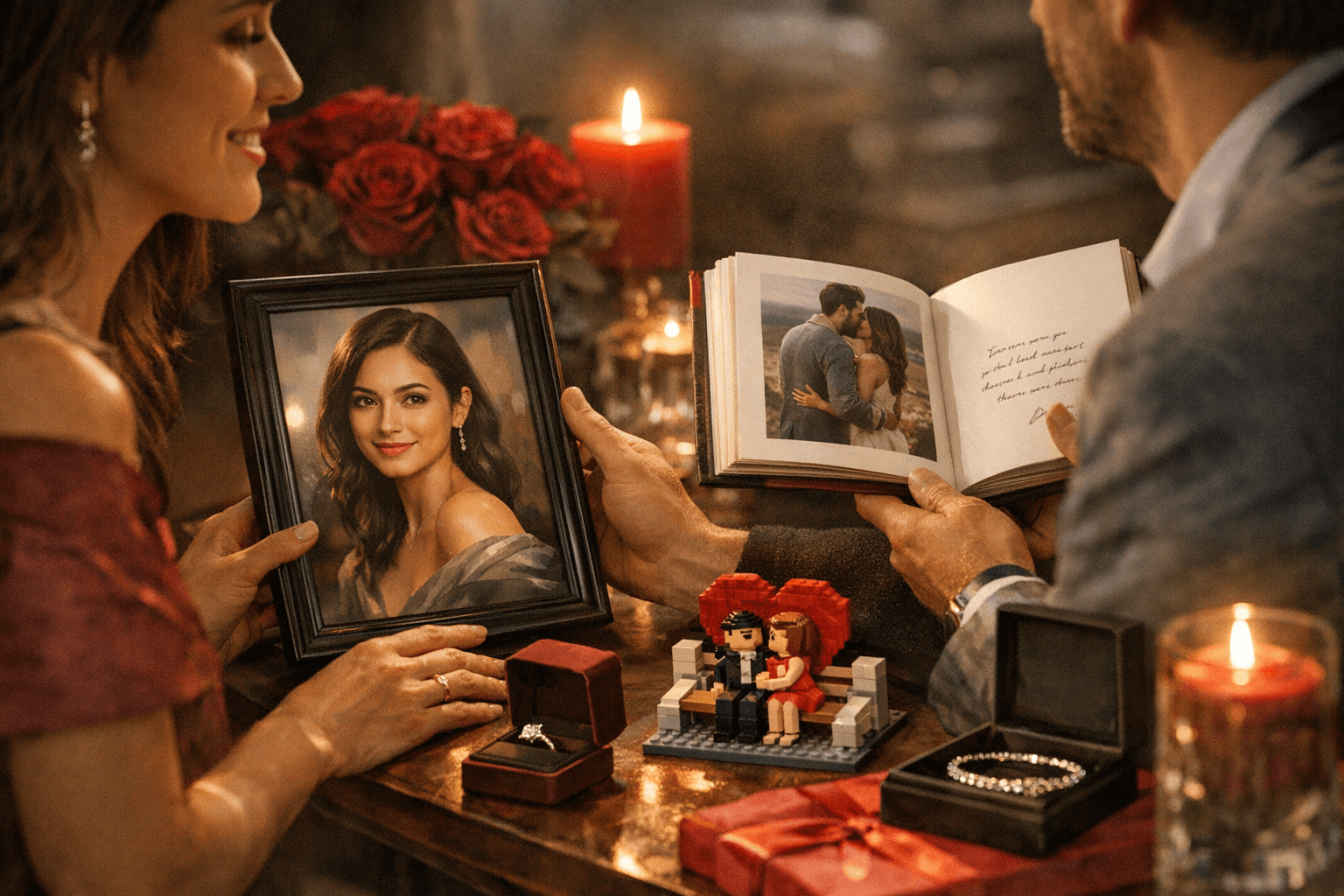
For gift ideas that match these findings, think hybrid: commission a bespoke Repossi appointment for a piece that carries personal history; request a personalized edition of a book or art object with AI-generated portraits and embossed covers, the anonymous Superagency author reported gifting custom editions and watching recipients move from “a polite ‘thank you’, then a pause, then curiosity, then delight”; arrange Kerzner-style experiential dining with a branded keepsake after the meal; or order a custom LEGO®-based model from DD Bricks, where “AI + Human Creativity = The Perfect Gift” and AI accelerates ideation while designers add the emotional finishing touches.
This year, the most effective Valentine gifts will not be purely algorithmic or purely artisanal. They will be AI-enabled tools used to scale true attention, paired with human creative choices that create surprise and attachment.
Know something we missed? Have a correction or additional information?
Submit a Tip