Choose Valentine's Day Gifts With Clear Intent, Not Category Clichés
The best Valentine's gift isn't the most expensive one — it's the one that communicates exactly who it's for. Here's how research explains the difference.

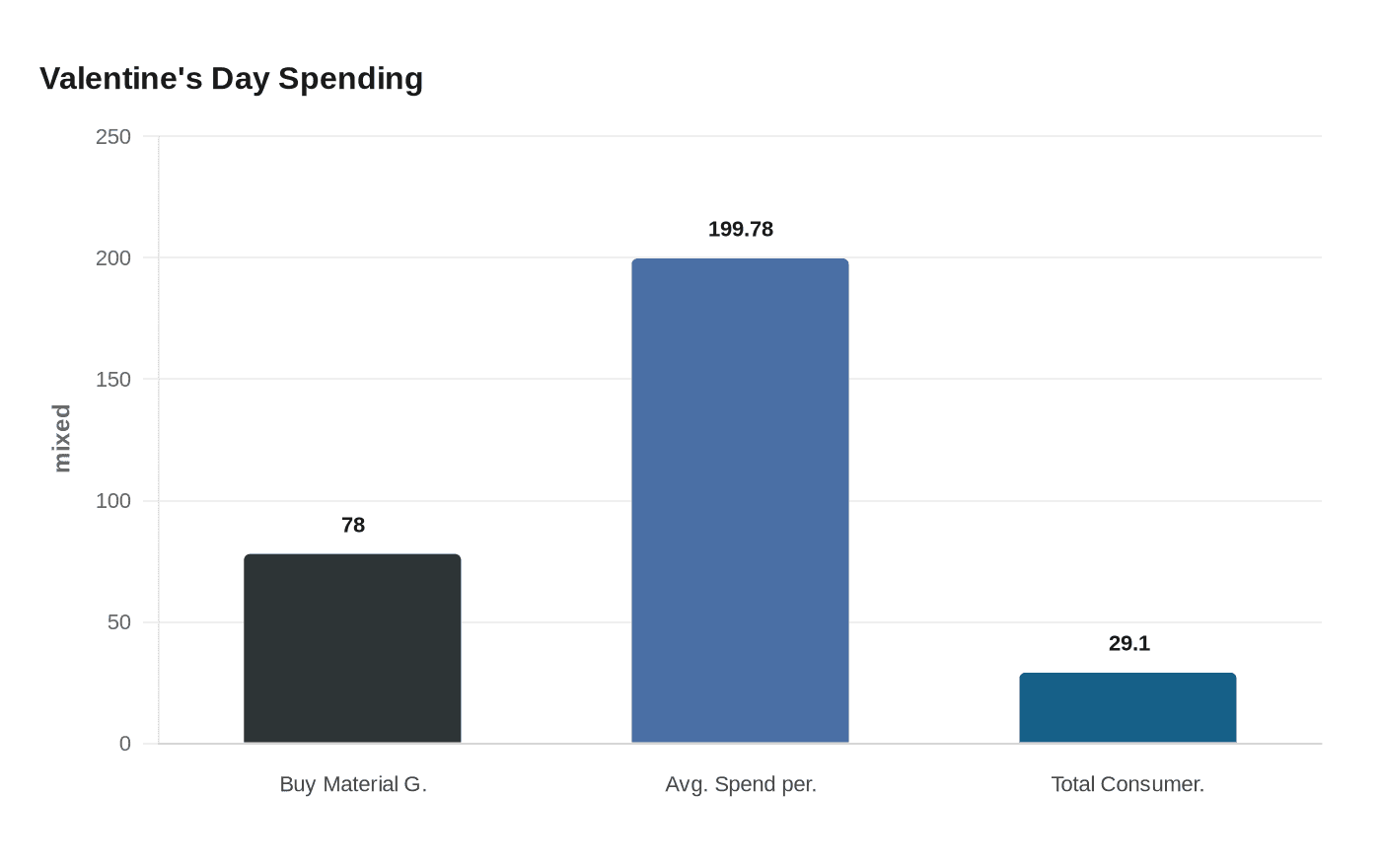
There's a number that tells you almost everything about what's broken with Valentine's Day gifting: 78% of people report most recently buying material gifts rather than an experience for someone they love, even though research consistently shows experiences are what actually deepen a relationship. Meanwhile, total consumer spending on Valentine's Day is expected to reach a record $29.1 billion this year, and shoppers are budgeting a record $199.78 on average for gifts. That is a lot of money being poured into a formula: flowers, chocolates, jewelry, and a dinner reservation made two weeks late. The issue isn't the spending. It's the intention behind it.
The most useful thing you can do before buying anything this February is ask yourself one question: what is this gift actually communicating? In romantic relationships, the act of giving serves as a fundamental signal of relationship value, where the investment of resources like time, effort, and money communicates a partner's level of commitment and care. That signal changes dramatically depending on whether you're buying for a partner, a close friend, or yourself. Collapsing all three situations into a single shopping trip at a department store is how you end up giving the right gift to the wrong person.
The "gift gap" is real, and it explains most bad Valentine's presents
Research reveals a pattern called the "gift gap": as givers, we often prioritize practical care when choosing gifts, but as receivers, we prefer gifts that are "relational signaling," that is, gifts that convey thoughtfulness about the relationship. Translation: you're buying what you think they need, and they're hoping you'll show them you understand who they are. This gap is particularly pronounced for gifts with sentimental value, where thoughtfulness is communicated through emotional attachment or nostalgia. Givers avoid these choices because they require more vulnerability, yet recipients consistently report appreciating them more.
There's also a price trap worth knowing about. In a 2024 study, participants were more suspicious about the intent of a giver when a wine bottle gift was described as "expensive" rather than "typically priced." This illustrates the principle of instrumentality: the psychological association between money and self-serving, transactional goals. Big, expensive presents can lead the recipient to question whether the giver is trying to gain a specific favor or create a power imbalance. Luxury is not a substitute for thought. More often than not, it's a replacement for it.
For a romantic partner: the case for going a little corny
A study in the Journal of Experimental Psychology suggested that knowing the gift giver put thought into choosing a gift can increase the receiver's appreciation of the gift. Further research by Givi, Galak, and Olivola reinforced that when recipients realize the giver put a lot of thought into the gift, they also tend to like it more, and it can strengthen the relational bond.
The most underrated Valentine's gift category for a romantic partner is the emotionally resonant material object. Research by Cindy Chan and Cassie Mogilner at the Journal of Consumer Research found that emotional material gifts — a joke-of-the-day calendar, a framed photo, jewelry engraved with a loving message — can be very effective in strengthening relationships. These work because they operate like experiences: they evoke specific emotion tied to your shared history. A book annotated with your own notes in the margins, a print of the neighborhood where you met, a playlist with actual track-by-track notes. None of these require a $199 budget. All of them require knowing the person.

People systematically underestimate the appreciation a partner may feel when they receive a thoughtful gift, regardless of its polish. The risk of a sentimental gift feeling "too much" is almost entirely in the giver's head.
For a friend: think feasibility, not flashiness
Valentine's Day gifting is no longer a two-person transaction. While the perfect romantic reveal for a significant other remains the dominant contributor to the holiday's spending, a big chunk of spending growth is coming from gifts for friends, co-workers, and even pets. As Katherine Cullen, NRF's vice president for industry and consumer insights, noted to NBC News, "People are normalizing their Valentine's spending when it comes to what they purchase for nonromantic relationships in their lives."
When buying for a friend, the trap is going aspirational. Research by Professor Nathan Novemsky of Yale and colleagues suggests that gift givers often overlook the feasibility of a gift — meaning how easy or convenient it is to use. Gifting a new high-tech gadget with many features seems desirable, but the recipient then needs to figure out how to use all of those features, which might be difficult or even a barrier to using it at all. A beautiful, specialized item that requires effort to integrate into daily life will sit unused within weeks. The question to ask is not "would she think this is cool?" but "will she actually pick this up on a Tuesday?"
Experiments examining actual gift exchanges in real-life relationships reveal that experiential gifts produce greater improvements in relationship strength than material gifts, regardless of whether the gift giver and recipient experience the gift together. For a friend, this tilts the recommendation firmly toward shared activities: cooking class for two, concert tickets, a spa afternoon, a botanical garden membership. As researcher Cindy Chan put it: "People often struggle with the challenge of choosing what to give someone. If you want to give them something that will make them feel closer to you, give an experience."
The self-gift: a category worth taking seriously
Nearly one-third of consumers who are not planning to celebrate Valentine's Day still plan to mark the occasion in some way, with popular activities including splurging on a gift or self-care, or planning a get-together or outing with friends and family. The self-gift is no longer a consolation prize. It's a deliberate category with its own logic.
Research by Temple University's Dr. Laurie Wu and Arizona State University's Dr. Christopher Lee found a "scarcity for me, popularity for others" effect: when buying gifts, consumers preferred best-selling items for others and limited-edition items for themselves, valuing uniqueness for themselves while reducing consumption risk for recipients. This is useful intelligence. If you're buying for yourself, ignore the bestseller list entirely and go toward what is singular to your taste: the small perfumer whose scent you've been thinking about for months, the art print you keep returning to, the one-day ceramics workshop you've rescheduled three times.
The framework: three questions before you buy
Before purchasing anything, run through this sequence:
1. Who is this gift for, and what is the primary relationship context: romantic, friendship, or self?
2. Am I choosing this because it communicates something true about the recipient, or because it fits a recognizable Valentine's Day category?
3. Does this gift ask anything of them, and if so, is that ask reasonable given how they actually live?
Gift giving on Valentine's Day has more implications than simply expressing affection. The gift that is given can be seen as a physical representation of the value one feels the relationship has, or as an investment in the relationship. The flowers that sell out every February 14th represent $3.1 billion of that investment. Yet in a survey of Americans in relationships, 61% said their ideal Valentine's Day gift is a romantic dinner, 57% want an experience like a trip or concert, and 51% of women and 39% of men want a handwritten card or letter.
The clichés endure because they're easy, not because they work. The best Valentine's gifts are the ones that could only come from you, given only to the person standing in front of you. That precision is what makes a $40 gift feel more considered than a $400 one — and what makes the difference between a gesture that lands and one that just gets shelved.
Know something we missed? Have a correction or additional information?
Submit a Tip