Cocoa Futures Fell, But Valentine's Day Chocolate Prices Stay High
Cocoa futures shed more than 70% from 2024 record highs, but manufacturers' hedging contracts kept Valentine's Day chocolate prices up 14.4% year-over-year.

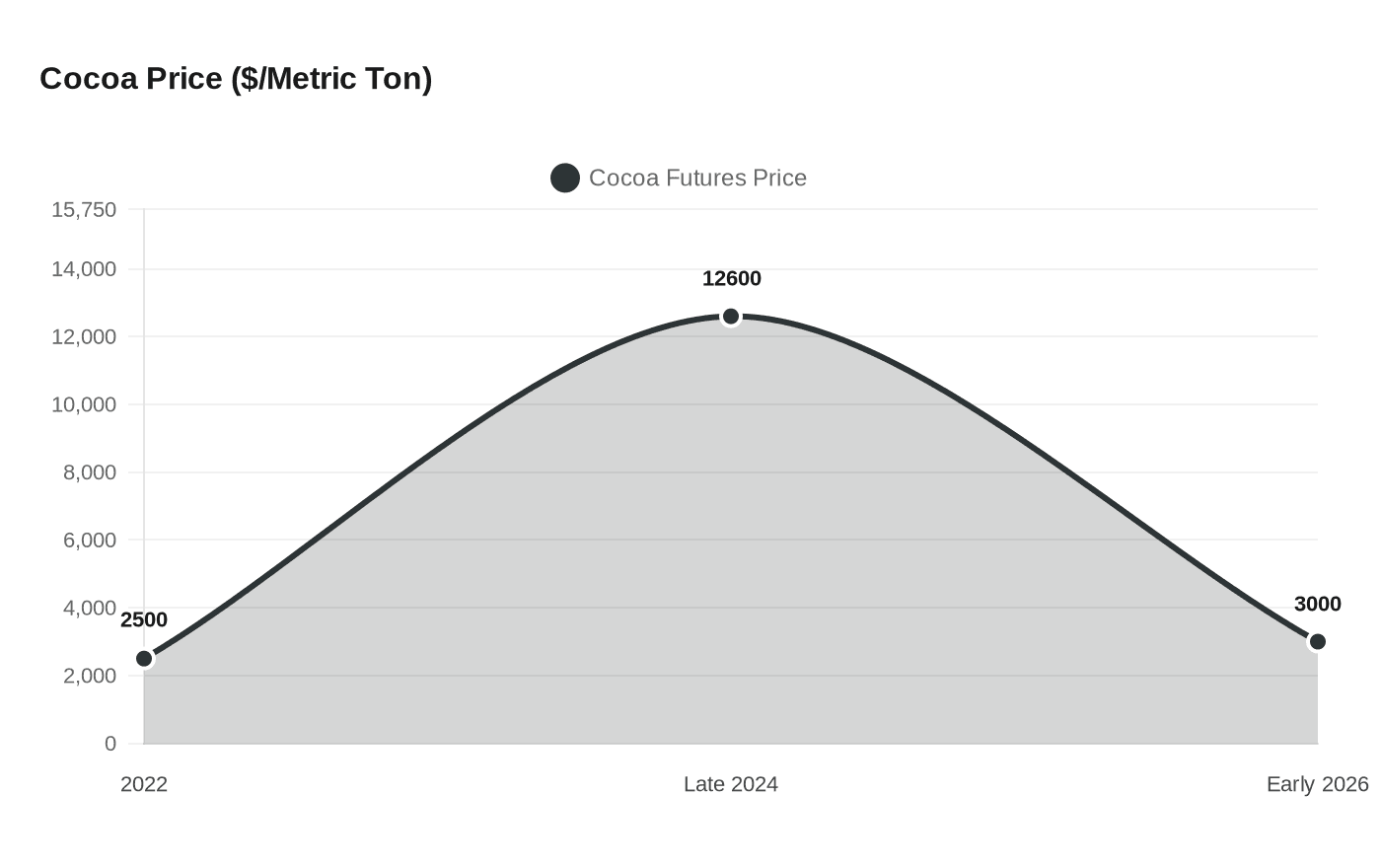
Cocoa futures lost more than 70% from the record highs they reached at the close of 2024, sliding back toward $3,000 per metric ton by early 2026. Yet anyone who bought a Valentine's Day box this February felt little of that relief: U.S. chocolate prices rose 14.4% year-over-year between January and early February, according to data from market analytics firm Datasembly.
The disconnect comes down to how candy manufacturers actually purchase raw materials. "Even though cocoa futures have dropped, retail prices remain sticky because candy makers buy cocoa months in advance and work through existing inventory and hedges," said David Branch, Sector Manager at the Wells Fargo Agri-Food Institute. The chocolates wrapped in red foil and stacked in drugstore displays this February were made months earlier, when cocoa was trading at prices far above current levels.
At its peak, cocoa topped $12,600 per metric ton by the end of 2024, up from roughly $2,500 in 2022. "We saw unprecedented cocoa inflation," said Stacy Taffet, chief growth officer at The Hershey Company. Hershey CEO Kirk Tanner confirmed the company remains "hedged above current [cocoa] market levels," meaning the cost savings visible in the futures market have not yet worked through its purchasing contracts.

For shoppers hoping Easter, now days away, brings cheaper chocolate bunnies, Branch was direct: "Most Easter chocolates were produced when cocoa was still extremely expensive, so shoppers should expect prices similar to or slightly above Valentine's Day levels." That applies specifically to seasonal products manufactured and priced well before they reach the shelf.
The lag has an estimated timeline. Analysts pointed to mid-2026 as the earliest point at which newly produced inventory, made at current lower cocoa costs, begins to displace stock built on older contracts. Financial services firm StoneX projected a global cocoa surplus of 287,000 metric tons for the 2025/26 crop year, which would eventually create structural downward pressure on pricing.
Tanner acknowledged that the deflationary momentum in cocoa markets, assuming it holds, takes "pressure down" on future price increases. But that momentum is not retroactive. Valentine's boxes are already sold, Easter eggs are already in distribution, and the consumers who paid 14.4% more this season are waiting for a relief cycle that has not yet arrived.
This article was produced by Prism’s automated news system from verified source data, official records, and press releases, then run through automated quality and moderation checks before publishing. The system is built and supervised by the people who set the standards it runs under. Read our full AI policy.
Did this article answer your question?