Engagement Ring Buying Guide: Budget, Style, and Practical Steps for Valentine's Day
Buying an engagement ring for Valentine's Day starts with one honest conversation: what can you actually spend, and what does your partner actually love?
Few purchases carry more weight than an engagement ring, and Valentine's Day has a way of turning that pressure up to maximum. The combination of romantic expectation and a hard deadline is a recipe for overspending on the wrong thing. The good news is that buying a ring well is a learnable skill, not a matter of luck or budget size.
Start with a real budget, not a myth
The old "three months' salary" rule is marketing, not wisdom. It was invented by De Beers in the 1930s to sell more diamonds, and it has no bearing on what makes a meaningful gift or a sound financial decision. Your actual budget should reflect what you can spend without going into debt that strains your relationship before it formally begins.
A useful starting point is to look at what you have available in savings, then decide what percentage of that you're genuinely comfortable spending. For some people that's $1,500; for others it's $15,000. Neither is wrong. What matters is that the number is honest. If you're planning to finance the purchase, factor in interest costs and set a total repayment figure you can live with, not just a monthly payment that feels manageable in the moment.
Understand the four Cs before you walk into a store
Cut, color, clarity, and carat weight are the four standard measures of a diamond's quality and price. Understanding them saves you from paying for characteristics that sound impressive on paper but make no visible difference in real life.
- Cut is the most important factor in how a diamond looks. A well-cut stone reflects light beautifully even if it scores lower on other measures. Prioritize cut above everything else.
- Color is graded from D (colorless) to Z (noticeably yellow). For most settings, you won't see a visible difference between a D and a G or H grade stone, but you'll pay significantly more for D. Unless your partner has specifically requested a colorless diamond, G or H is a smart sweet spot.
- Clarity measures internal flaws, called inclusions. A stone graded VS2 (very slightly included) or even SI1 (slightly included) will look flawless to the naked eye. Paying for internally flawless clarity on a stone that will be worn daily is rarely worth the premium.
- Carat is weight, not size. Two one-carat diamonds can look dramatically different depending on their cut and shape. A well-cut 0.9-carat stone often appears larger than a poorly cut 1.1-carat stone.
Choose a shape that matches your partner's style
The shape of the center stone sets the entire personality of the ring. Round brilliant cuts are the most popular and return the most light, but they're also the most expensive per carat because more raw diamond is lost in cutting. Oval, pear, and marquise cuts offer a larger face-up appearance for the same carat weight, making them excellent value options that have surged in popularity over the last several years.
Emerald and Asscher cuts are architectural and sophisticated, with a "hall of mirrors" effect that suits someone drawn to clean lines and vintage references. Cushion cuts sit between round and square with soft corners, and they're a strong choice for someone who likes a romantic, slightly antique feel. Princess cuts are square with sharp corners and tend to appeal to people who like modern, geometric aesthetics.
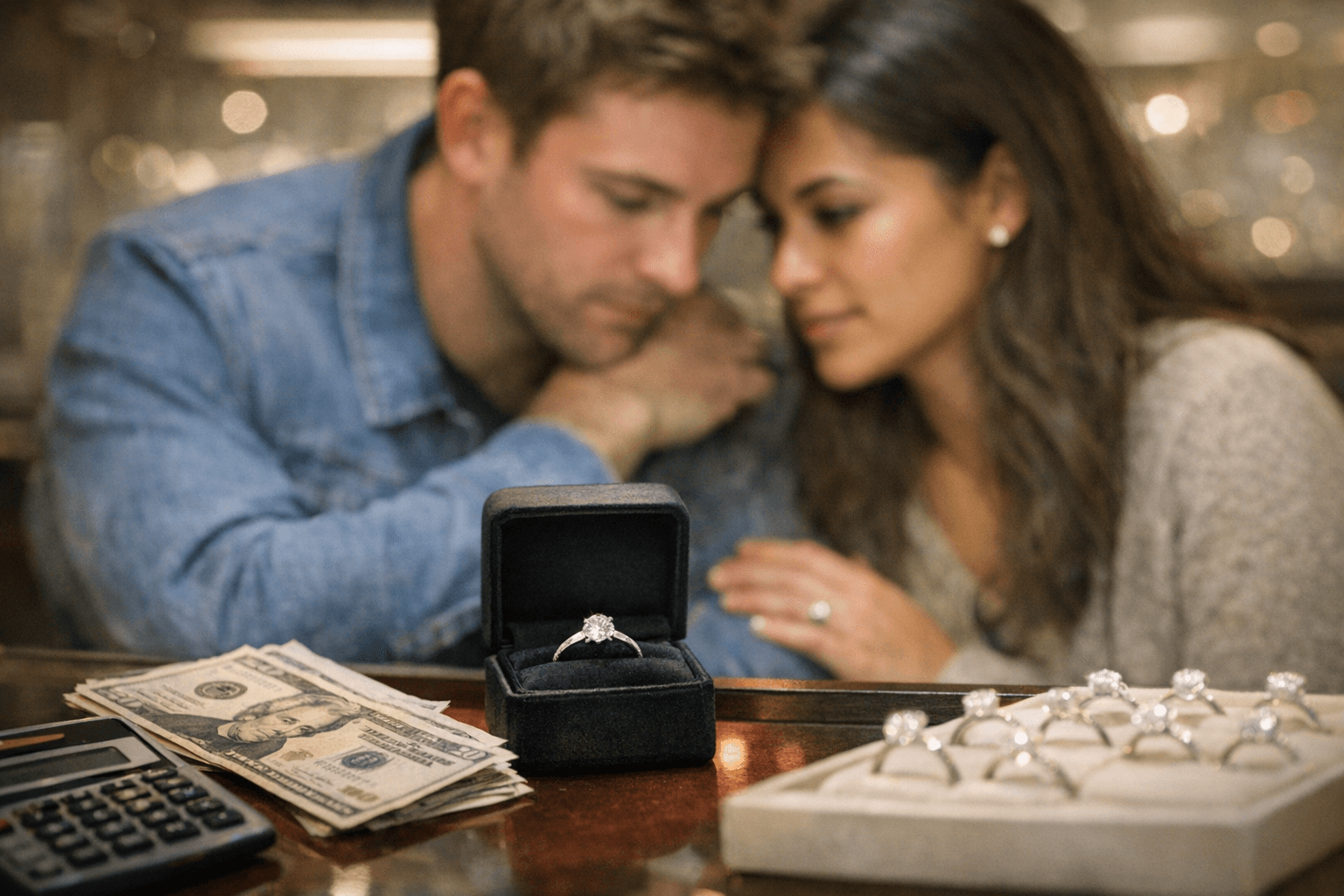
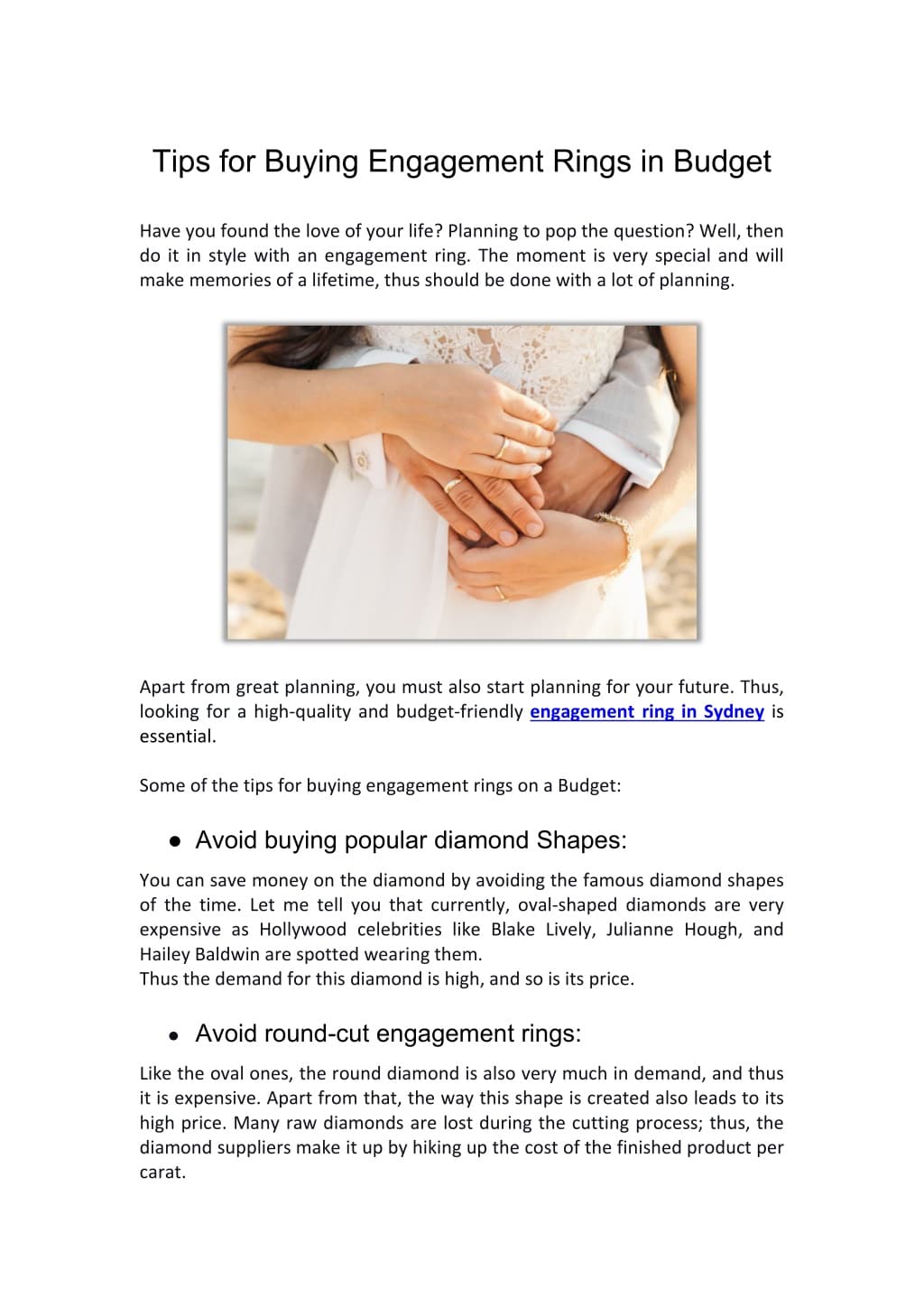
If you're not certain what your partner prefers, pay attention to the jewelry they already wear. Yellow gold and antique-inspired pieces suggest they might love a vintage-style setting. Simple, sleek silver-toned jewelry usually points toward platinum or white gold with a more minimal design.
Metal choice matters more than most people realize
Platinum is durable, naturally white, and hypoallergenic, making it the premium choice for engagement rings. It's also significantly more expensive than gold, both at purchase and for resizing or repairs. White gold achieves a similar look at a lower price point but is coated in rhodium plating that will wear off over time and need to be replated every few years.
Yellow gold has made a strong comeback and suits a wide range of skin tones beautifully. It's also the easiest metal to resize and repair. Rose gold has a romantic warmth to it but is worth noting that opinions on it can be more polarizing than yellow or white options.
Consider alternative stones
Diamonds are traditional, but they are not the only option. Moissanite is a lab-created stone that closely resembles a diamond visually, tests positive on many diamond testers, and costs a fraction of the price, often 80 to 90 percent less per carat. A moissanite center stone allows you to invest more in a beautiful setting or simply keep more money in your pocket.
Lab-grown diamonds are chemically identical to mined diamonds and certified by the same grading institutions. They typically cost 50 to 70 percent less than natural diamonds of equivalent quality. If the symbolic importance of a "real diamond" matters to your partner, a lab-grown stone delivers that without the price premium of a mined stone.
Sapphires, emeralds, and rubies have centuries of history as engagement stones and can make for a deeply personal choice, particularly if one of those stones holds meaning for your partner or represents a birthstone connection.
Buying for Valentine's Day specifically
The Valentine's Day deadline creates real pressure, but most reputable jewelers can set a custom or semi-custom ring in two to four weeks, which means late December or early January is a reasonable starting point for shopping if you want the ring ready in time. If you're cutting it closer, many jewelers offer a "proposal box" option where you propose with a placeholder ring or a rendering of the final design, with the actual ring completed afterward. This takes the time pressure off and lets your partner participate in final adjustments to sizing and details.
Don't overlook independent jewelers and estate sales as sourcing options. Vintage engagement rings from the Art Deco or Edwardian eras often offer exceptional craftsmanship at prices well below comparable new rings, and they come with a history that many people find more meaningful than a brand-new piece.
The ring you choose doesn't need to be the most expensive one in the case. It needs to reflect that you paid attention to the person you're asking.
This article was produced by Prism’s automated news system from verified source data, official records, and press releases, then run through automated quality and moderation checks before publishing. The system is built and supervised by the people who set the standards it runs under. Read our full AI policy.
Did this article answer your question?