Floral motifs bloom across spring jewelry collections, from gold to titanium
Floral jewelry is blooming with sharper meaning in 2026, from a $400,000 gold masterpiece to titanium petals that feel intimate, modern, and deeply personal.
The new flower code
With U.S. consumers expected to spend a record $27.5 billion on Valentine’s Day and jewelry projected to take a record $6.5 billion share, the smartest gift question is not how much to spend. It is which flower says what you mean. That is the real appeal of floral jewelry right now: it can look romantic without tipping into cliché, and it can feel precise enough to read like a private language.
The trend has sharpened because the best pieces are no longer literal. Designers are working flowers into gold, diamonds, titanium, suede, horn, hand-painted porcelain, and hand-painted enamel, which gives the motif a new range of voices. About 30% of buyers used AI to research Valentine’s purchases this year, but floral jewelry still rewards something no algorithm can fully replace: knowing whether your partner wants a whisper, a sculpture, or a keepsake.
Why flowers feel fresh again
There is nothing new about floral jewelry itself, and that is exactly why it works. Victorian and Edwardian jewelers used floral engravings, enamel blossoms, carved gemstone petals, and three-dimensional flower forms to communicate private meanings, while the symbolism of flowers predates the Victorian era altogether. In other words, the motif has always carried emotional freight. What changes in 2026 is the attitude around it.
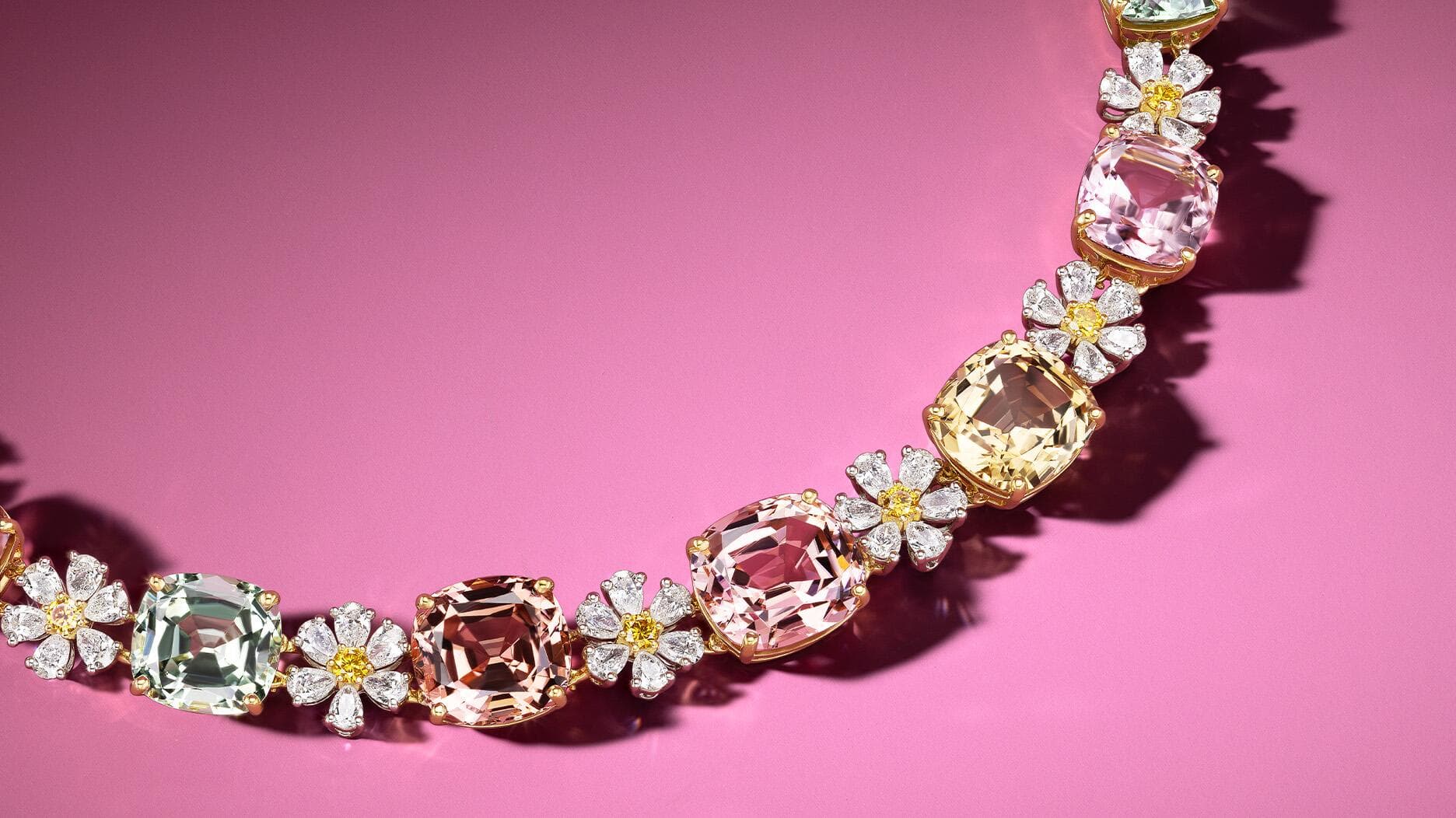
This season’s flower pieces feel less like decorative afterthoughts and more like design problems solved with real invention. A bloom can now be engineered in titanium, painted in enamel, or built in pavé and yellow gold, and that material shift matters. It turns the flower from a sweet gesture into a piece of jewelry with architecture, texture, and staying power, which is exactly why it feels right for Valentine’s Day and beyond.
How to choose the right floral piece
- Choose delicate petal motifs if your partner wears jewelry every day and prefers a quiet signal over a declaration. These pieces usually work best when the flower is suggested rather than spelled out.
- Choose sculptural flower statements if your partner likes one strong piece to anchor an outfit. This is the lane for bold shapes, high polish, and a little spectacle.
- Choose heirloom-leaning floral jewelry if your partner responds to symbolism, craft, and pieces that feel like they can be passed down rather than simply worn.
- Choose modern floral materials, like titanium or enamel, if your partner dresses with color, contrast, or an eye for the unexpected. The freshness here is not just the flower, but the way it is built.
The high-jewelry end of the bouquet
Oscar Heyman’s platinum-and-18-karat yellow-gold “Flower” necklace, priced at $400,000, is the kind of piece that turns a floral motif into a major event. It is for the partner who understands jewelry as both art and ceremony, someone who wants rarity, not just sparkle. The same house’s “Pansy” earrings translate that language into a smaller, more wearable gesture, still unmistakably luxurious but easier to live with than a neck-hugging statement necklace.
At the other end of the emotional spectrum but still firmly in proposal territory, Tacori’s “Dahlia” sculpted double-petal engagement ring is priced at $16,990 without the center stone. Designed by Nadine Tacorian and inspired by the dahlia’s language of commitment and lasting bonds, it uses deconstructed petals, fine pavé, and intricate texture to make the flower feel modern rather than sentimental. This is the right choice for the partner who wants symbolism with a bit of edge, not a sugary bloom frozen in gold.
The modernists’ flowers
Adam Neeley makes the strongest case for floral jewelry as something futuristic. His “Callara” earrings in blue anodized titanium and “Rosa Petula” necklace in red and purple anodized titanium trade conventional romance for color, lightness, and a slightly industrial finish. These are the pieces for a partner who likes design that feels inventive and a little off the expected path, especially if their wardrobe already leans toward sharp tailoring or saturated color.
Boochier’s “Rainbow Flower Puff” bracelet sits closer to playful exuberance. It is the sort of floral piece that reads less like a garden and more like a burst of optimism, which makes it ideal for someone who enjoys jewelry with personality and does not mind being noticed. Emily P. Wheeler’s flower bolo tie on a suede cord goes even further toward fashion-as-expression, giving the motif a tactile, slightly Western note. It is a smart gift for the partner whose style moves comfortably between accessories and clothing, and who likes texture as much as shine.
The softer, more intimate floral language
Monica Rich Kosann’s “Loves Me” two-tone daisy necklace takes one of the oldest romantic flower games and gives it a cleaner, more polished life. The two-tone finish keeps the daisy from feeling juvenile, while the motif still carries the sweetness of hope and possibility. It suits the partner who likes a readable symbol, something that feels tender without becoming precious.
Nada Ghazal’s “My Muse” ring, with hand-painted enamel, brings the floral idea into painterly territory. Enamel gives the piece depth and color in a way that polished metal alone cannot, and that makes it especially appealing for someone who prefers jewelry with an artisanal, almost one-of-a-kind mood. Pippa Small’s floral necklace and drop earrings round out the picture for the woman who values quiet luxury in the truest sense: pieces that feel handmade, thoughtful, and rooted in craft rather than flash.
What makes this floral wave feel fresh is that it no longer belongs to one price point or one personality. A flower can now mean engagement, whim, memory, color, or high drama, depending on how it is built and who wears it. That flexibility is why floral jewelry is working now, and why the most persuasive piece is the one that feels chosen for one person alone.
Know something we missed? Have a correction or additional information?
Submit a Tip