How much should you spend on a Valentine's Day gift?
Spend enough to feel intentional, not enough to feel performative. The right Valentine’s budget depends on relationship stage, debt, and what actually gets used.
NRF expects U.S. consumers to spend a record $29.1 billion on Valentine’s Day in 2026, with an average gift budget of $199.78. Americans already spend more than $20 billion on gifts, cards, romantic dinners and more, by The Knot’s estimate. NRF has surveyed Valentine’s shopping habits for more than a decade.
Start with the relationship, not the receipt
The budget gap is real. The Knot’s long-running spending study puts men at expecting their partner to spend about $211 on them and planning to spend $339 on a partner, while women expect about $154 in treats but spend around $64. The same study cites WalletHub data showing women are 33 percent more likely than men to spend nothing and men are twice as likely to spend over $100.
Age and relationship stage matter just as much as gender. Bankrate’s 2020 survey put the average adult in a relationship at $152, while millennials averaged $208, and The Knot puts younger millennials ages 23 to 29 at an average of $266 planned spending and about $260 expected from a partner. Older millennials ages 30 to 38 are much quieter at roughly $109 spent and $68 expected, and people together less than two years are far more likely to buy a gift than those together 20-plus years, 85 percent versus 61 percent.
Why the holiday feels pricier than it used to
Valentine’s Day takes its name and date from the martyrdom of St. Valentine, a third-century priest. The day became associated with romance around the 14th century and may have roots in Lupercalia. In 2026 it falls on Saturday, February 14.
Under $25: make it personal
This is the lane for the person who would rather feel remembered than impressed. A Lovepop Valentine’s card starts at $13, and Target’s Paper Love pop-up Valentine cards run from $13.99 to $15.99, which leaves enough room to add a handwritten note, a downloaded playlist or a favorite candy bar without turning the gift into a production. Shutterfly’s custom photo mugs start at $16.99, so if your partner likes a daily-use keepsake, that is one of the cheapest ways to make a generic holiday feel specific.
If you want this tier to feel thoughtful instead of thin, pair one small object with one piece of evidence that you actually know the person: a printed photo, a joke only the two of you use, or a favorite dessert.
$25 to $75: the sweet spot for everyday people with good taste
This is where you can give something useful that still feels special. Owala’s FreeSip Sway starts at $26.99, the FreeSip Tumbler in 30 ounces is $34.99, and both lean practical for someone who lives out of a tote, goes to the gym or always has a drink within reach. Jellycat’s Valentine’s Day collection is also nicely pitched here and just above it, with Honoré at $38 and a personalized Bashful Pink Bunny with a navy jumper at $45, which makes more sense for someone who likes cute collectibles than for someone who wants a grand romantic gesture.
A bottle gets used every day; a Jellycat lives on a desk or shelf.
$75 to $150: spend on the moment, not the clutter
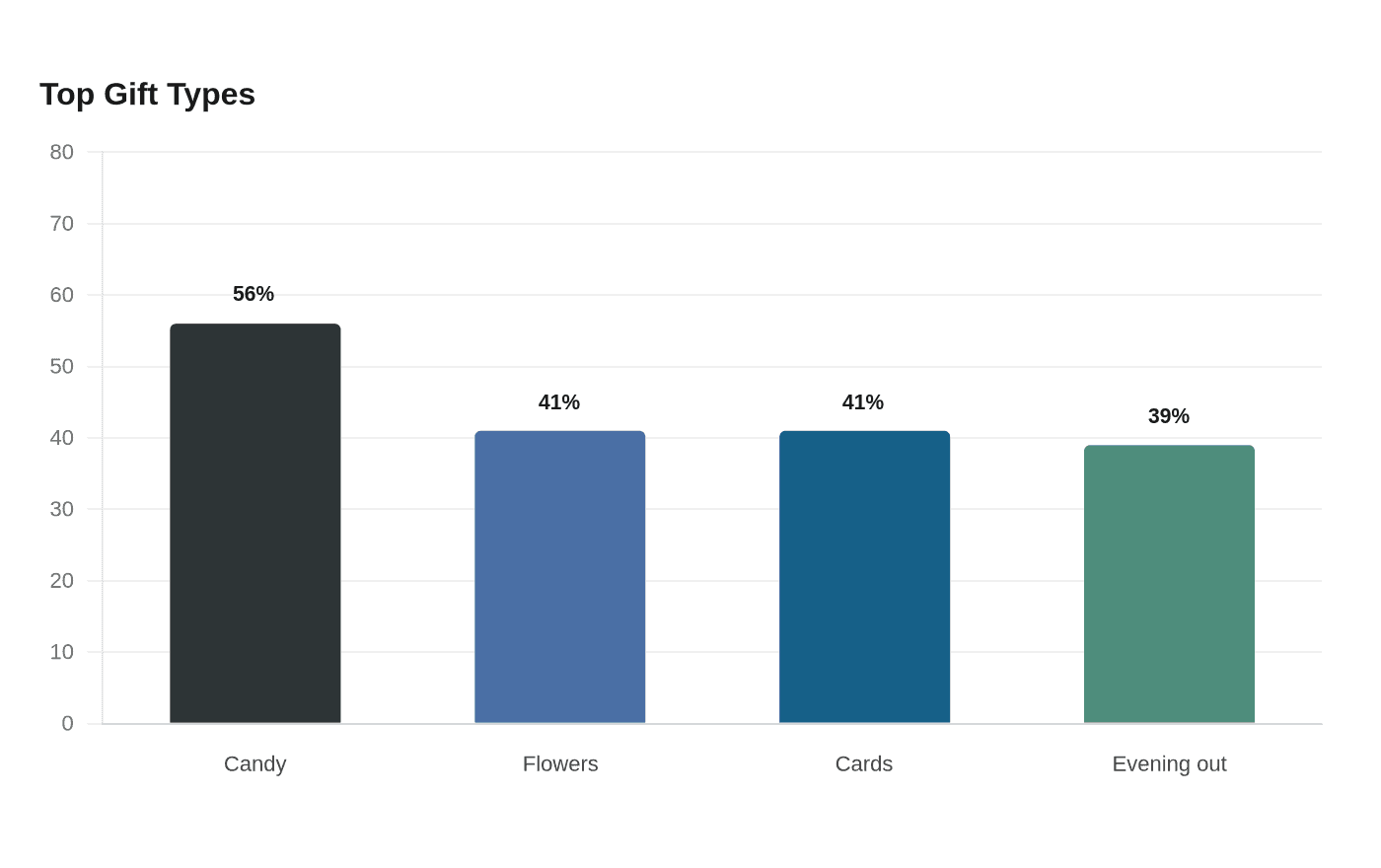
This is still a mainstream Valentine’s budget: candy is the most common gift at 56 percent, flowers and greeting cards each draw 41 percent of shoppers, and an evening out still sits near the top at 39 percent in NRF’s 2026 survey. If you want a classic romantic gift, Bouqs’ Valentine’s flowers start from $42 on subscription and $59 for one-time bouquets, while its 50 Red Roses arrangement is $129.
This is also the range where a physical gift and a plan should live together. A nice bouquet paired with dinner, a show or a room-service night in usually lands better than two medium gifts that feel like last-minute add-ons. NRF expects spending on romantic partners to total $14.5 billion in 2026.
Above $150: only if it fits the relationship, not the internet
A spend above $150 should be a ceiling to consider, not a requirement to meet. Higher spend makes the most sense when the gift is genuinely experiential or highly personal, like a three-month Bouqs flower subscription for $225, a booked weekend away or a dinner you would have wanted anyway and are just folding into the holiday. Younger millennials are already closer to this territory at $266 on average, but Bankrate found 62 percent of couples keep at least some money separate and 61 percent of cardholders with debt have carried it for at least a year.
This article was produced by Prism’s automated news system from verified source data, official records, and press releases, then run through automated quality and moderation checks before publishing. The system is built and supervised by the people who set the standards it runs under. Read our full AI policy.
Did this article answer your question?