How to Buy Valentine’s Jewelry, Know Gemstone Grades and Avoid Mistakes
The best Valentine’s jewelry is the piece that matches a partner’s style, comes with clear labeling, and can be returned without drama. A little homework protects both the gift and the budget.
Read the person before you read the price tag
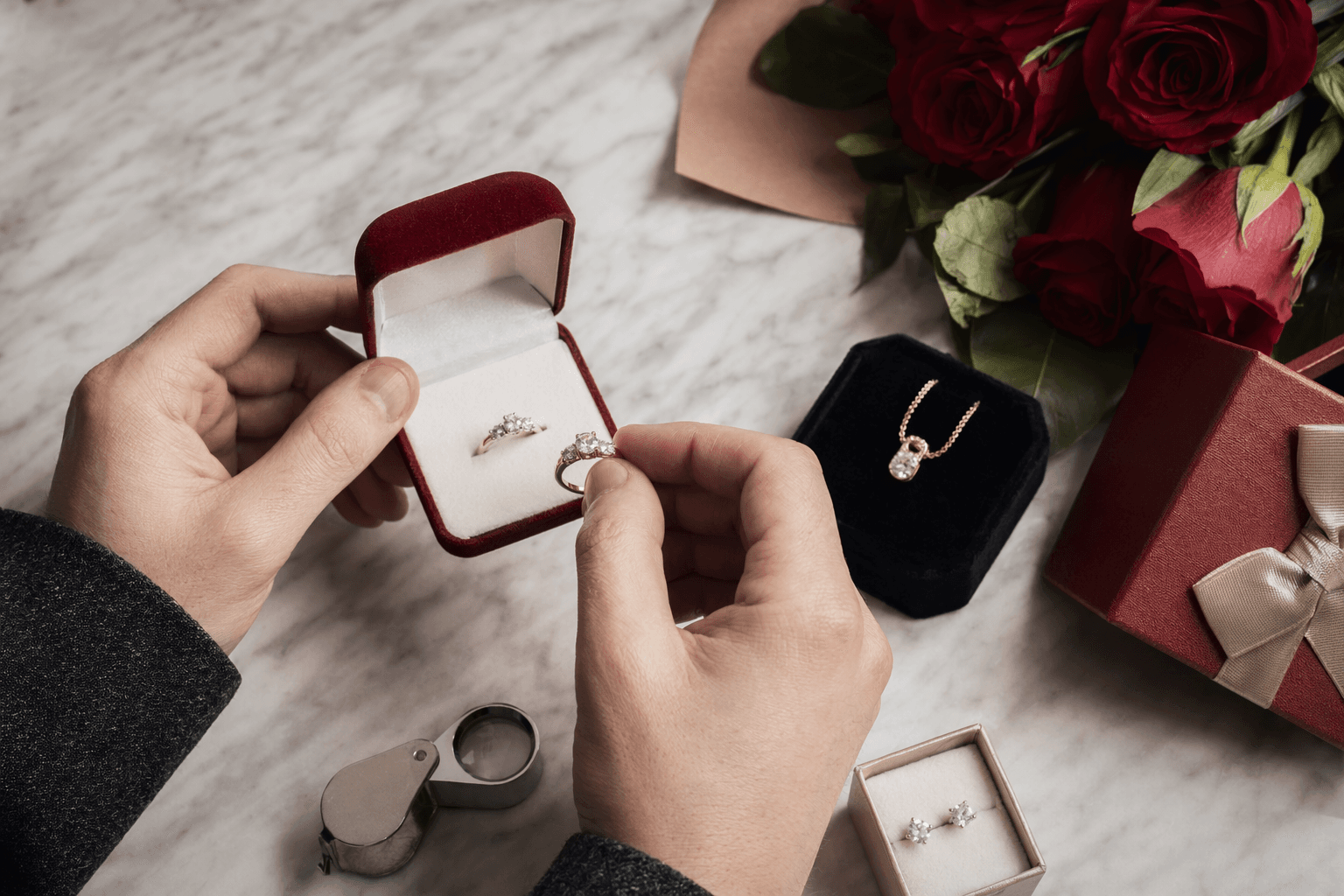
Valentine’s jewelry should feel personal, not speculative. The smartest buys start with the basics: what metal they actually wear, whether they prefer delicate pieces or bold ones, and if their day-to-day life calls for something durable enough to survive work, travel, or a million hand-washing moments. That is how you make a piece feel thoughtful and luxe without gambling on the wrong style.
The scale of the holiday matters, too. The National Retail Federation expects U.S. consumers to spend a record $29.1 billion on Valentine’s Day gifts in 2026, with average spending at $199.78. In 2025, the group said shoppers expected to spend $27.5 billion, or $188.81 on average, which is a useful reality check: most people are not buying a red-carpet jewel box. They are trying to find one piece that feels meaningful, polished, and worth keeping.
Let the label do some of the work
A pretty stone is not enough if the description is vague. The Federal Trade Commission’s Jewelry Guides are meant to help shoppers get accurate information about gemstones, laboratory-created and imitation substitutes, natural and cultured pearls, and precious metals. That matters because the difference between a lab-created stone and a natural one, or between a cultured pearl and an imitation, can change both the price and the expectation attached to the gift.
The FTC also tells shoppers to learn the terminology sellers use so they can decide whether a piece is really what they want and whether it is worth the price. That is the practical checkpoint that keeps a romantic purchase from turning into an expensive regret. If a seller cannot clearly explain the stone, the setting, and the metal, treat that as a warning sign, not a charming mystery.
If you want extra confidence, look for guidance that goes beyond sales language. The Gemological Institute of America, established in 1931, is an independent nonprofit that says it protects the gem and jewelry buying public through research, education, and laboratory services. Its Gem Encyclopedia also includes buyer’s guides and detailed gemological information, which is exactly the kind of background that helps when you are deciding whether a piece deserves your money.
Buy from sellers that make returns boring
A reputable jewelry purchase should come with paperwork that is easy to understand. The FTC advises checking return policies, deadlines, customer service numbers, receipts, product packaging, warranties, and seller websites before you buy. That sounds unromantic, but it is the part that protects the romance later.
The best seller for a Valentine’s gift is usually the one that answers practical questions quickly. Can the piece be resized? Is the stone described in plain English? How long do you have to return it? What happens if the box arrives damaged or the chain breaks after a week? Those details matter more than a glossy display case, because jewelry gifts are emotional purchases with very real financial consequences.
This is also where shopping in person can still beat clicking blindly. Being able to compare pieces side by side makes it easier to see whether one diamond looks lively and another looks flat, or whether a pearl’s luster is actually what you hoped for. If the store feels slippery about terms, paperwork, or policy, walk away. A good Valentine’s gift should feel secure before it is wrapped.
Know when to negotiate
Jewelry is one of those categories where shopping around can pay off. The Associated Press advice here is refreshingly practical: learn a few tricks, ask questions, and do not be shy about negotiating when it makes sense. That does not mean haggling over every tiny item. It does mean understanding that the first price is not always the final price, especially when you are comparing similar pieces across multiple stores.
Negotiation is most useful when you have already done the homework. If you know the style, the stone type, and the metal you want, you can compare apples to apples instead of paying extra for vague prestige. A smart buyer also thinks about value beyond the sticker. Sometimes the real win is a more durable setting, a clearer grading explanation, or a seller who includes better service and return flexibility.
Do not forget the afterlife of the gift
A Valentine’s jewelry gift is beautiful, but it can also be vulnerable. Insurance groups including World Insurance and the NW Insurance Council have warned that jewelry given for Valentine’s Day can be at risk of theft or loss. That makes coverage part of the buying decision, not an afterthought for later.
If the piece is valuable enough to make you nervous, ask about insurance or coverage before you buy. Keep the receipt, the product details, and any warranty information in one safe place. This is the unglamorous part of luxury shopping, but it is also the part that keeps a sentimental purchase from becoming a very expensive lesson.
The most satisfying Valentine’s jewelry gifts are the ones that feel deliberate from the first glance to the final clasp. When you read the person, decode the terminology, insist on clear policies, and check protection, you are not just buying jewelry. You are buying peace of mind with sparkle on top.
This article was produced by Prism’s automated news system from verified source data, official records, and press releases, then run through automated quality and moderation checks before publishing. The system is built and supervised by the people who set the standards it runs under. Read our full AI policy.
Did this article answer your question?