How to make Valentine’s Day gifts feel personal and thoughtful
The easiest way to dodge Valentine’s clichés is to make one familiar gift feel unmistakably chosen. A bouquet, a box of chocolates, or a piece of jewelry becomes memorable when it reflects the recipient, not the holiday.
Americans spent a record $27.5 billion on Valentine’s Day in 2025, with average planned spending at $188.81 per person. The National Retail Federation expects spending to climb again to $29.1 billion in 2026, with average planned spend reaching $199.78. Candy, flowers, greeting cards, an evening out, and jewelry remain the biggest gift categories, which is why the smallest personalization moves stand out.
Valentine’s Day gifts work best when they look considered before they look expensive. Familiar staples like flowers, chocolates, and jewelry feel more personal, memorable, and clearly chosen when they are tailored to one person.
Start with the recipient, not the category
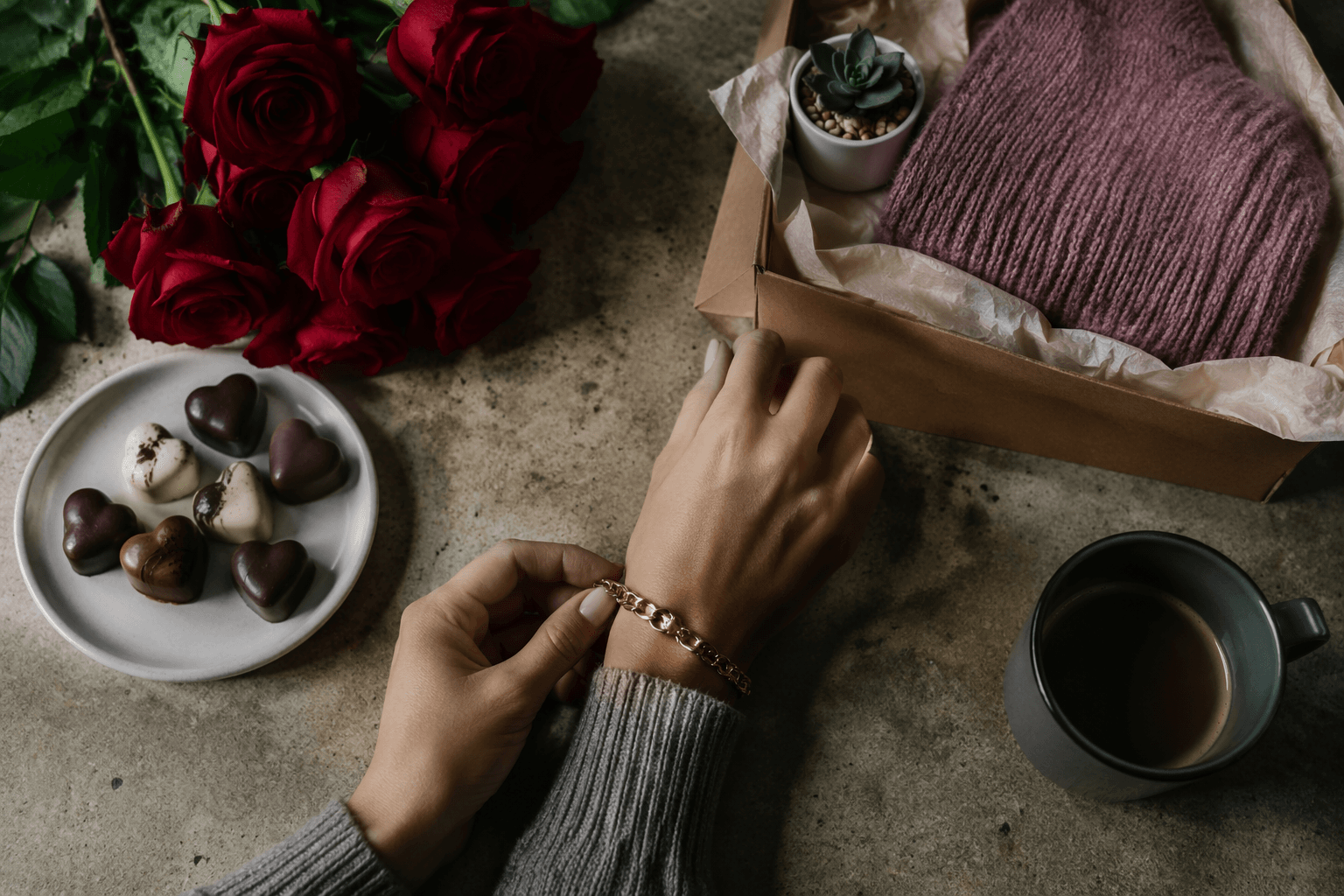
A Valentine’s gift feels thoughtful when it reflects what the other person already loves. A bouquet becomes more meaningful when it leans into a favorite color, a flower tied to a shared memory, or a note that explains why you chose that arrangement. A box of chocolates lands differently when it is paired with a handwritten card, a favorite dessert, or a planned ritual such as breakfast in bed or a movie night you already know they would enjoy.
Flowers should look selected, not assembled
Flowers remain one of the most common Valentine’s gifts, and the Society of American Florists says 22% of Americans bought fresh flowers or plants as Valentine’s gifts in 2022. A generic bouquet says the calendar did the thinking; a bouquet built around the recipient’s taste says you did.
- Choose blooms in a color they wear often or already love at home.
- Ask for a mixed arrangement that reflects a memory, a destination, or a favorite season.
- Add a short note that names the reason behind the choice, not just the occasion.
- Skip oversized drama if it does not suit their style; a smaller, better-edited bouquet often feels more refined.
Small changes make a major difference:
Chocolate feels more intimate when it becomes a ritual
Candy remains one of the top Valentine’s categories, but the gift becomes more memorable when the package is only the beginning. A good box of chocolates feels warmer when it arrives with a plan attached: a breakfast spread the next morning, a reservation-free night in, or a dessert pairing that shows you know how they like to linger over something sweet.
Presentation matters here too. A handwritten card changes the emotional temperature of the gift immediately, because it turns a purchase into a message. If you want the gesture to feel especially polished, choose one beautiful box instead of a scatter of smaller items, then add one deliberate extra, such as a favorite tea, a bottle of sparkling water, or the movie you know they have been meaning to watch.
Jewelry works best when it reflects the person wearing it
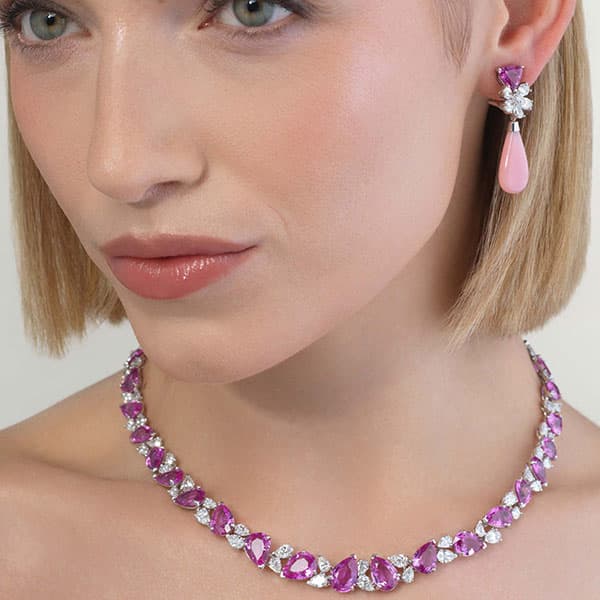
Jewelry is one of the holiday’s most traditional gifts, but it becomes personal only when it matches the recipient’s style. The shape, metal, engraving, or even the way it is presented can make the difference between something ornamental and something they will actually wear. A heart motif can be sweet, but it is not the only way to signal affection.
Think about whether they wear warm or cool metals, whether their style leans minimal or expressive, and whether they prefer a delicate chain, a bolder ring, or something with sentimental engraving.
Why Valentine’s gifting keeps expanding
In 2026, 55% of consumers planned to celebrate Valentine’s Day, and 83% of celebrants planned to buy a gift for a significant other, according to the National Retail Federation. The holiday extends well beyond couples, with shoppers also buying for family members, friends, children’s classmates and teachers, and co-workers.
The holiday’s old roots make the personal touch feel even more appropriate
Valentine’s Day is observed on February 14, but its origins are older and less certain than the modern retail ritual suggests. Britannica traces the holiday in part to the Roman festival of Lupercalia and dates its association with romance to the 14th century. Britannica also says the day may have been named for a priest martyred around 270 CE under Claudius II Gothicus. HISTORY says the exact origin is unknown, but the name and date come from the martyrdom of St. Valentine, a third-century priest.
A few etiquette guardrails make the gesture stronger
The Emily Post Institute, a fifth-generation family business that has promoted etiquette based on consideration, respect, and honesty since Emily Post wrote her first book in 1922, offers one practical rule: re-gifting should be rare. If it happens at all, the item should be brand new, still in its original packaging, and include instructions.
This article was produced by Prism’s automated news system from verified source data, official records, and press releases, then run through automated quality and moderation checks before publishing. The system is built and supervised by the people who set the standards it runs under. Read our full AI policy.
Did this article answer your question?