Kid-friendly Valentine’s gifts for babies through teens, from books to bath sets
Skip the sugar crash: these Valentine picks work for babies through teens and still earn their keep on February 15.
Why the anti-candy approach works
Valentine’s Day may still be the holiday of candy hearts and classroom valentines, but the smarter kids’ gifts are the ones that outlast the chocolate. National Retail Federation spending is projected to reach a record $29.1 billion in 2026, with shoppers budgeting an average of $199.78 each, and 27% planning gifts for classmates and teachers. That is a clear sign that Valentine’s has become a real family spending moment, not just a romantic one.
The holiday’s roots are old, tied to St. Valentine and to the romance culture that took shape in 14th-century England, yet the modern version in the United States is often much more practical: kids swap valentines at school, parents send in treats, and everyone tries to avoid a bag full of sugar with nowhere to go. Pediatric and dental guidance has long favored non-candy alternatives, especially when a small toy, book, or keepsake can do the same job without the sugar overload.
Babies and toddlers: soft, simple, and soothing
For the youngest kids, Valentine’s gifts should be calm, tactile, and easy to use again and again. A plush toy is the obvious comfort buy, but the reason it works is not just cuteness. It becomes a car-seat companion, a crib buddy, and a familiar object that can survive long after any candy disappears.
A board book is even more practical. It gives babies a first holiday object that belongs in a bedtime routine, not a drawer, and it feels more thoughtful than a novelty trinket. Bath sets also fit this age well because they turn a daily chore into a ritual, which is about as luxurious as gifting gets when you are under 3 feet tall.
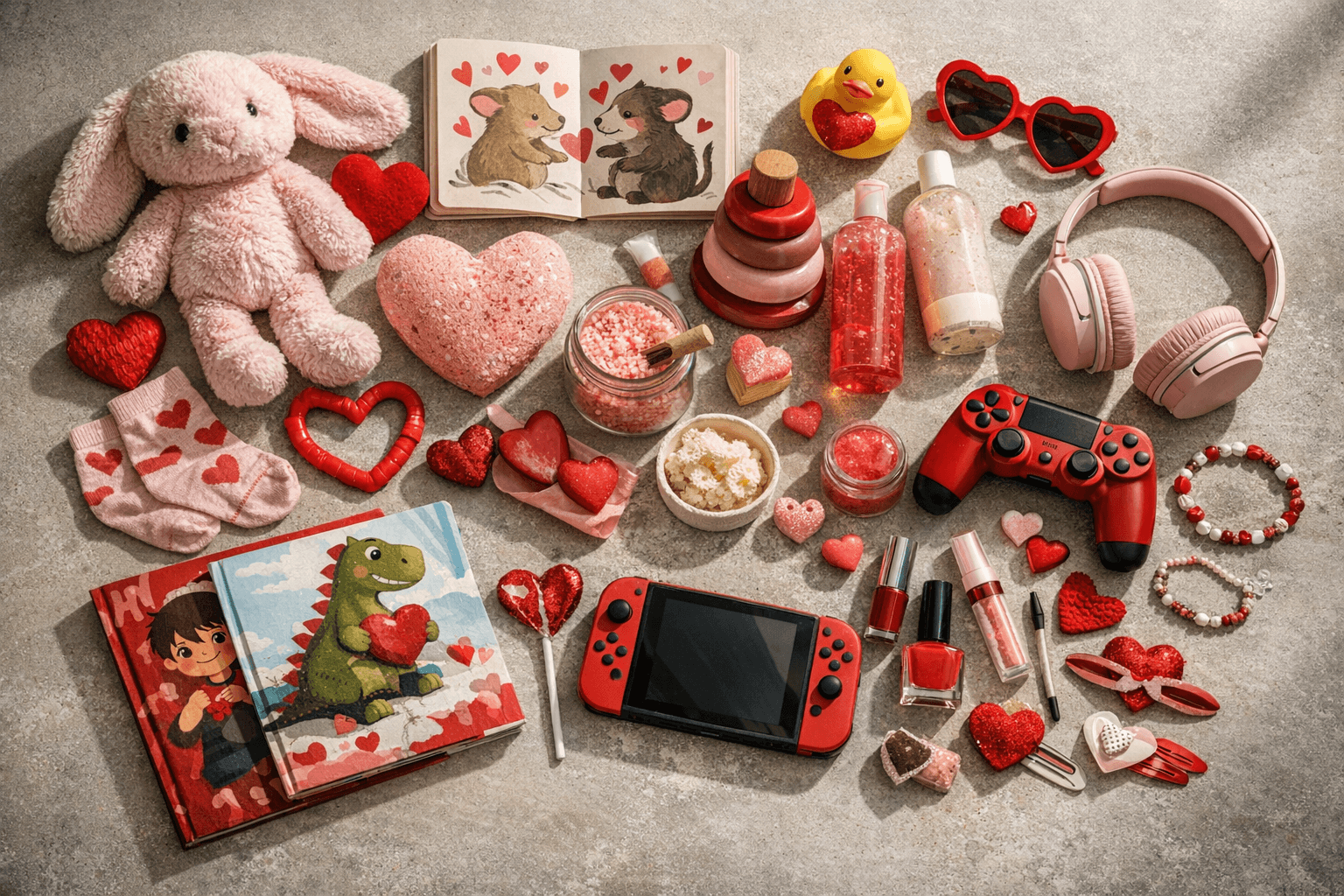
- Plush toy: usually $15 to $30, and best when it is soft enough for naps and small enough to carry.
- Board book: usually $10 to $18, and ideal if you want something that can be read every night on February 15 and beyond.
- Bath set: usually $15 to $25, especially useful for parents who want one gift that solves the bedtime transition.
Little kids: make it playful, not sugary
This is the age where Valentine’s clutter starts to accumulate, so the best gifts are the ones that invite open-ended play. Building blocks are a standout because they are not a one-time novelty. They become towers, pretend food, garages, and whatever else a child can dream up, which makes them a far better investment than a single candy bag.
Headbands and other accessories are smart here too, especially for kids who love dress-up and want something they can wear immediately to school or to a family dinner. Plush toys still work, but pairing one with a book gives the gift more range: one part comfort, one part storytime, one part keepsake. That mix feels more complete than a box of sweets that vanishes by the weekend.
- Building blocks: usually $20 to $40, and worth it because the play value keeps expanding.
- Headbands: usually $8 to $20, which makes them classroom-friendly and easy to gift in multiples.
- Book-plus-plush pair: usually $15 to $30, and especially good if you want a present that feels affectionate without becoming clutter.
Tweens: aim for hobbies, independence, and a little style
Tweens want gifts that feel a step up from little-kid Valentine’s fare, but they still benefit from something direct and useful. Craft sets fit that brief beautifully because they give kids a project, not just an object. They also solve a parent pain point: the gift becomes an activity, which means less screen time negotiation and more time spent making something.
This is also the age where books can be deeply personal. A strong pick here is a title that matches a real interest, whether that is mystery, fantasy, art, animals, or sports. Bath sets make sense too, but they should feel a little more grown-up, with a cleaner presentation and scents or textures that feel less juvenile. If you add candy at all, keep it as a small accent rather than the whole idea.
- Craft set: usually $15 to $35, and best for tweens who like to make things with friends or on their own.
- Interest-led book: usually $12 to $25, and far more memorable when it matches a specific obsession.
- Bath set: usually $20 to $40, especially if you want the gift to read as a preteen version of self-care.
Teens: keep it polished and practical
Teen gifts work best when they feel considered, not cutesy. A bath set is one of the easiest wins because teens are often already choosing their own routines, and a well-chosen set makes the bathroom feel more personal without crossing into childish territory. Books still matter here too, but the key is specificity. A teen will notice whether you picked something tied to their actual taste, not just a generic bestseller.
Accessories can also work for teens when they are simple and wearable, the kind of thing that gets used on school days instead of sitting in a drawer. And if you do include candy, let it be a small, well-chosen extra rather than the centerpiece. That keeps the gift aligned with the anti-candy brief while still acknowledging the holiday.
- Bath set: usually $25 to $50, a good fit for teens who appreciate a more polished routine.
- Book: usually $12 to $25, and strongest when it tracks with a real genre or fandom.
- Small accessory: usually $10 to $25, best when it is something they would wear without being asked.
The classroom-friendly rule
The easiest way to make Valentine’s feel better for everyone is to choose gifts that travel well, break down easily into portions, and do not send children home on a sugar high. That is why non-candy options keep growing in appeal. National Retail Federation data shows candy still leads overall Valentine’s categories at 56%, but it also shows growing interest in gifts for classmates, teachers, and family members, which leaves plenty of room for books, building toys, bath sets, plush toys, and other small keepsakes.
The best kid Valentine’s gift is the one that disappears into real life, not the trash. On February 15, that is what makes it feel memorable.
This article was produced by Prism’s automated news system from verified source data, official records, and press releases, then run through automated quality and moderation checks before publishing. The system is built and supervised by the people who set the standards it runs under. Read our full AI policy.
Did this article answer your question?