lab-grown stones drive a reset in engagement ring spending
Lab-grown center stones now make up 61% of engagement ring purchases, while average spend fell to $4,600 and the typical ring reached 1.9 carats.

Lab-grown center stones are no longer the exception in engagement-ring buying. They are the market, with The Knot Worldwide’s 2026 Real Weddings Study putting them at 61% of all engagement ring purchases among couples married in 2025, a 239% jump since 2020.
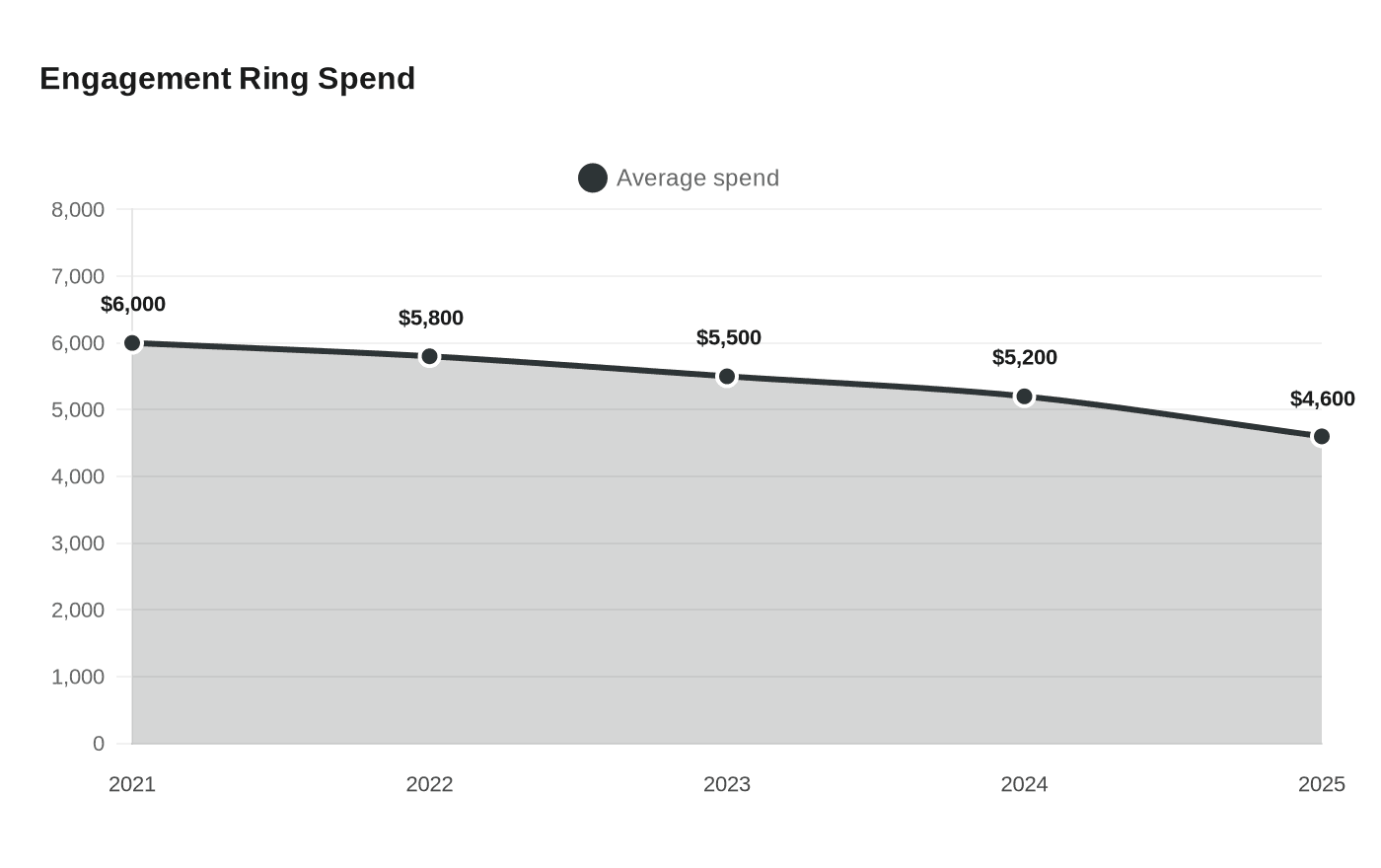
That shift is doing more than changing taste. It is resetting what a proposal budget can buy. The average engagement-ring spend fell to $4,600 in 2025, down from $5,200 in 2024, $5,500 in 2023, $5,800 in 2022 and $6,000 in 2021, even as the average stone size rose to 1.9 carats. In practical terms, buyers are getting more visual presence for less money, and that has made size part of the value conversation again.
The Knot’s data also shows how quickly the stigma has faded. In 2024, 52% of engagement rings featured a lab-grown diamond, the first year the category crossed 50%. Back in 2019, only 12% did. By 2023, one in three engagement rings totaled more than 2 carats, including side stones and accents, and roughly one in three couples said having a lab-grown stone was important. This year, that share rose to 40%.
Nearly 9 in 10 proposers bought a ring in hand when they proposed, a sign that the ring itself is increasingly treated as part of the moment, not a placeholder for later customization. The Knot’s study, based on more than 10,000 U.S. couples married between Jan. 1 and Dec. 31, 2025, is one of the largest and longest-running snapshots of the market, fielded annually for nearly 20 years. It also lands at a moment when Gen Z now represents 41% of the wedding market, and the emphasis on authenticity, intention and personal expression is reshaping what couples want from a ring.
JCK calls the engagement-ring market “fundamentally shifted,” and Rapaport quotes The Knot ascribing the growth to “economic pragmatism and evolving values.” That is the real Valentine’s Day story here: lab-grown stones are not the alternative anymore. They are the new baseline for buyers who want a larger, brighter ring without paying a premium for old assumptions about status.
This article was produced by Prism’s automated news system from verified source data, official records, and press releases, then run through automated quality and moderation checks before publishing. The system is built and supervised by the people who set the standards it runs under. Read our full AI policy.
Did this article answer your question?