Millennials drive self-purchased fine jewelry boom ahead of Valentine’s Day
Self-gifting has become the new luxury cue: 80% of adults buy fine jewelry for themselves, and 86% of millennials do it, led by rings.
Fine jewelry is no longer waiting politely for someone else to buy it. BriteCo’s October 2025 survey of 1,002 U.S. adults found that 80% of Americans now purchase fine jewelry for themselves, a shift that places self-gifting at the center of Valentine’s Day rather than at its margins.
The strongest signal comes from millennials. Among adults ages 30 to 44, 86% said they have bought fine jewelry for themselves, the highest share of any generation. That points to a market shaped less by one-night romance than by status, autonomy and the modern habit of marking a win with something lasting.

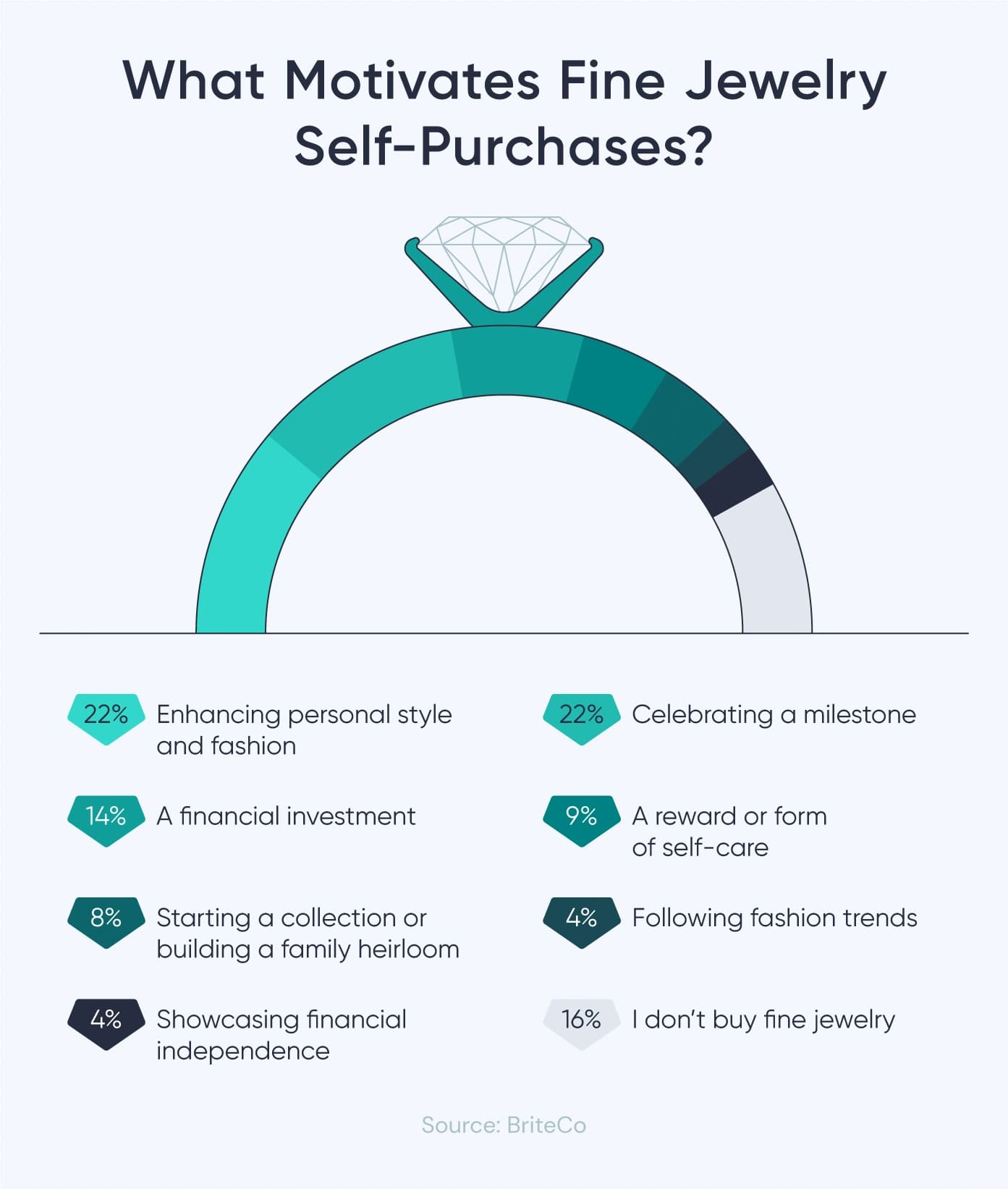
The reasons are telling. The top motivations for self-purchasing were enhancing personal style, at 22%, and celebrating a milestone, also at 22%. Rings ranked as the most meaningful self-purchase overall at 31%, followed by necklaces at 22% and watches at 17%. Among Gen Z respondents, necklaces rose to the top at 35%, suggesting that younger buyers are leaning toward pieces they can wear every day, not just reserve for special occasions.
That is where the story becomes bigger than a personal shopping trend. The National Retail Federation and Prosper Insights & Analytics projected that Valentine’s Day spending in 2026 would reach a record $29.1 billion, with shoppers expected to spend $7 billion on jewelry alone. Jewelry would remain the top gift category by dollars spent for the 10th straight year, and average Valentine’s Day spending was projected at $199.78, up from $188.81 in 2025.

Taken together, the numbers suggest both democratization and concentration. The broad 80% self-purchase rate shows that fine jewelry has moved into everyday buying behavior, not just anniversary or engagement territory. But the 86% figure among millennials, along with Gen Z’s strong appetite for necklaces, shows who is driving the shift: younger consumers with more spending power, more comfort with self-reward and less interest in waiting for a partner to define the occasion.

Valentine’s Day has always been jewelry’s biggest stage. What is changing is the audience. More buyers are stepping onto it for themselves, and they are treating fine jewelry less as a romantic expectation than as a personal decision with staying power.
Know something we missed? Have a correction or additional information?
Submit a Tip