The 2026 Engagement Ring Resale Report
Lab-grown diamond resale values have crashed to as low as 5% of purchase price, while GIA-certified natural stones are quietly rebounding with specialty buyers.

Spend $2,390 or spend $16,530. Those are the actual 2026 retail prices for two diamonds that look identical to the naked eye: a 1.51-carat, D-color, VVS1, ideal-cut stone, one natural and one lab-grown. The more startling number isn't the price gap at purchase. It's what happens when you try to sell either one.
A new market analysis from Diamond Buyers published in late March 2026 puts hard numbers to a shift that's been building for several years: resale values for natural and lab-grown diamonds are no longer moving in the same direction, and the divergence has real consequences for anyone giving or receiving a diamond ring this season.
The Two-Track Market
Natural diamonds typically hold 50% to 60% of their original retail price on the resale market. That's not a great investment by stock-market standards, but it represents meaningful retained value for something worn daily for decades. Lab-grown diamonds tell a different story: their resale value frequently falls to around 10-30% of the purchase price, and sometimes lower.
The mechanism driving that gap is straightforward. Labs can produce diamonds whenever demand exists. There's no scarcity, no limited supply driving up resale prices. The result is a market where the secondary value of a lab-grown stone erodes as production technology improves and manufacturing costs fall. A 1.5-carat lab diamond that sold for $10,300 in 2016 was worth only $3,975 by 2021, while a comparable natural diamond barely moved in price during the same period.
Meanwhile, in early 2026, oval lab diamonds have seen a price increase of about 6% due to high demand, showing that some shape-specific pockets of the lab market can buck the broader trend, though overall lab prices remain under structural pressure. The Diamond Buyers report confirms that GIA-certified natural stones have begun to rebound in demand among specialty buyers, a shift that reflects both scarcity and the credibility that comes with independent grading documentation.
Why Certification Changes Everything
A diamond accompanied by a respected grading report, such as one from GIA, usually commands a higher resale value and sells faster because the buyer doesn't have to guess its quality. This is not a minor administrative detail. On the secondary market, an uncertified stone forces every potential buyer to rely on the seller's word for the stone's specs. A GIA certificate removes that friction and opens access to a broader pool of serious buyers willing to pay closer to market rate.
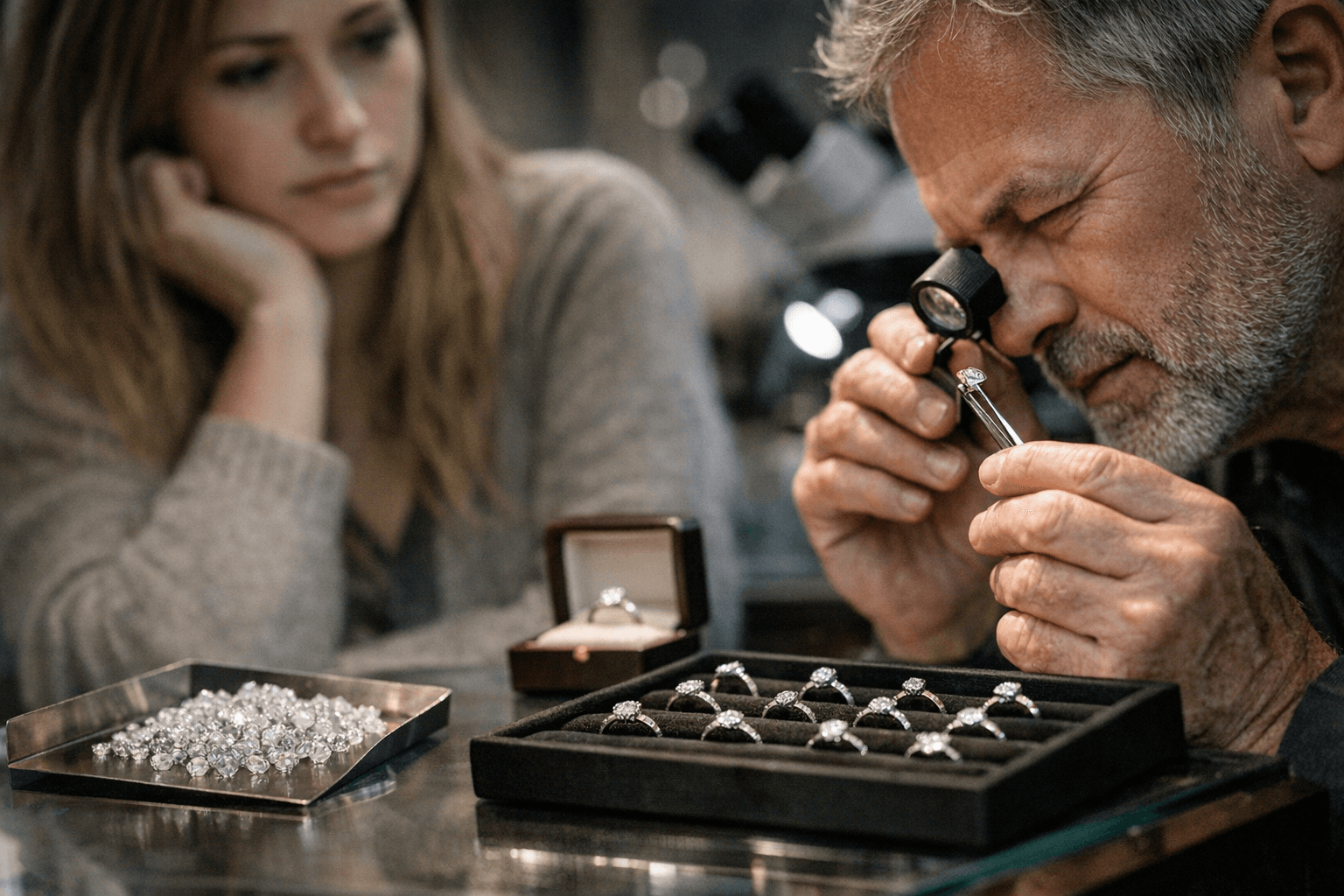
GIA-certified stones command the highest demand in the secondary market, with value depending on the 4Cs: cut, color, carat, and clarity. Conservative appraisal documentation matters too. An inflated insurance appraisal, which jewelers sometimes provide as a feel-good upsell, has no bearing on what a specialist buyer will actually pay. What matters is an honest, current-market valuation grounded in recent comparable sales.
The practical implication for anyone buying a diamond as a gift: if the stone doesn't have GIA certification, the resale case for natural diamonds weakens considerably. Well-kept paperwork, original invoices, and any previous appraisals all help strengthen your position when the time comes to sell.
Gifts First, Investments Distant Second
The Diamond Buyers report is clear on this point, and the data supports it: no diamond purchase should be made primarily as a financial instrument. Lab diamonds deliver serious value in 2026, but only if you buy smart and focus on getting the size and quality that makes you happy, not future resale value. That same logic applies to natural stones. The 40-60% resale ceiling for even the best GIA-certified naturals means the "diamonds are forever" pitch should be understood as an emotional argument, not an economic one.
Lab-grown stones jumped from just 1% of diamond sales in 2015 to about 20% by 2024; for center stones specifically, 52% were lab-grown in 2024, up from only 12% in 2019. That market share shift explains why the secondary market for lab stones is so soft: there's simply more supply chasing the same pool of resale buyers, with new, cheaper stones available at retail every season.
For gift-givers, that math points toward a clear framework: a lab-grown diamond at its lower price point is a genuine way to give a visually impressive ring without the retail premium of a natural stone, provided both parties understand the stone's resale profile. A natural, GIA-certified stone is the choice if long-term retained value carries weight in the relationship.
How to Sell: Where You Go Matters as Much as What You Have
For anyone on the other side of this transaction, including post-Valentine sellers or people liquidating inherited jewelry, the Diamond Buyers report's most actionable guidance is about where to sell, not just what to sell.
Specialist diamond purchasers, online marketplaces, and auction sites can expose your stone to a wider pool of buyers. Some provide free shipping, inspection, and no-obligation quotes, but final prices still often fall within the same 20-50% band of original price for natural stones. That band is still meaningfully better than what most retail jewelers offer on buyback, which tends to reflect wholesale pricing and a significant margin buffer.
The fastest way to turn jewelry into cash is through jewelers, but they typically offer the lowest diamond resale price because they need a strong margin and may lack specialist grading expertise. Consignment through a reputable auction house or diamond-specific reseller takes longer but consistently produces better outcomes for stones with strong GIA documentation and desirable specs.
The practical sequence for anyone looking to sell:
1. Pull the original GIA certificate and any supporting purchase documentation.
2. Get independent quotes from at least two specialist diamond buyers before engaging with any retail jeweler's buyback program.
3. Compare auction house estimates for stones above one carat with strong color and clarity grades, where the buyer pool is deepest.
4. Factor in consignment timelines: auction cycles can run 60-90 days, but the price premium often justifies the wait for investment-quality stones.
The Real Takeaway
The 2026 engagement ring market is not a single market. It's two parallel markets with diverging fundamentals, and confusing them is expensive. A GIA natural diamond retains liquidity, typically reselling for 40% to 60% of its retail price, functioning as a store of value; a lab-grown diamond's resale value drops to near zero, in the 5-10% range, immediately after purchase. Those numbers don't make one choice right and the other wrong. They make the stakes of each choice clear. The best diamond gift in 2026 is the one given with full knowledge of what it is and isn't, starting with an honest conversation about what "lasting value" actually means to the people involved.
Know something we missed? Have a correction or additional information?
Submit a Tip