Valentine's Day Self-Gifting Trend Sees Budgets Double Partner Chocolate Spending
Japanese shoppers budgeted roughly double for self-chocolate compared to partner gifts this Valentine's Day, with some spending up to 300,000 yen ($2,000) on themselves.
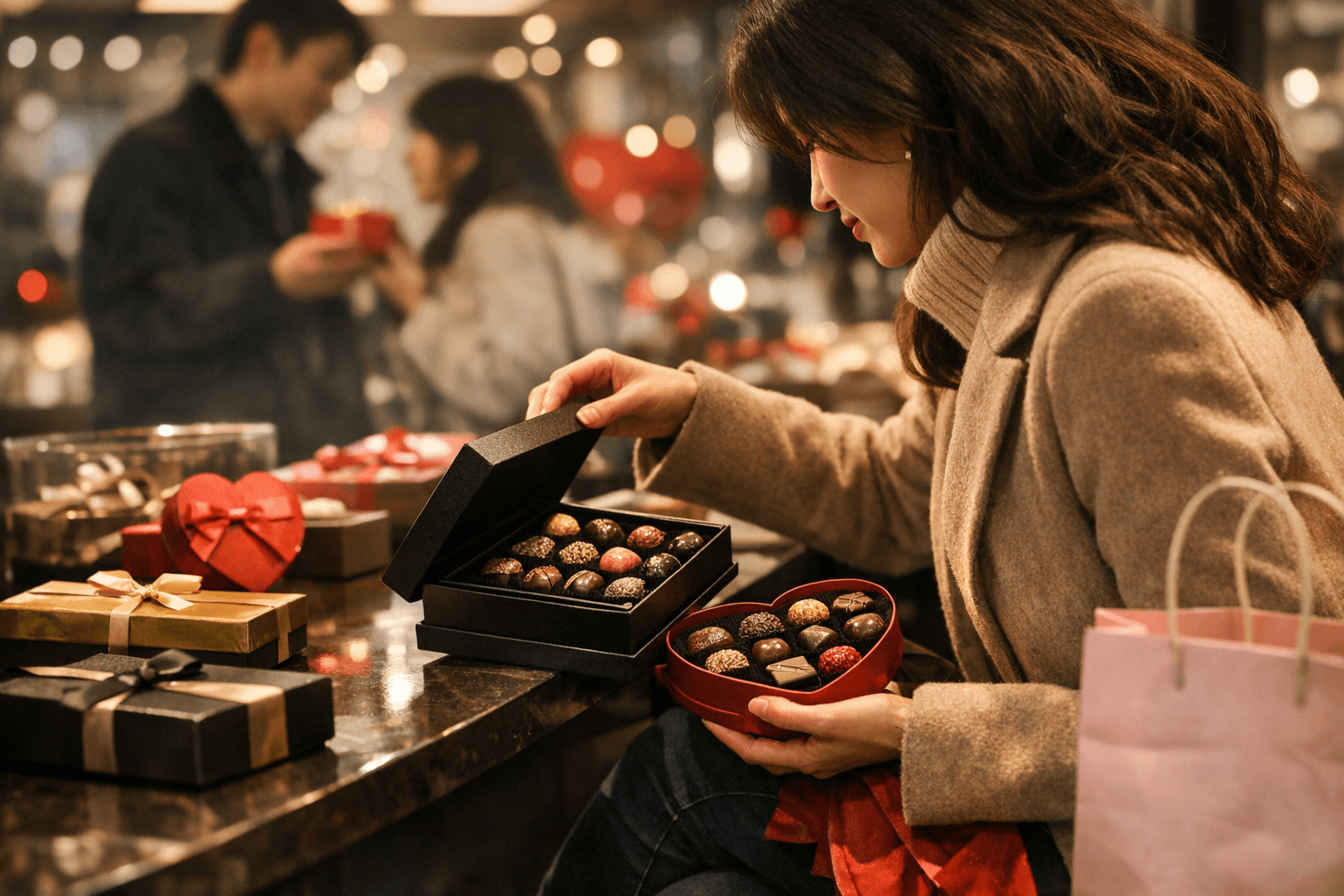
Japanese Valentine's Day shoppers turned the holiday's giving tradition on its head this year, spending roughly double on chocolate for themselves compared to what they planned to spend on a partner. Survey results showed the average budget for so-called "self-chocolate" climbed to 10,662 yen (about $70) in 2026, with some shoppers reporting budgets of up to 300,000 yen, nearly $2,000, for personal indulgences that far outpaced even the priciest gifts for partners.
The shift marks a notable departure from a custom that Mary's Chocolate helped establish when it brought Valentine's Day chocolate to Japan in the 1950s. Under that tradition, women make or buy chocolate for their sweetheart on February 14th, with the expectation of a return gift on White Day, March 14th, a date developed in the 1980s specifically as a mechanism for men to reciprocate. "Valentine's Day in Japan is no longer just about giving, giving, giving," Japankuru noted of the trend. "In 2026, it's time to treat yourself."
The appetite for self-gifting comes even as chocolate prices surged. Global cocoa shortages produced what the market is calling a "cocoa shock," pushing Japan's chocolate prices roughly 30% higher year-on-year as of November 2025. Brands surveyed by Matsuya Ginza reported average price hikes of just over 10%. Supermarkets responded by introducing sunflower-based chocolate alternatives, while high-end chocolatiers shifted toward local ingredients, including buckwheat and Shine Muscat grapes, to sidestep imported cocoa costs.
On the reciprocal side of the holiday, Yoitoki's White Day Action Trend Report 2026, published March 4, found that roughly 60 to 70 percent of men who received Valentine's gifts planned to give a White Day return. Many reported pressure about "what to give," reflecting the weight the holiday carries as what researchers framed as a relationship signal. Typical partner gifts included gourmet chocolate assortments, jewelry, accessories, date-night experiences, and handwritten tokens, gifts the report characterized as expressions of appreciation rather than obligation.
For colleagues, the calculus was simpler: boxed candies or cookies shared with a whole team are the norm, with deeply personal gifts reserved for situations involving clear romantic intent, known in Japanese as 本命 (honmei). Friend exchanges, often originating from 友チョコ (tomo choco) among women, typically drew a lighthearted return of group desserts or small tokens. The self-chocolate surge, then, is less an abandonment of the holiday than an expansion of it, with Japanese shoppers adding themselves to the list of people worth treating well.
This article was produced by Prism’s automated news system from verified source data, official records, and press releases, then run through automated quality and moderation checks before publishing. The system is built and supervised by the people who set the standards it runs under. Read our full AI policy.
Did this article answer your question?