Valentine's Day spending hits record $27.5 billion, NRF says
NRF says Valentine’s Day spending hit a record $27.5 billion, with pets, teachers and co-workers joining the usual flowers, candy and dinners.
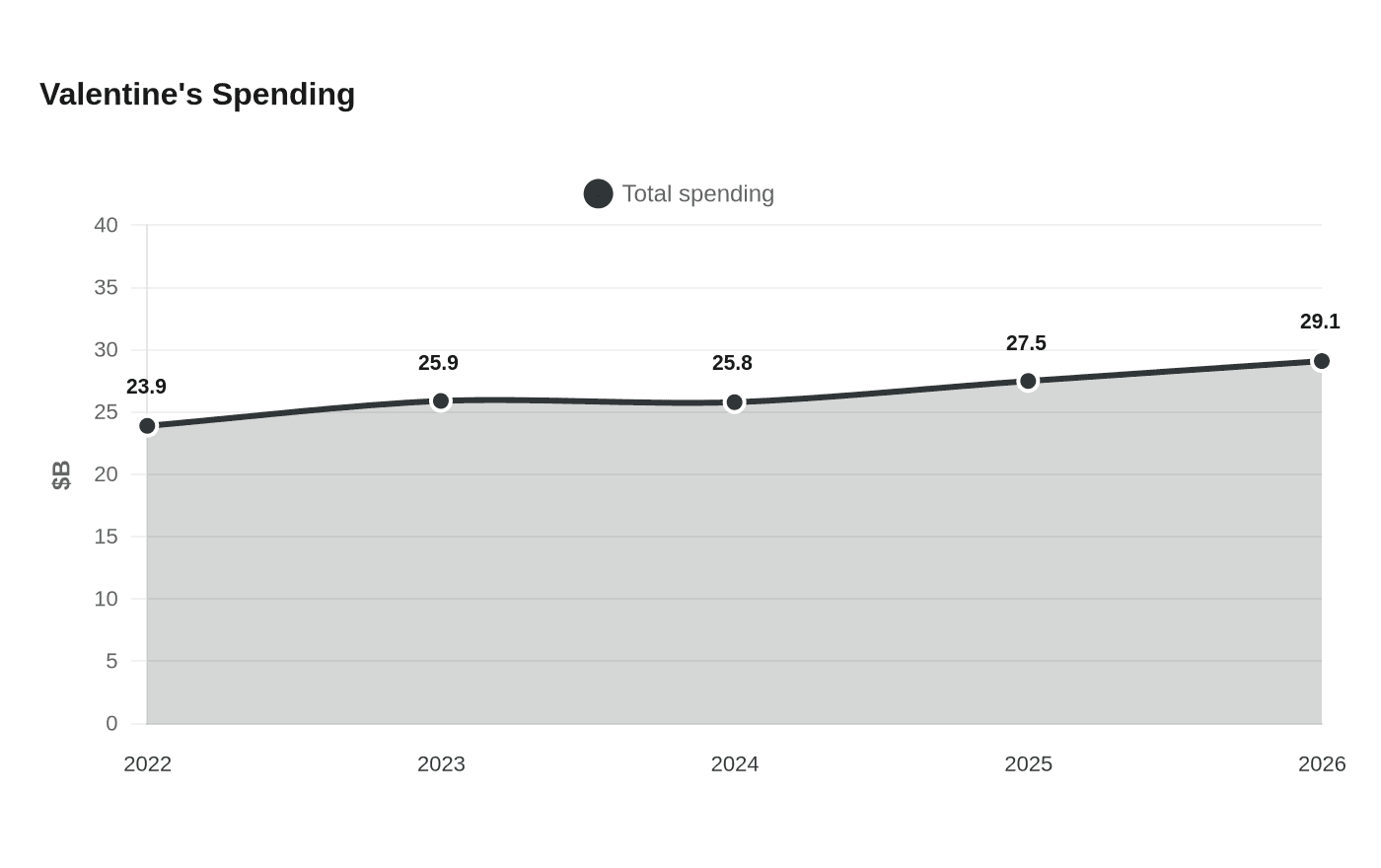
Valentine’s Day spending hit a record $27.5 billion in 2025, and the National Retail Federation’s data show the holiday has become a far wider shopping moment than a box of chocolates for one person. Average spending reached $188.81, topping the prior record set in 2020, and the trade group said its annual consumer survey, run since 2004, has tracked the holiday’s march from a romantic ritual into a broader relationship calendar.
That expansion was even clearer in the NRF’s 2026 survey, which projected another record, $29.1 billion in total spending, with average spending rising to $199.78. Only 55% of consumers said they planned to celebrate, but 83% of those celebrants said they would buy for a significant other. The money, however, did not stop there: 58% planned gifts for other family members, 33% for friends, 27% for children’s classmates and teachers, 21% for co-workers and a record 35% for pets. NRF pegged spending for romantic partners at $14.5 billion, compared with $4.5 billion for family, $2.4 billion for friends, $2.2 billion for classmates and teachers, $1.7 billion for co-workers and $2.1 billion for pets.
The spending arc has been climbing for several years. NRF put Valentine’s Day outlays at $23.9 billion in 2022, then $25.9 billion in 2023, $25.8 billion in 2024 and $27.5 billion in 2025. That is the kind of run that makes the holiday useful for benchmarking: the old core of candy, flowers, cards and dinner is still there, but the budget now stretches across a much longer list of recipients.
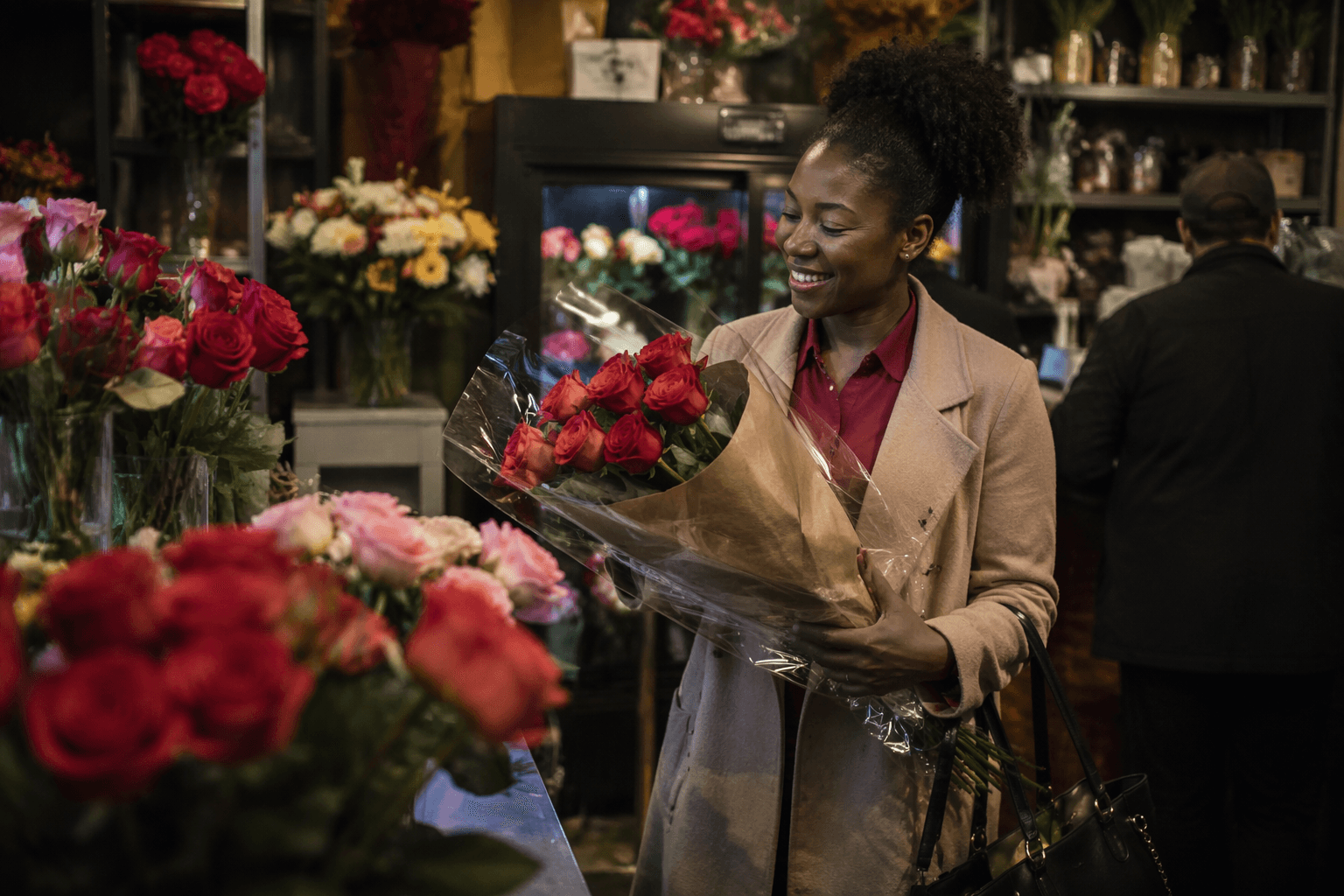
The biggest categories still read like a classic Valentine’s Day receipt. In 2026, shoppers were expected to spend $7 billion on jewelry, $6.3 billion on an evening out, $3.5 billion on clothing and $3.1 billion on flowers. Online remained the most popular shopping destination at 38%, followed by department stores at 35%, discount stores at 30% and specialty stores at 21%. In 2024, online was still first at 40%, with department stores at 33%, discount stores at 31% and florists at 17%.
NRF vice president of industry and consumer insights Katherine Cullen said the record spending reflects how meaningful the holiday is for many Americans. Prosper Insights & Analytics executive vice president of strategy Phil Rist pointed to the growing place of pets in the holiday. HISTORY traces Valentine’s Day to the ancient Roman festival of Lupercalia, then to the romance traditions of medieval Europe and Victorian England, while Richard Cadbury popularized the box of chocolates in the 19th century. That history still sits underneath a modern bill that now reaches from jewelry counters to pet aisles.
This article was produced by Prism’s automated news system from verified source data, official records, and press releases, then run through automated quality and moderation checks before publishing. The system is built and supervised by the people who set the standards it runs under. Read our full AI policy.
Did this article answer your question?