Where to Find Affordable Engagement Rings With Post-Valentine Deals
Post-Valentine markdowns on engagement rings are still live at major retailers. Here's where the deals are and how to shop smarter right now.
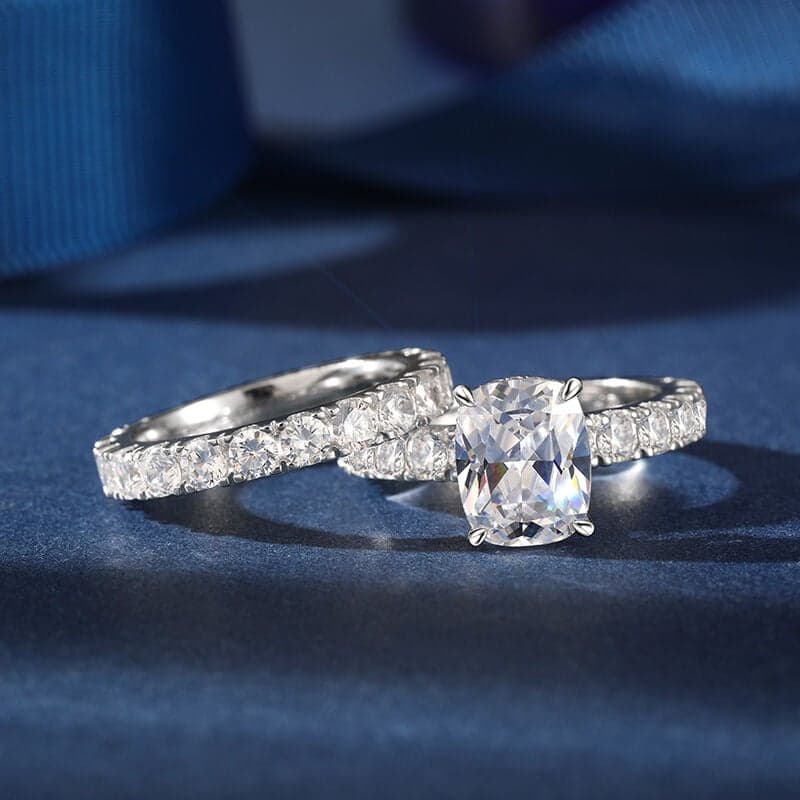
The average American engagement ring costs around $4,600, according to The Knot's 2026 Real Weddings Study. But the most interesting number isn't in that figure; it's in what's quietly happening at the checkout pages of the biggest online jewelers right now. Valentine's Day promotional pricing hasn't fully expired, and the window between mid-February and early spring is one of the least crowded, most discount-rich moments to buy a ring. Forbes' deals editors flagged exactly this opportunity in a roundup of 14 vetted retailers, published this month, and the advice is sharper than the usual "shop smart" platitudes.
Here's where the deals are actually landing.
Rare Carat
Rare Carat operates differently from most jewelers: it functions as a diamond comparison marketplace, pulling inventory from multiple dealers and using AI-driven price and quality scoring to surface the best value per stone. That infrastructure makes it unusually effective during promotional periods, because discounts from several suppliers surface in one place. The platform advertises savings of up to 40% compared to traditional jewelers on lab-grown stones, and its 1-carat lab diamond category is one of the most competitive price points to start a search. If you're doing preliminary research before committing to a retailer, Rare Carat is the place to establish your price baseline.
Blue Nile
Blue Nile built its reputation as the online jeweler that undercuts brick-and-mortar on price without sacrificing certification standards, and in 2026 that positioning still holds. Prices on loose diamonds and settings run 25% to 40% lower than physical retail on comparable stones. The brand's settings section is where promotions concentrate, with discounts of up to 25% surfacing on a rolling basis, roughly every one to two months. Post-Valentine, those setting sales overlap with early spring clearance, creating a short window where both the stone and the band can be bought at reduced prices simultaneously. Blue Nile also offers ready-to-ship options that bypass the customization wait time, useful if the proposal timeline is tighter than anticipated.
Brilliant Earth
Brilliant Earth leads on sourcing transparency and sustainability credentials, which matters to a growing share of buyers. The brand explicitly prices its engagement rings and fine jewelry without traditional markups, meaning items aren't inflated first to be discounted later. That's a notable contrast to department store jewelry counters that rely on perpetual "sale" framing. Brilliant Earth's 360-degree viewing technology and virtual try-on tools let you assess a stone and setting combination before purchasing, and the 30-day return window with free FedEx shipping removes the financial risk from online buying. The brand's spring promotions tend to run across its lab-grown gemstone categories, which overlap naturally with Valentine-adjacent gifting impulses.
James Allen
James Allen is the closest thing the online diamond industry has to a viewing room, with high-definition 360-degree video on every stone in inventory. As of this year, the platform hosts over 65,000 lab-grown diamonds, and the price differential versus natural stones is stark: a 2.0-carat lab diamond currently runs at roughly the same price as a 0.75-carat natural stone. Settings carry a slight premium of $100 to $300 compared to competitors, but diamond prices are the lowest among the major three online retailers. James Allen runs discounts of 20% to 30% on engagement rings and focuses promotional energy particularly on lab-grown collections. Every purchase includes a free lifetime warranty covering cleaning, polishing, and prong tightening, plus a 30-day risk-free return.
Lab-Grown Diamond Options
Lab-grown stones now account for more than 45% of U.S. engagement ring sales, and the pricing advantage is not subtle. According to BriteCo data, lab-grown diamonds cost 73% less than natural equivalents on a like-for-like basis. All four of the retailers above carry substantial lab-grown inventory, but quality improvements over the past five years make this a different category than it was even in 2022. By 2025, 85.9% of lab-grown diamonds sold were colorless, compared to 37.7% in 2020. Buyers aren't just trading down to save money; they're frequently getting higher color and clarity grades than they could afford in natural stones at the same budget.
Vault and Clearance Sections
Every major online jeweler maintains a vault or clearance section that most buyers never think to check. These are inventory lots, discontinued settings, and overstocked stones that retailers need to move, and the discounts reflect that urgency. The Forbes roundup specifically calls this out as a high-value tactic: browsing vault inventory before shopping standard listings can surface stones and settings at meaningfully lower price points, often with the same certification and return policy protections as full-price inventory. Blue Nile and James Allen both maintain clearance sections that refresh regularly; checking back weekly during a promotional period like the current post-Valentine window increases the odds of finding the right stone at a reduced price.
Tracking Promo Codes
Promo codes are less random than they appear. The major retailers follow a predictable cadence: setting discounts at Blue Nile and James Allen surface roughly every one to two months, with deeper codes appearing around cultural moments like Valentine's Day, Mother's Day, Black Friday, and Cyber Monday. The post-Valentine period is the tail end of one of those cycles, meaning codes issued around February 14 may still be active or have successor offers running. The Forbes editors specifically highlight watching for these discount windows, and the recommendation is practical: sign up for email lists at any retailer you're seriously considering. Introductory subscriber discounts at several of these brands are consistently in the 10% to 15% range, which on a $3,000 to $5,000 purchase represents real money.
Balancing Cut, Clarity, and Setting on a Budget
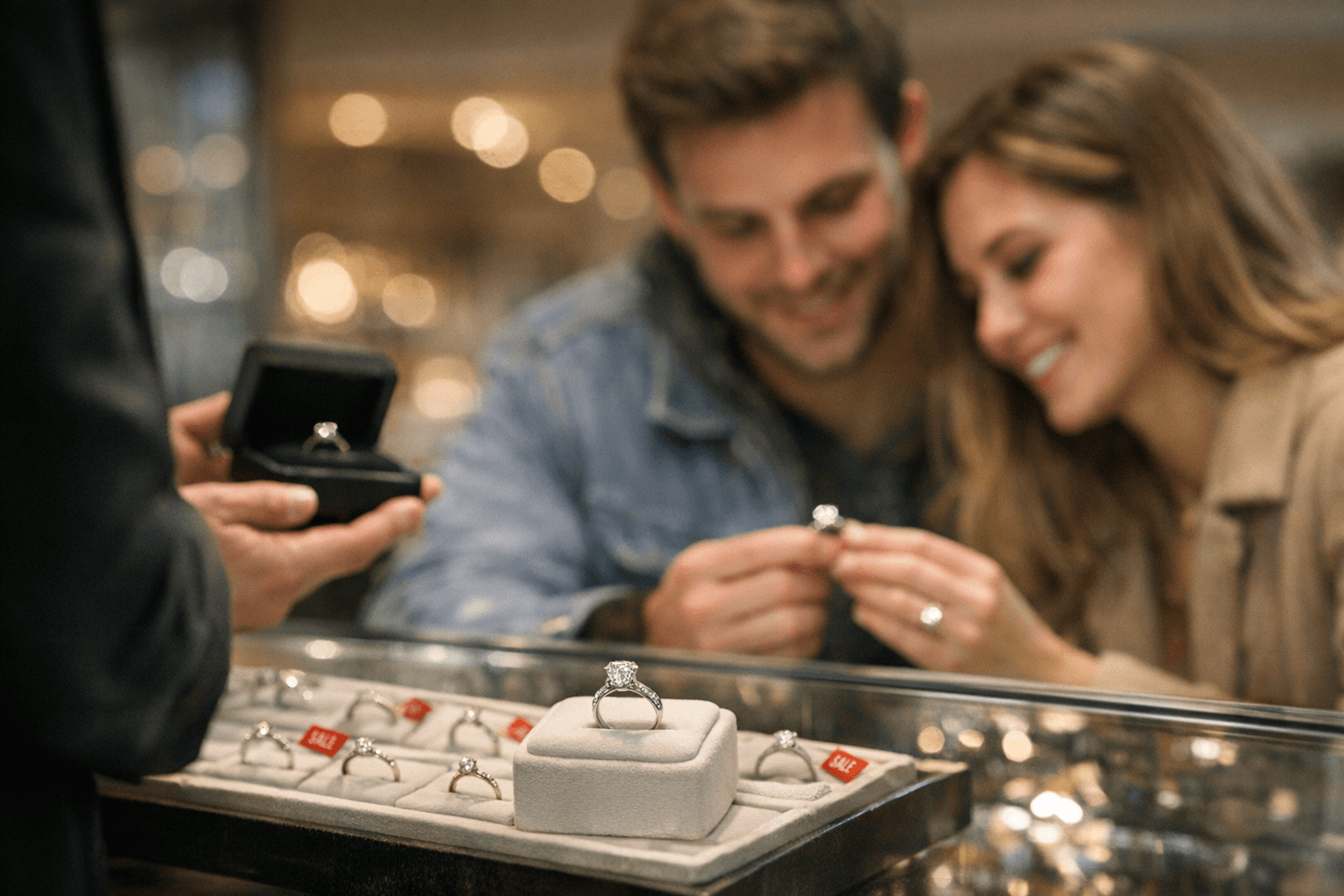
The most common budget mistake is weighting carat size over cut quality. Cut determines how a diamond returns light, and a well-cut stone at 0.9 carats will visually outperform a poorly cut 1.1-carat stone at the same price. Clarity, meanwhile, can often be safely dropped to VS2 or SI1 on round brilliant diamonds, where inclusions are hidden by the facet pattern and invisible to the naked eye. Redirecting budget from clarity to cut, or from the stone to the setting, is where experienced buyers find the most value. Brilliant Earth's transparent pricing model and James Allen's 360-degree viewing tools are both designed to help buyers make exactly these trade-off decisions with full information rather than relying on an in-store salesperson's guidance.
The Post-Valentine Timing Advantage
The conventional logic is that engagement ring shopping peaks between Thanksgiving and Valentine's Day. What that logic misses is the post-Valentine demand: engagements that happen on February 14 require rings, and retailers know the buying intent doesn't disappear after the holiday. Forbes' editors note that many retailers ran Valentine's promotional pricing forward into March, and the current moment, at the end of the month, catches the tail end of that cycle. Early spring also coincides with the lead-up to Mother's Day promotions, giving jewelers a second incentive to keep discounts active rather than letting inventory sit at full price through the quiet period.
Budget Constraints and Smart Entry Points
For buyers working under $2,000, the most effective path is lab-grown stones in a solitaire or simple pavé setting. James Allen's lab-grown inventory starts well below that number for certified stones, and Rare Carat's comparison engine will show you the spread across dealers at that price tier. For budgets between $2,000 and $5,000, the options expand significantly: you can pair a lab-grown center stone above 1.5 carats with a quality setting, or buy a natural diamond in the 0.75-to-1.0-carat range with strong cut grades. The Knot's market average of $4,600 suggests this middle tier represents the actual buying sweet spot for most couples in 2026.
Spring Promotion Windows
The post-Valentine promotion window runs roughly through mid-March, but spring also carries its own promotional calendar. Mother's Day marketing activates as early as late March at most jewelers, and fine jewelry is prominently featured. This creates an overlap period where two separate discount cycles are in motion simultaneously, and the Forbes roundup was timed precisely to this window. Engagement rings as a category sit at the intersection: high enough in average order value to attract promotional priority from retailers, specific enough in intent that buyers are ready to act rather than browse.
Natural Diamond Considerations
Natural diamond prices have not followed the same downward trajectory as lab-grown. For buyers who prioritize provenance or long-term resale considerations, the retailer landscape still offers meaningful savings versus traditional jewelry stores. Blue Nile and James Allen both price natural diamonds 25% to 40% below comparable brick-and-mortar inventory, and lab diamond price drops have pushed retailers to sharpen natural pricing to stay competitive. Blue Nile has historically run its deepest natural diamond promotions outside of the holiday peak, making March a reasonable time to comparison shop without the Valentine's-week surge in demand and urgency pricing.
Certification and Consumer Protections
Every retailer in the Forbes roundup sells certified stones, typically graded by GIA or IGI, which are the two most respected grading labs for natural and lab-grown diamonds respectively. IGI has become the standard certification for lab-grown stones at James Allen, Brilliant Earth, and Blue Nile, and the consistency of IGI grading means a VS1 at one retailer is meaningfully comparable to a VS1 at another. Beyond certification, return policies across these platforms are strong: 30 days is the standard window, with free return shipping included. James Allen's lifetime warranty adds post-purchase value that isn't always priced into the comparison but represents real protection for a purchase at this price point.
Making the Most of the Current Window
The practical sequence for a buyer entering the market right now: start with Rare Carat to benchmark pricing across the market, then narrow to two or three retailers based on the setting styles you're drawn to. Sign up for email lists immediately to capture any introductory codes. Check vault and clearance sections before standard inventory. And prioritize cut above all other variables if you're managing a tight budget. The Forbes editors' timing is deliberate: the post-Valentine spring window is brief, and by late April the promotional landscape shifts toward Mother's Day without the same engagement-specific inventory focus. The deals visible now are among the best the first half of the year will produce.
This article was produced by Prism’s automated news system from verified source data, official records, and press releases, then run through automated quality and moderation checks before publishing. The system is built and supervised by the people who set the standards it runs under. Read our full AI policy.
Did this article answer your question?