3D Printed Kei Truck Blends Hoverboard Motors and Salvaged Parts
Victor’s 1:3 kei truck used hoverboard motors, printer salvages, and RP2040 boards to roll into Anime Los Angeles, where it won Best Prop before crashing into a wall.

Victor’s 1:3 scale kei truck did what the best 3D-printed builds do: it disappeared into a bigger machine. Built as Truck-Kun for Animé Los Angeles, the Suzuki Carry-inspired rig mixed hoverboard motors, salvaged printer hardware, steel tubing, and printed brackets into a tiny vehicle that actually drove under its own power before convention day.
Victor said the project was his obsession for most of 2025, with work happening almost every day. He started sourcing components in May, began designing in June, and had the truck “wheels down” and driving at 3 a.m. on January 7, just before heading to Long Beach, California. By the time Animé Los Angeles 21 opened at the Long Beach Convention Center on January 8, the truck was already more than a cosplay prop. It was a working, convention-ready machine.
The drivetrain leaned on old hoverboard motors, a favorite of DIY builders because the brushless hub motors bring plenty of torque and relatively simple drive requirements. From there, Victor built a ladder frame with a wheel at each corner, then wrapped it in a body made from cardboard, tape, paint, and a handful of 3D-printed parts. The chassis itself combined printed components, steel tubing, and, in Victor’s own words, “more wire than common sense.”
The print work was not the whole story, but it was the connective tissue. Victor used a leadscrew and stepper motor pulled from an old 3D printer for steering, a clean example of how desktop hardware keeps getting repurposed into stranger, more ambitious projects. His design notes show three separate voltage systems: 36V for the motor controllers, 5V for RP2040 boards and lights, and 12V for the stepper motor steering system. An ESP32-S3 handled the Xbox One controller input, while RP2040 boards managed the motor control side of the build.
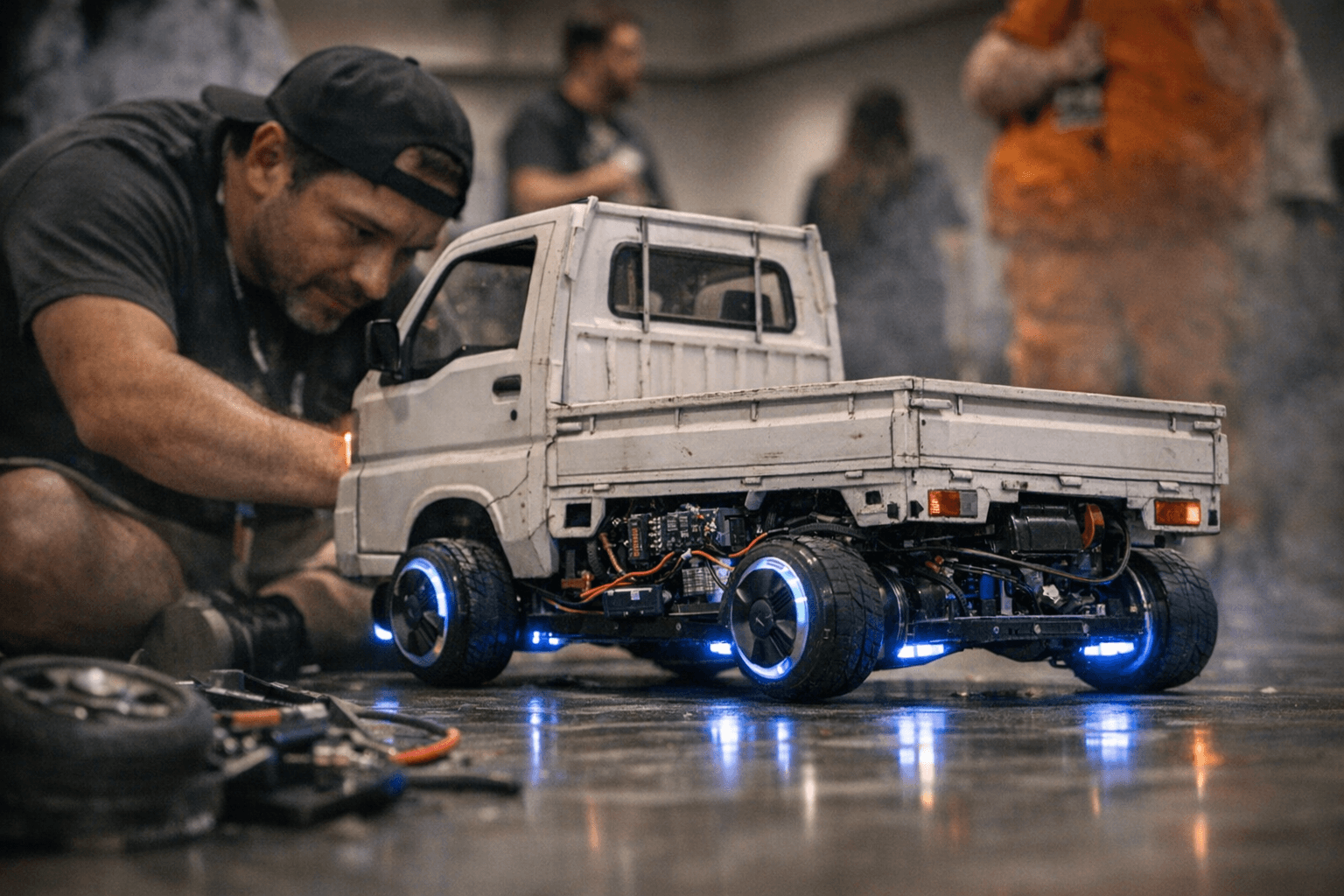
The truck fit right into the energy of ALA 21, whose official theme was Isekai and whose history page lists 18,786 attendees for 2026. An independent recap later put the crowd at more than 21,000. Victor drove Truck-Kun around the convention, showed it to other RC fans, and was told to enter the Hall Cosplay Contest, where he won Best Prop.
Then came the ending no builder wants and every maker understands. Truck-Kun slammed into a wall and finished in a mess of root beer. But the wreck only sharpened the point of the build: the most interesting 3D prints are often the ones that let old parts, code, motors, and improvised structures become one working machine, even if that machine lasts only long enough to steal the show.
This article was produced by Prism’s automated news system from verified source data, official records, and press releases, then run through automated quality and moderation checks before publishing. The system is built and supervised by the people who set the standards it runs under. Read our full AI policy.
Did this article answer your question?