All3DP updates guide to choosing the right 3D printer build surface
The right build plate can save a print before the first layer fails, and the wrong one can turn PETG, nylon, and TPU into a cleanup job.
The surface under the part is often the real decision
When the first layer goes wrong, the fix is not always more tuning. All3DP refreshed its build-surface guide on May 21, 2026, and the logic behind it is simple: choose the plate that fits the filament and the job, because adhesion, release, surface finish, and cleanup all rise or fall together. MakerBot’s own guidance still puts leveling and nozzle-to-bed distance at the center of bed adhesion, since a gap that is too wide leaves the first layer loose and a gap that is too tight can stop extrusion from behaving properly.
PLA: look for easy first-layer success, not the grippiest possible bed
PLA is the filament where a lot of people learn the difference between stick and release. Prusa describes its smooth PEI sheet as giving excellent adhesion with most materials and a very clean underside, while its textured sheet is more forgiving and transfers texture to the part. That tradeoff matters: Prusa notes that PLA with a small contact area may need a brim on textured PEI, while PLA with a large footprint can warp there, so the question is not simply “what sticks best,” but “what releases cleanly without creating a new problem later.”
PETG: this is where a sheet change can beat another hour of retuning
PETG is the material that most clearly rewards choosing the right surface up front. Prusa warns that PETG can adhere so strongly to a clean, degreased smooth PEI sheet that removal can peel the PEI surface and cause irreversible damage, which is why it recommends a separating agent such as a glue stick or even a different sheet. Prusa also says glue is not needed for PLA, but may be advisable for polyamide, PETG, PC, and other materials when you want a protective separation layer. MatterHackers makes the same practical case from another angle, positioning its LayerLock PEI plate as a way to improve first-layer reliability for PLA, ABS, PETG, and more.

Nylon: standard PEI often stops being enough
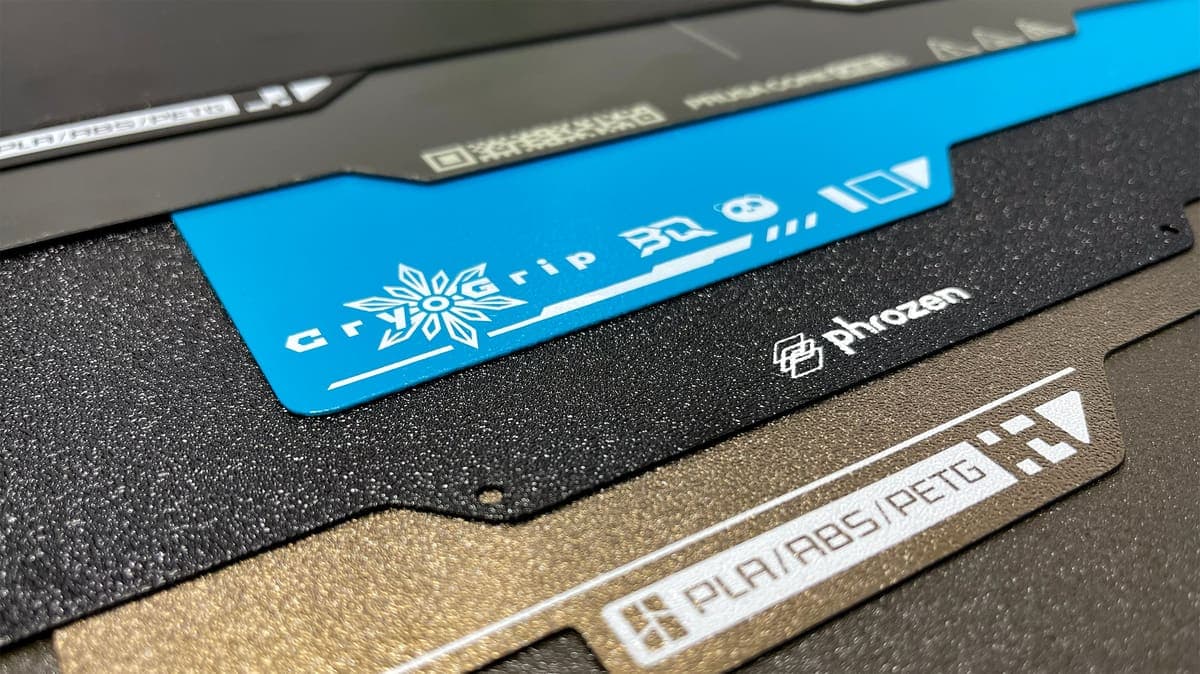
Nylon is where the decision guide becomes truly material-specific. Prusa says adhesion to standard PEI is generally very poor for polyamides, which is why it offers a dedicated PA Nylon sheet designed specifically for nylon-based filaments. Its flexible spring-steel system includes six sheet types with different strengths and attributes, including smooth, textured, satin, PP, PA Nylon, and HighTemp, which is a strong signal that one plate is not supposed to do every job forever. If nylon is your everyday filament, a new sheet is often the smarter fix than endlessly revisiting Live Z and first-layer settings.
TPU: the problem is often too much grip, not too little
TPU flips the usual bed-adhesion story. Prusa says its smooth PEI sheet offers excellent adhesion, but also warns that TPU and PETG can stick too strongly and may damage the sheet when removed. That makes release behavior just as important as first-layer hold, especially on flexible parts that can otherwise become a wrestling match at the end of the print. Prusa’s textured powder-coated sheet is built for a tougher balance, with scratch resistance, automatic release as the sheet cools, and a more forgiving Live Adjust Z setup, which is exactly the sort of behavior that saves time when you want the part off the plate without prying.
Composites and high-temperature materials need their own surface logic
For composites and hotter technical materials, Prusa’s HighTemp sheet exists because standard steel sheets can be wrong in both directions, either too slippery or too sticky. Prusa says that sheet is intended for materials such as PEEK, PEEK-CF, PEI, PEKK, and PPSU, which puts fiber-filled and high-temperature composites into a different category from everyday PLA or PETG. That same philosophy shows up in Bambu Lab’s plate ecosystem, where separate troubleshooting guidance exists for the Cool Plate, Textured PEI Plate, High Temperature Plate, and Engineering Plate, making it clear that the plate itself is part of the workflow, not a static accessory.
Maintenance decides whether the plate keeps earning its place
A build surface only works if you treat it like a tool, not a disposable sticker. Bambu Lab warns not to clean its Textured PEI with acetone and says detergent should not contain oils or moisturizers, because residue can ruin adhesion. Prusa’s guidance is just as blunt about the downside of the wrong cleaner, and its sheet-specific warnings reinforce the point: textured and satin-style surfaces are meant to solve release and durability problems, but they also reward the right cleaning routine. The hidden tradeoff is easy to miss until you have lived it: smoother surfaces often give prettier bottoms, while textured or specialty plates usually buy you easier release and less damage during daily use.
Know when to swap the sheet instead of chasing settings
The cleanest decision is the one that stops a recurring failure before it becomes habit. If PLA keeps warping on a surface that is too slick or too aggressive, if PETG is threatening to bond to the plate, if nylon will not hold on standard PEI, or if TPU starts chewing up the finish on removal, a new build surface is often faster and cheaper than another round of re-leveling, Z-offset tweaking, and test squares. That is the real value of All3DP’s updated guide: it treats the build plate as the quiet part of the machine that decides whether the first layer becomes a success or a restart.
Know something we missed? Have a correction or additional information?
Submit a Tip