A.G. Gaston Boys & Girls Club links STEM learning to screen creativity
A.G. Gaston’s 60-year legacy now runs through a modern clubhouse where kids can turn STEM curiosity into screen-ready skills.
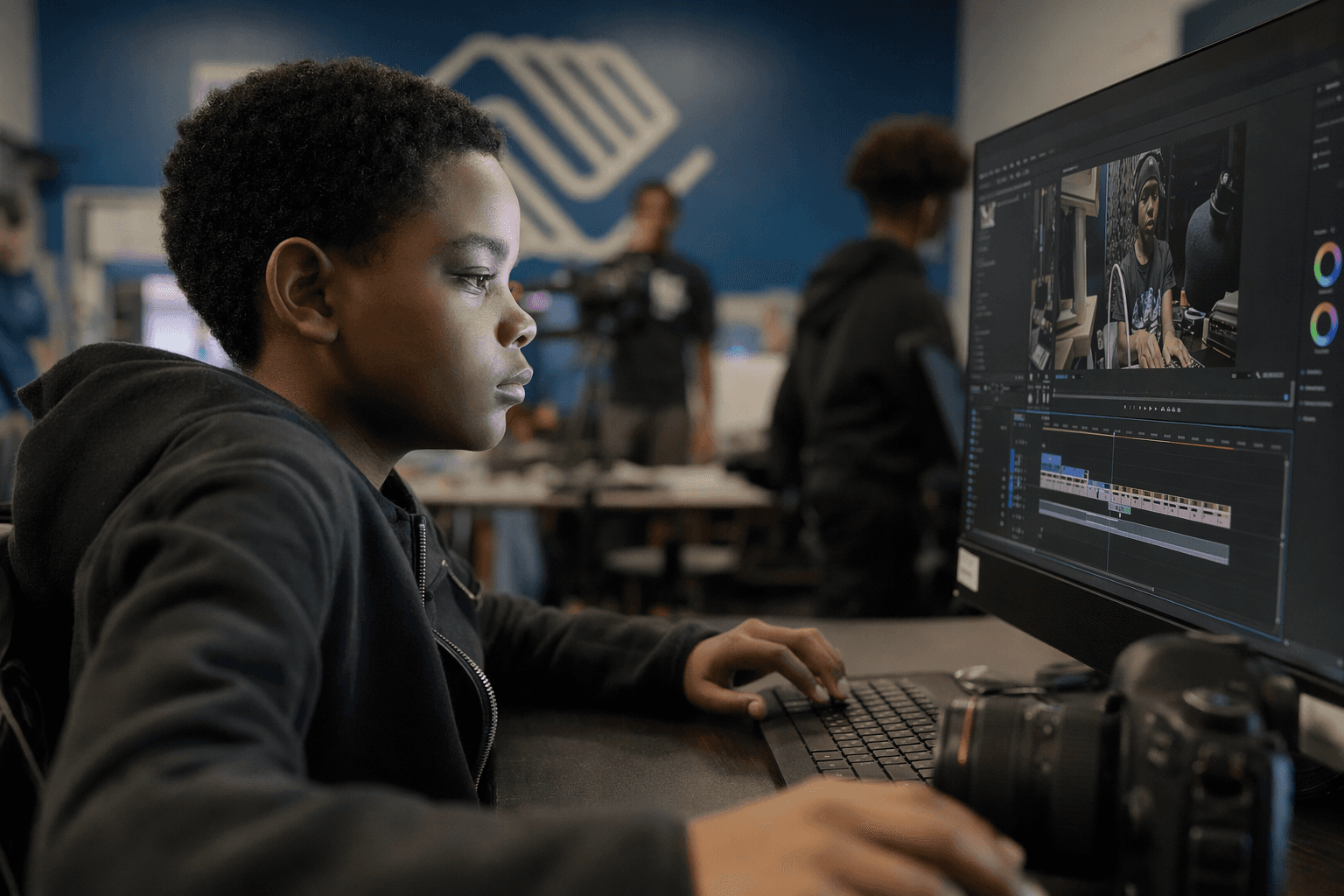
The Walter Howlett Club at the A.G. Gaston Boys & Girls Club is turning a familiar Birmingham institution into an early on-ramp for screen work. Its “seedlings to screen” framing ties STEM learning to the habits that drive film sets, from technical problem-solving to storytelling and teamwork.
A pipeline starts with hands-on learning
In a city where arts, education, and community organizations keep overlapping, this story lands as more than a youth feature. For Alabama Independent Film, the real takeaway is pipeline building: the people who grow into camera assistants, editors, writers, production coordinators, and audience builders often first discover visual storytelling in community spaces that make technology feel useful and approachable.
That is why the club’s approach matters. When young people learn that screens are tools for communication, not just entertainment, they begin to see media work as a practical craft. That shift can build confidence, public speaking, technical curiosity, and teamwork, all of which carry straight into production environments across Birmingham and beyond.
A clubhouse built for more than after-school hours
The setting itself reinforces that mission. The Walter Howlett Jr. Clubhouse at 4821 Avenue W in Birmingham replaced the aging Kirkwood R. Balton Clubhouse with a 25,000-square-foot facility built for broader use. It includes a dedicated Teen Center, a café with a teaching kitchen, and a permanent performance space, making it a flexible place for learning, presenting, and creating.
The clubhouse also serves children from schools throughout Greater Birmingham and offers after-school transportation, which matters as much as the equipment inside the building. A youth program cannot become a media pipeline if access is limited, and this facility was designed to widen that door. Earlier reporting said the new clubhouse was intended to increase average daily attendance to 450 children and youth, a scale that gives the program room to reach far more students at once.
That kind of capacity is what makes the screen-arts angle useful to local filmmakers. A place that can host tutoring, performance, kitchen-based instruction, and teen programming can also nurture the kinds of soft skills and creative habits that underpin production work. In practical terms, it is where a future grip, post-production assistant, or digital storyteller can begin to understand how a team works.
Sixty years of local relevance
The timing is not accidental. A.G. Gaston Boys & Girls Club is marking its 60th anniversary in 2026, and the organization says it has served about 20,000 young people over its history. CEO Andre McFadden is the quoted leader in the anniversary coverage, and the club’s celebration dinner was scheduled for May 14, 2026, at the Renaissance Birmingham Ross Bridge Golf Resort & Spa, with Super Bowl champion Jalen Hurts set for a fireside chat.
That anniversary frame gives the current STEM-and-screen story real weight. This is not a new experiment trying to find its footing. It is a long-running Birmingham institution updating its mission for a digital age, while staying close to Arthur George Gaston’s original purpose. Gaston opened the youth organization in 1967 after he and supporters raised $350,000, including a $50,000 personal donation from Gaston himself.
The club’s growth has been steady enough to trace across decades. Earlier reporting said it was serving more than 1,400 young people in 2017, and the newer milestone of 20,000 served reflects how deeply the organization is woven into the city’s youth-development landscape. Gaston’s guiding principle still hangs over that work: “find a need and fill it.”
Why Birmingham’s film community should watch this closely
For the independent-film crowd, the important part is not just that children are being exposed to STEM. It is the way the club is normalizing creative technology inside a trusted neighborhood institution. A child who learns to build, fix, present, and collaborate in this setting is already practicing the same habits that matter on a low-budget set, in a post-production bay, or inside a small creative studio.
That is especially relevant in Birmingham, where local creative growth depends on widening the base of people who understand how media gets made. The city does not just need finished filmmakers. It needs the technicians, storytellers, organizers, and support staff who make a production ecosystem durable. When a youth program helps students see that technology and storytelling belong in the same conversation, it expands the future talent pool in a very concrete way.
The Walter Howlett Club’s structure makes that crossover easier to imagine. A teen center can become a place for editing or digital storytelling practice. A permanent performance space can support presentation skills, camera comfort, and live production awareness. Even the café and teaching kitchen signal that learning here is meant to be active, social, and hands-on rather than abstract.
The garden project shows the model already works
The screen-creativity angle also makes sense because the club has done this kind of teaching before. Earlier coverage documented a teaching garden revitalization project that brought children into hands-on learning about growing fruits and vegetables and understanding healthy eating, with support from BB&T Bank. That work matters because it shows the club already knows how to turn a practical activity into a learning system.
The garden project is a useful analogy for the new media framing. In both cases, children are not just hearing about a concept. They are handling tools, following process, and seeing how small steps lead to a visible result. That is exactly the kind of instruction that can translate well into media literacy, production tech, and the discipline required for film and video work.
The club has also been tied in Birmingham reporting to broader efforts to expose Black students to STEM-based careers, which makes the “seedlings to screen” idea feel rooted in the city’s larger education conversation. The overlap between youth development and screen culture is no longer a side note. At the Walter Howlett Club, it looks like part of the city’s long-term creative infrastructure.
For Alabama Independent Film, that is the key lesson. The future local talent base will not be built only on sets and festivals. It will also be built in places like the A.G. Gaston Boys & Girls Club, where curiosity gets connected to skill, and skill gets connected to opportunity.
This article was produced by Prism’s automated news system from verified source data, official records, and press releases, then run through automated quality and moderation checks before publishing. The system is built and supervised by the people who set the standards it runs under. Read our full AI policy.
Did this article answer your question?


