Alabama State film minor blends theory and hands-on indie skills
Alabama State’s 18-hour film-studies minor gives students a flexible route into indie work, pairing theory with photography and TV production skills.
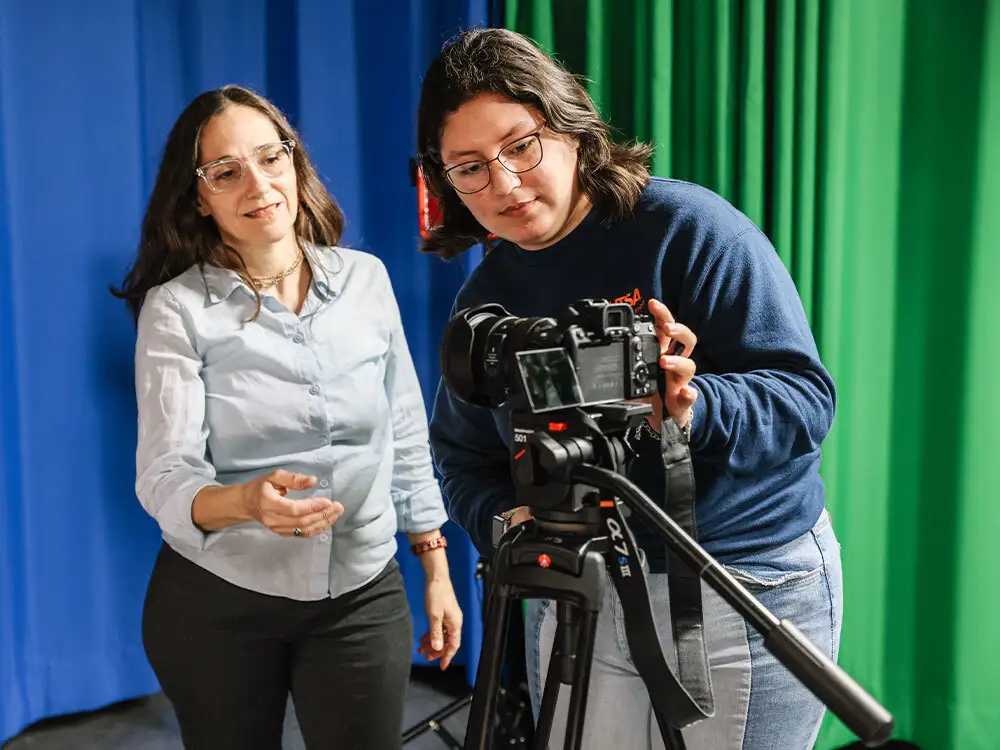
For Alabama students who want a real entry point into indie filmmaking without signing up for a full production-track degree, Alabama State University’s Film Studies Minor is built for exactly that kind of step-in. The program keeps the load light at 18 hours total, but it still moves students through film theory, film history, and hands-on media skills that translate directly to small sets, local crews, and low-budget shoots.
What the minor actually requires
Alabama State’s minor sits in the Department of Languages and Literatures in the College of Liberal Arts and Social Sciences, which tells you a lot about its shape before you ever open the course list. This is not a heavy equipment-focused production sequence. It is a structured film foundation built around analysis, literacy, and a few practical media courses that can fit alongside another major.
The core is 12 hours of required classes: ENG 375 Introduction to Film Studies, ENG 376 Film Theory, ENG 377 Film History, and ENG 442 Special Topics in Film Studies. Students then add 6 elective hours, with options that include CMM 213 Basic Photography and CMM 215 TV Production Skills. That mix is small enough to be manageable, but specific enough to build fluency in both how movies work and how images are made.
Why the blend matters for indie work
For independent film, the value of that mix is obvious once you step onto a real set. Film theory and film history give you the vocabulary to talk about framing, cutting, genre, pacing, and the way images carry meaning. They also help you recognize why a scene lands, why a transition feels sharp, or why a stylistic choice reads one way to an audience and another way to a programmer or collaborator.
The practical side matters just as much. Basic Photography pushes students into framing and exposure, while TV Production Skills introduces the workflow side of moving-image work. Even a tiny indie project depends on those basics. If the shot is off, the exposure is wrong, or the workflow breaks down, the footage feels accidental instead of intentional.
That is why this kind of minor is useful for people who are not trying to become full-time film majors. Writers, musicians, photographers, teachers, and community organizers often end up in Alabama indie productions as collaborators, not as students in a traditional production pipeline. A program like this gives those people a way to build craft without having to restructure their entire academic path.
ASU’s context gives the minor extra weight
Alabama State’s own 2021-2023 undergraduate catalog identifies the university as one of the nation’s oldest Historically Black Colleges and Universities, founded in 1867. That history matters because it places the minor inside a long-running Montgomery institution with deep cultural roots and a broad student base. For students who want film knowledge in a setting that is not isolated from other disciplines, that background makes the program feel especially practical.
The location also helps. Montgomery sits in the middle of Alabama’s production geography, and the minor’s placement in Liberal Arts and Social Sciences makes it easier to combine with other interests. If your day-to-day work is in writing, media, communications, or another field, the minor can still build a serious film foundation without forcing you into a specialized production track.
How Alabama’s film ecosystem supports the path
The surrounding state infrastructure makes this kind of training more useful. The Alabama Entertainment Office says Alabama gives filmmakers urban, small-town, rural, mountain, river-valley, and Gulf Coast locations, along with lower production costs and state tax incentives. That range matters for indie crews, because a student project in Alabama can move from city streets to rural roads to coastlines without leaving the state.
SAGindie lists the Alabama Entertainment Office at 401 Adams Ave., Ste. 749 in Montgomery, and gives a public phone number of 334-242-4195. That kind of visible contact point is part of what makes the state’s film support network feel usable, not abstract. When students start looking beyond classwork and toward actual production, they are not stepping into a vacuum.
The Alabama Film Office also points to a broader network of regional support, including Film Birmingham, Mobile Film Office, MGM Film Works in Montgomery, and Selma. North Alabama adds another useful piece of language to the map, with the North Alabama Film Commission describing the region as “camera-ready.” For students coming out of a film-studies minor, that means the next step is not theoretical. There are already local offices and regions named for the work.
A second university model shows the field is expanding
The Alabama State model is not the only way the state is organizing film education. In November 2024, Jag Media reported that the University of South Alabama would launch a Film Studies minor in Spring 2025, and the university now describes that minor as a multi-disciplinary program for sustained study of film, television, and digital visual media. That gives Alabama students a useful comparison: ASU offers a lean, flexible route, while South Alabama offers a broader multi-disciplinary model.
Taken together, the two programs show that film education in Alabama is no longer limited to one narrow lane. Students can now choose between different kinds of academic structure depending on how they want to work, how much time they have, and whether they want theory, production, or a little of both. That is a real advantage in a state where indie filmmaking depends on people who can move between disciplines and still speak the language of the craft.
Alabama State’s minor works because it keeps the barrier low without making the training shallow. It gives students film history, theory, and a few hands-on tools, all inside a program that fits a larger academic life. For anyone looking to enter Alabama indie film without waiting for the perfect full-scale production program, that is a sturdy place to start.
This article was produced by Prism’s automated news system from verified source data, official records, and press releases, then run through automated quality and moderation checks before publishing. The system is built and supervised by the people who set the standards it runs under. Read our full AI policy.
Did this article answer your question?