Birmingham screening spotlights The Cry of Jazz with Sun Ra Arkestra panel
Sun Ra comes home in Birmingham through a screening of The Cry of Jazz, a rare crossover of film history, jazz scholarship and Black arts memory.

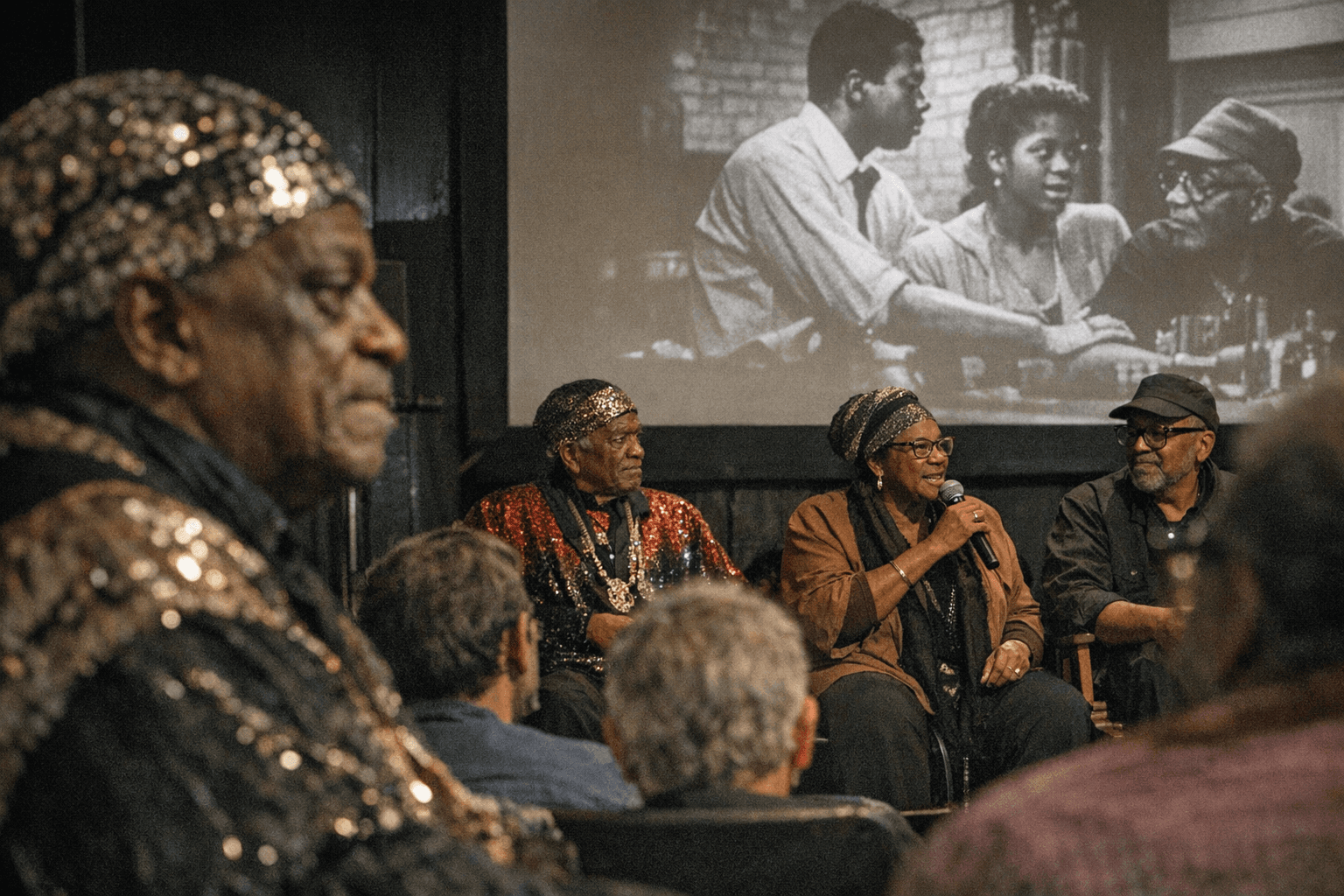
Birmingham’s latest film-and-music crossover reaches back across decades to bring Sun Ra into the room. A screening of The Cry of Jazz, followed by a panel with members of the Sun Ra Arkestra, is presented as part of the Year of Birmingham Jazz initiative, with Create Birmingham and Film Birmingham helping frame the evening as a Birmingham-centered cultural homecoming rather than a routine screening.
That framing matters because Sun Ra was born Herman Sonny Blount in Birmingham on May 22, 1914, studied piano here, and attended Alabama Agricultural and Mechanical College, now Alabama A&M University. He later died in Birmingham on May 30, 1993. The Birmingham Museum of Art’s Hanson Library and Archives also holds printed proofs of four Sun Ra album covers, including When Sun Comes Out from 1963, Universe in Blue from 1972, Dreams Come True, also known as Deep Purple, from 1973, and Discipline 27-II from 1973. The museum’s archive holdings show how deeply Sun Ra’s visual and musical legacy is already embedded in the city’s institutions.
The film itself is not a Birmingham production. Edward O. Bland’s The Cry of Jazz was made in 1959 by first-time filmmakers and is tied to Chicago’s Black neighborhoods, but it carries Sun Ra Arkestra performance footage and a forceful argument about jazz as an expression of the situation of Black Americans. The Library of Congress describes the film as using dramatic dialogue, direct address, realist documentary illustration, an innovative soundtrack and essayistic construction. Its music credits include Sun Ra, Julian Priester, Paul Severson, Eddie Higgins and Norman Leist. That combination makes the screening feel less like a museum piece and more like a living argument about how Black experimental art is made, framed and remembered.
After the film, the conversation moves into Birmingham’s own cultural network. Burgin Mathews, founding director of the Southern Music Research Center and author of Magic City: How the Birmingham Jazz Tradition Shaped the Sound of America, joins Jessica Chriesman, Sidewalk Film’s Director of Education + Outreach, alongside members of the Sun Ra Arkestra for a discussion of Sun Ra’s influence on music and visual culture. Create Birmingham says Year of Birmingham Jazz is designed to use film to document and preserve Birmingham’s cultural heritage and deepen public understanding of the city’s history and global influence. For Alabama independent film, that kind of collaboration signals real momentum: museums, film programmers, historians and working musicians are treating one-night events as a way to build a broader, more connected local screen culture.
This article was produced by Prism’s automated news system from verified source data, official records, and press releases, then run through automated quality and moderation checks before publishing. The system is built and supervised by the people who set the standards it runs under. Read our full AI policy.
Did this article answer your question?


