Fairhope Coal Ash Documentary Wins National Sustainability Award at D.C. Festival
Sallie Smith was 80, dying of lung cancer, and still fighting 21 million tons of toxic coal ash near Mobile Bay. Her story just won a national award in Washington, D.C.
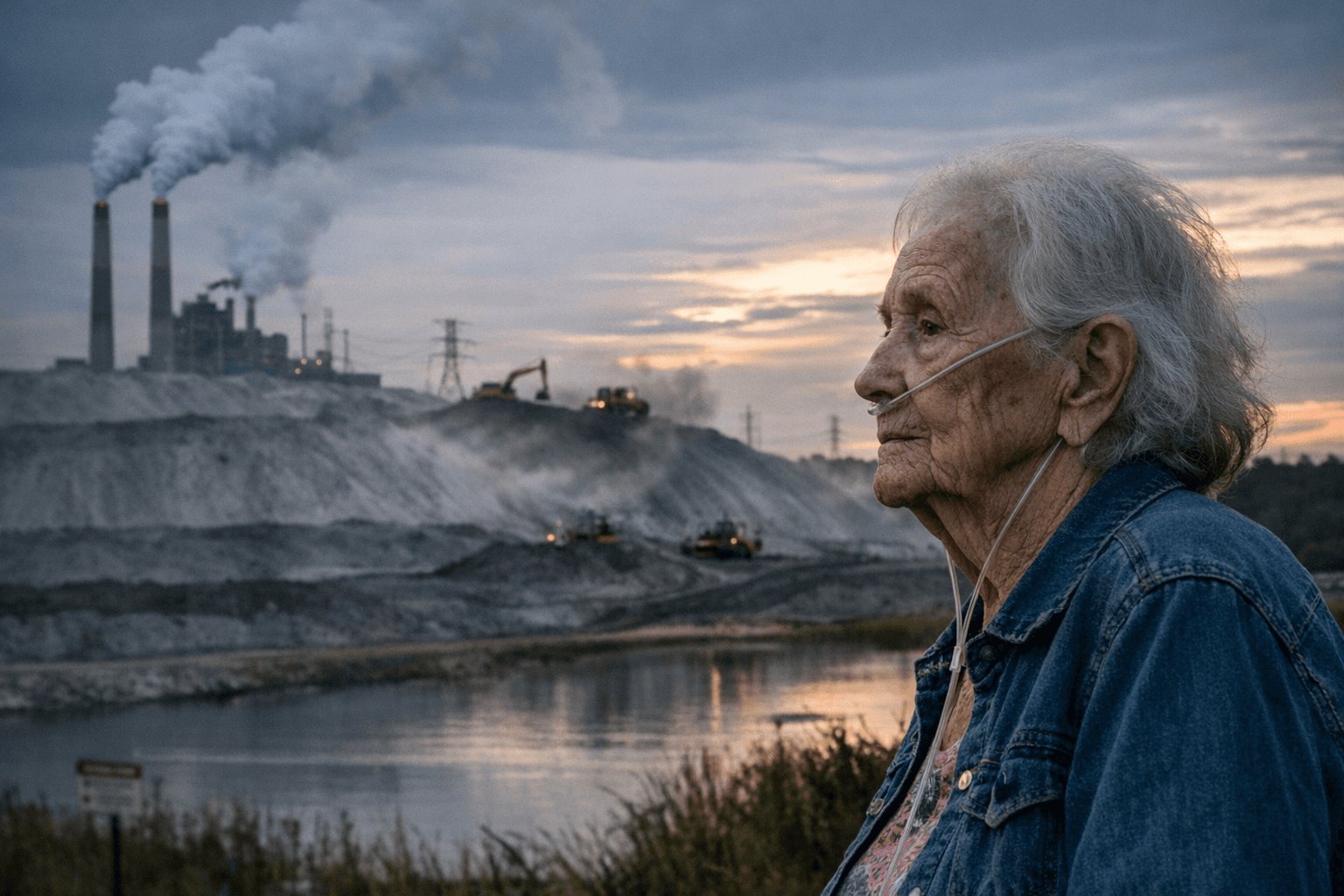
Sallie Smith was 80 years old, fighting terminal lung cancer, and still showing up to meetings about 21 million tons of coal ash stored in an unlined pit near the Mobile River. That combination of urgency and improbability sits at the heart of "Sallie's Ashes," the 40-minute documentary directed by Brennan Robideaux that won the Eric Moe Award for Best Short on Sustainability at the 2026 Environmental Film Festival in Washington, D.C. on March 30.
The Eric Moe Award is one of only four major juried prizes presented by the festival, now in its 34th year as the nation's longest-running environmental film series. For an Alabama indie documentary to land at that level, the film had to earn its way there: it debuted at the Telluride Film Festival, picked up a Critics' Choice Documentary Awards nomination for Best Short Documentary, and opened the Fairhope Film Festival's regional premiere before arriving in the capital.
The path from regional story to national recognition started with a three-minute Alabama Public Radio interview. Smith, along with fellow activists Diane Thomas and Savan Wilson, told their story; the segment was picked up by NPR and reached Oscar-winning producer Daniel Junge, who reached out about turning their fight into a film. Junge and producer Allison Bohl DeHart brought Robideaux on as director, and the Coal Ash Action Group, the organization Smith co-founded in 2022 and that has since grown to more than 1,450 subscribers, opened its doors. That embedded access shaped everything the film could do.
Plant Barry, Alabama Power's coal facility, sits 25 miles north of Mobile Bay, and the ash pits it operates lie adjacent to the Mobile-Tensaw Delta, considered one of the most ecologically significant river systems in the United States. A University of Alabama and Texas A&M study documented heavy metals including arsenic and mercury leaching from the unlined pit into the Mobile River, giving the film a scientific foundation beneath its deeply personal narrative. Smith's group earned the nickname "Coal Ash Grannies," a moniker Robideaux leans into rather than away from, because the contrast is precisely the point: retirees carrying an environmental justice fight that larger institutions had not.
"'Sallie's Ashes' was made as a labor of love, both for the people of Alabama and for a cause that matters deeply to us," Robideaux said. "It's a reminder that the most unlikely voices can carry the greatest weight. Sometimes the fight for the future rests in the hands of those who know they won't live to see it."
For Alabama indie filmmakers watching the trajectory, the playbook is legible: start with community trust before turning on a camera, anchor the personal narrative in verifiable science, build a festival run that expands the story's geography without diluting its local specificity, and then bring the film home.
That homecoming begins in late April, with Baldwin County screenings scheduled at the Daphne Library, Daphne City Hall, the Magnolia Springs Community Association, and Graham Nature Preserve in Foley. Those stops are positioned as organizing opportunities as much as film events, connecting the D.C. recognition directly to the neighborhoods living closest to Plant Barry's ash pits.
This article was produced by Prism’s automated news system from verified source data, official records, and press releases, then run through automated quality and moderation checks before publishing. The system is built and supervised by the people who set the standards it runs under. Read our full AI policy.
Did this article answer your question?


